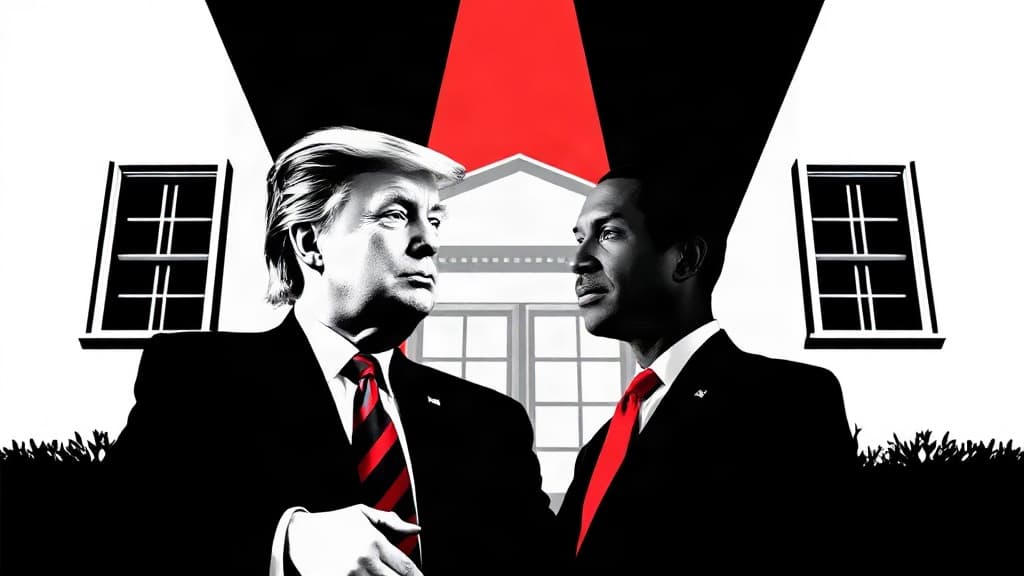
President Trump will meet Monday with New York City Mayor Zohran Mamdani at Gracie Mansion — the first time the mayor has hosted the president at his official residence — and the question for working Americans is whether this is a pragmatic deal for the city or a capitulation to a leftist mayor who has opposed law enforcement and border security at every turn.
The meeting comes as world leaders descend on New York for the U.N. General Assembly, and it lands on the Jewish High Holy Day of Yom Kippur — timing that raises its own questions about what message is being sent. Mamdani's office would only say the meeting "will focus on issues affecting New York City and New Yorkers," and declined to provide further details on the agenda.
The two men have a track record. Trump hosted Mamdani at the White House twice — once in late November 2025, before the mayor took office, and again in late February. Both meetings were remarkably warm for a pair who disagree on nearly everything. Mamdani campaigned on being Trump's "worst nightmare" and called him a "fascist" and a "despot." Trump brushed it off: "I've been called much worse than a despot, so it's not that insulting," he quipped. After the November meeting, Trump declared: "We have one thing in common. We want this city of ours that we love to do very well."
So what has the charm offensive actually delivered? City Hall has suggested the diplomatic approach pays dividends. In February, Mamdani pushed for federal investment to build housing over Sunnyside Yard — but there's been no reported progress since. Mamdani also secured the release of a pro-Palestinian protester from immigration detention the very morning of that White House meeting. That's a concrete result — for Mamdani's political base, not for the New Yorkers struggling with cost of living.
The big backdrop is November's midterms. CNBC framed the meeting as part of the GOP's messaging blitz to paint Democrats as "communists" using Mamdani as the poster child — even as Democrats surge in public polling and Republicans risk losing both chambers. But Trump himself has undermined that attack line by continuing to extol Mamdani's "great personality." The Post leaned into the "chummy" angle and the personal rapport. City & State NY, meanwhile, noted the substantive policy asks and the Yom Kippur timing. What none of them pressed: who is getting what out of this relationship, and at whose expense.
Then there's the Netanyahu problem. Mamdani campaigned on arresting the Israeli prime minister if he set foot in the city, citing his International Criminal Court warrant. Trump scoffed, insisting it wouldn't happen. Mamdani has since begrudgingly acknowledged he lacks the authority to arrest a foreign leader — and last week inaccurately claimed he never even encouraged New Yorkers to protest Netanyahu's visit. Netanyahu speaks at the U.N. on Thursday and is only expected in New York for about a day. He is not planning to meet with Trump.
Mamdani told reporters last week: "When it comes to the president, we continue to have a conversation about how best to deliver for this city." That's a politician's answer. The open question is what "delivering" actually looks like — and whether the price of this partnership is paid by the New Yorkers Mamdani was elected to serve, or by the national Republicans Trump needs to keep Congress.