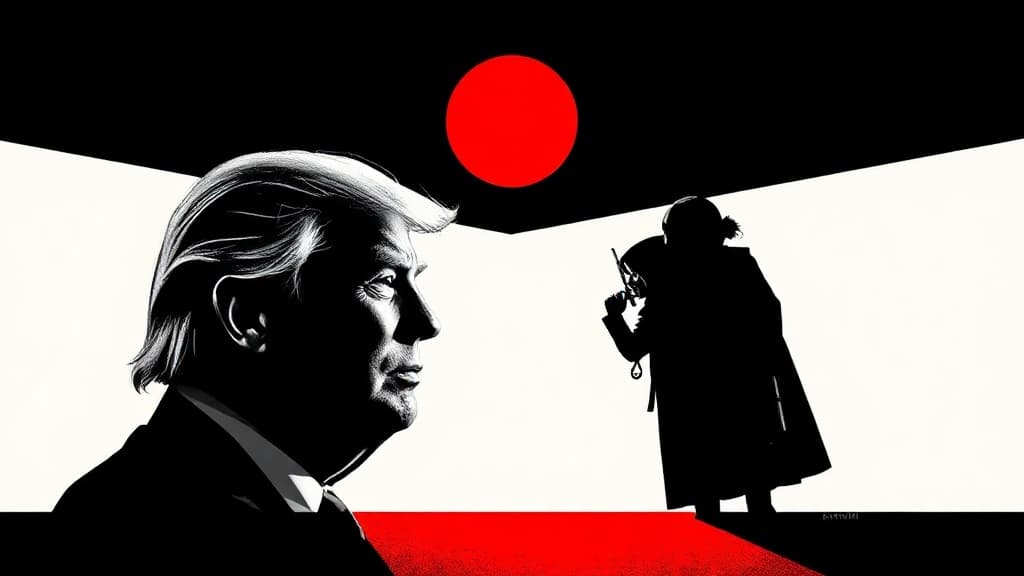
Trump told Italian broadcaster La7 that Prime Minister Giorgia Meloni "begged" him for a photo at the G7 summit. Meloni fired back that his claims were "totally invented" and that "neither I nor Italy ever beg." Italy's foreign minister canceled a planned trip to Washington. The press lost its mind. And not a single working American's life changed one bit.
Here's what actually matters: the substantive policy rift between the U.S. and Italy over the Iran war, and the fact that these globalist summits produce nothing for the people who fund them.
The spat itself is thin gruel. CBS News and the New York Post both note that La7 only released an Italian-dubbed version of Trump's remarks — no original audio. We literally cannot verify what Trump said in his own words. The Guardian, meanwhile, framed the story as Trump "wrecking historic relations" and making America "unpopular across the entire European continent," quoting an Italian undersecretary — a framing that serves European diplomatic interests, not American readers.
Meloni responded on Instagram: "I don't know why the president of the United States behaves this way with his own allies. I can only say that it's a pity he doesn't show the same determination with enemies of the West." Italy's Foreign Minister Antonio Tajani announced he was canceling a visit to the U.S., calling Trump's words offensive to "all of Italy." Defense Minister Guido Crosetto, as reported by the New York Post, called it a "lapse in style" that hurt both nations.
That's the drama. Here's the substance the press is burying.
Meloni and Trump were once close — she was the only European leader at his inauguration, as CBS News reported. The real fracture came in April, when Italy refused to support the U.S.-Israeli war in Iran and Trump attacked Pope Leo XIV for his anti-war stance. Meloni called Trump's remarks about the pope "unacceptable." Trump responded that he was "shocked at her" and thought she "had courage, but I was wrong," according to CBS News. He then threatened to withdraw U.S. forces from Italy, saying the country "has not been of any help to us" in the Iran war.
That's an actual policy dispute with real consequences: Should American forces stay in Italy? Does the Iran war serve U.S. interests? Does Italy's refusal to back it matter? Those questions affect American service members and taxpayers. The photo-op gossip doesn't.
And then there's the G7 itself — a luxury summit at Evian-les-Bains on Lake Geneva where leaders posed for pictures, held "deep conversations" on the sidelines, and Meloni declared a "very positive climate" and "no friction." What did they deliver for the people who pay for it? The press doesn't ask. It just covers the catfight.
The Italian government is now making a diplomatic show of canceling a visit. Fair enough — nations have pride. But the question for Americans isn't whether Meloni felt insulted. It's whether these summits, these alliances, and this war are worth what we're paying for them.
The real rift isn't over a photo. It's over a war Italy won't support and forces Trump says he might pull. That's the story. The rest is theater.