The New York Times once dismissed an American inventor's claim that rockets could reach the moon as ignorant nonsense — then waited 49 years to correct the record, one day after Apollo 11 launched. Elon Musk just reminded everyone.
Musk responded to a post showing a statue of rocket pioneer Robert Goddard in Roswell, New Mexico, with a simple assessment: "He was ahead of his time." The comment cuts straight to a pattern Americans know well — institutional media mocking builders, then memory-holing their own arrogance once the builders prove them wrong.
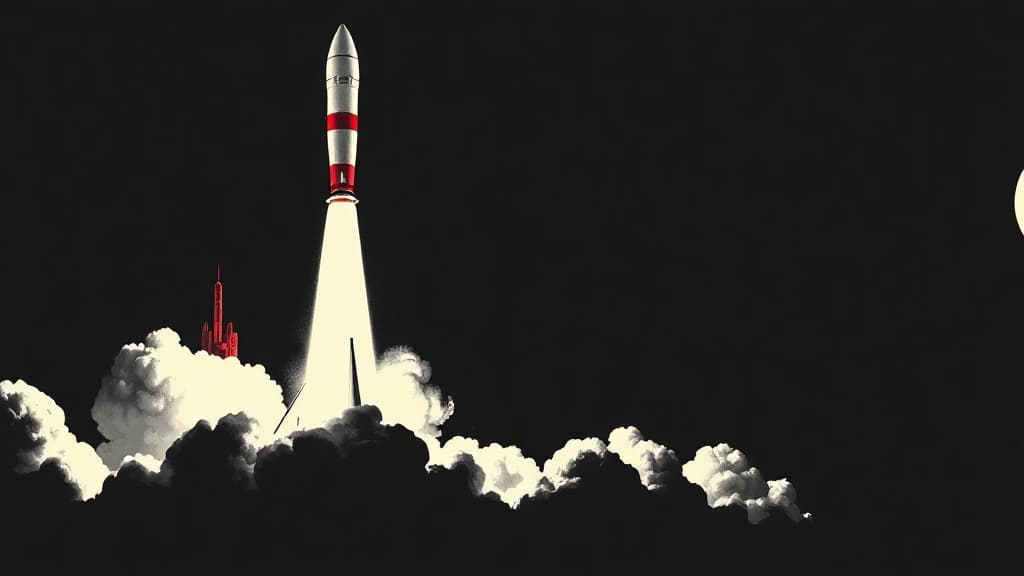
Goddard launched the world's first successful liquid-fueled rocket on March 16, 1926, from his relative's farm in Auburn, Massachusetts. The 10-foot vehicle, powered by gasoline and liquid oxygen, flew for 2.5 seconds, climbed 41 feet, and landed 184 feet away in a cabbage patch. NASA compares that flight's significance to the Wright brothers' first airplane. His wider work produced foundational patents for liquid propulsion, multistage rockets, fuel pumps, and gyroscopic guidance systems — technology that became standard in every rocket that followed.
But in 1920, The New York Times editorial board mocked Goddard's suggestion that rockets could function in a vacuum, writing that he lacked the "knowledge ladled out daily in high schools." The paper published a correction in July 1969 — the day after Apollo 11 launched toward the moon. Goddard had died in 1945. He never got to read the apology.
The episode fits a familiar template. The same institutional press that dismissed Goddard now routinely frames Musk and SpaceX as overhyped or reckless. The financial press, for its part, has spent weeks cataloging Musk's paper losses after SpaceX's post-IPO slide — his wealth falling from a peak near $1.33 trillion in mid-June to roughly $684 billion, with the stock dropping 46% from its high, according to reporting by TNW. Short sellers have piled in, with bets against the stock jumping to roughly 219 million shares.
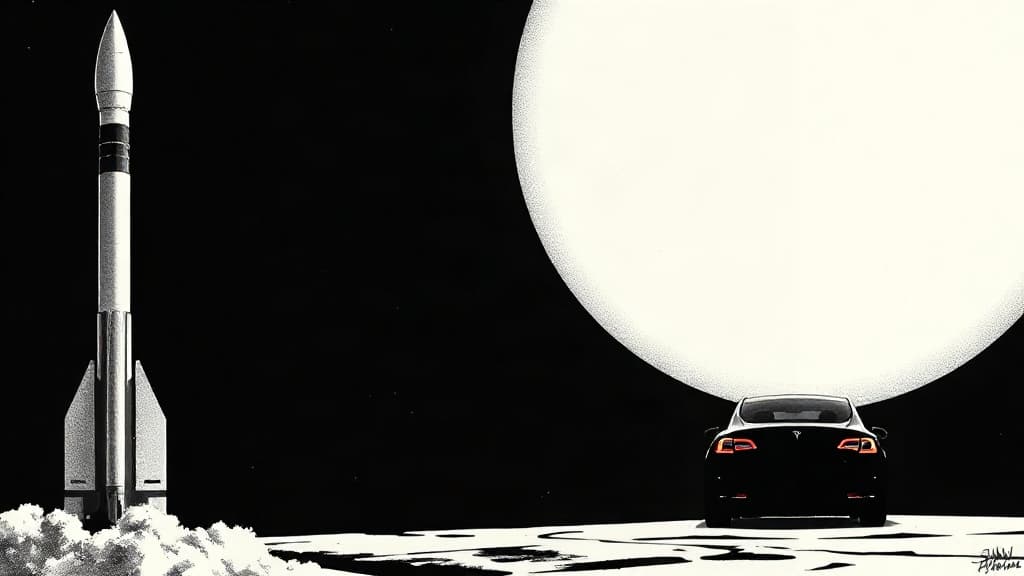
None of that changes the hardware on the pad. Starship's latest test deployed 20 Starlink satellites and completed the vehicle's best reentry yet. SpaceX aims to recover and relaunch both stages — extending the reusable model that already made Falcon 9 the workhorse of American launch. Musk has told investors the company is on track for $1 trillion in revenue by 2030.
Goddard kept working through years of ridicule, funded by Smithsonian and Guggenheim grants, eventually moving his lab to Roswell in 1930. National Park Service records show he later launched a gyroscope-equipped rocket to 4,800 feet and secured dozens of patents. The establishment press didn't build any of it. They just showed up to mock — and then to quietly correct the record when the results became undeniable.
A century after Goddard's rocket cleared that cabbage patch, the only question left is who the press is dismissing today that history will vindicate tomorrow.