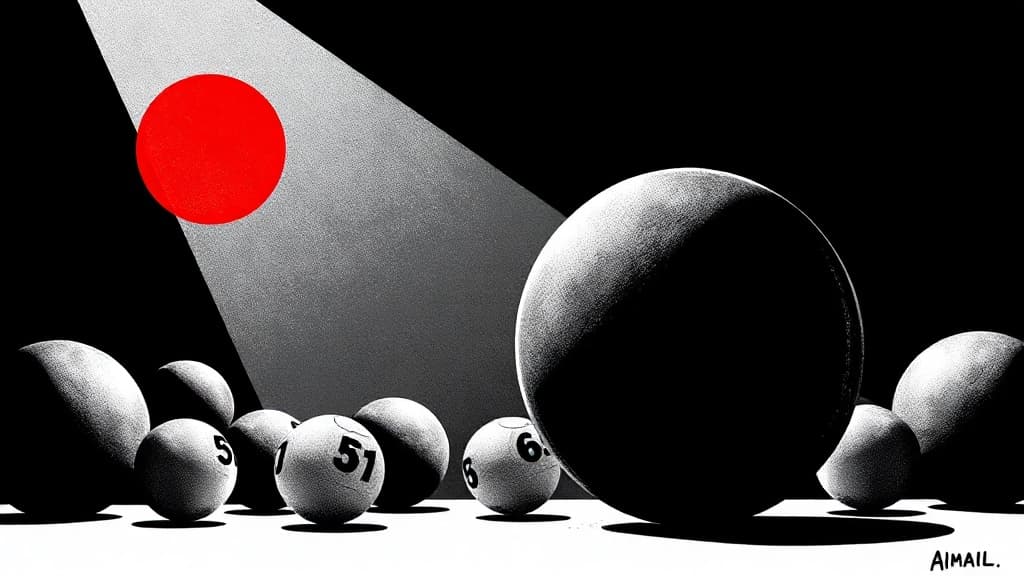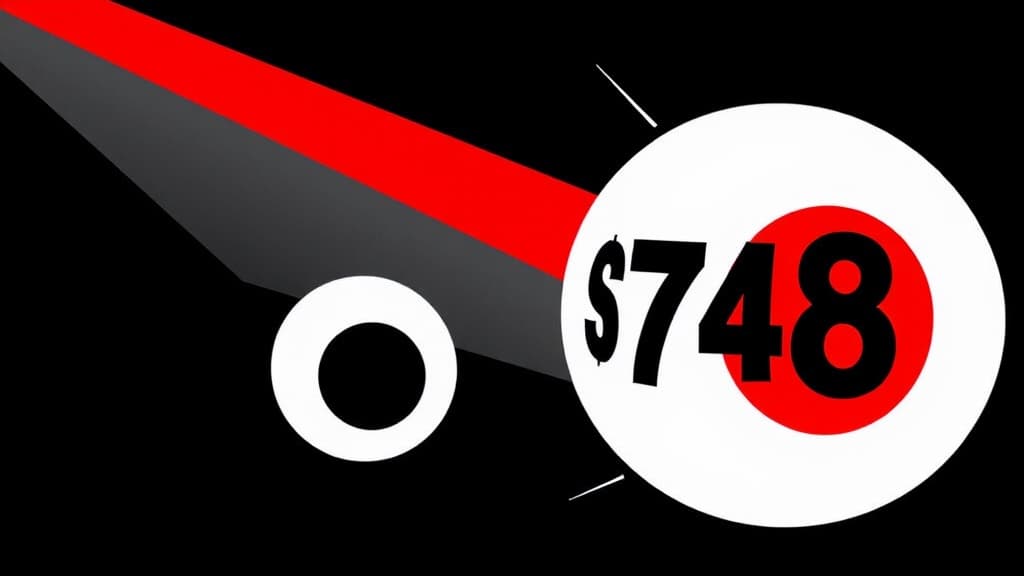
The Powerball jackpot has ballooned to $748 million after nobody hit all six numbers Saturday night, and your government couldn't be happier—because the house always wins, and the house is the state.
This is a regressive tax plain and simple, dressed up in prime-time drawings and YouTube streams. The same government that will throw a book at you for running a sports book out of your garage is running the largest gambling operation in North America across 45 states, Washington D.C., Puerto Rico, and the U.S. Virgin Islands. The state doesn't have a moral objection to gambling. It has a moral objection to gambling it doesn't control.
Consider the terms. The advertised jackpot is $748 million, but the cash option—the actual money—is just $325.1 million, according to the Maryland Lottery. That's less than half. Then the tax man takes his bite again on the back end, after the state already skimmed its cut upfront. Forbes flagged the gap between the headline number and what a winner actually takes home, but the deeper scandal is who's buying the tickets that fund this racket.
Study after study shows lottery players are disproportionately low-income and minority. The state is preying on desperation, selling a fantasy to people who need real economic opportunity—not a 1 in 292.2 million long shot. Those odds, per the Multi-State Lottery Association, are worse than being struck by lightning twice. But you won't hear the treasury department lecture Americans about financial responsibility the way it does when it comes to private risk.
Saturday's drawing is a case study in the grind. No one won the grand prize. Six players nationwide walked away with seven-figure consolation prizes—three in California, one in Maryland, one in Texas, and a Virginia player who paid an extra dollar for the Power Play option to double a $1 million prize to $2 million. In Maryland alone, 30,658 players won something—mostly $4. The vast majority of players in the state, and across the country, lost every dollar they put in. A 7-Eleven in College Park sold a $1 million ticket. A Chevron in Sawtelle sold an $809,204 winner. For every one of them, there are millions who walked away with nothing.
The jackpot hasn't been hit since May 2—39 consecutive drawings. That's 39 rounds of the state vacuuming up $2 per ticket from working people who probably shouldn't be spending it, hoping for a miracle the odds guarantee they almost certainly won't see.
The real question isn't who wins Monday night. It's why the government gets to run a numbers game that would land any private citizen in federal prison, and why nobody in either party treats it as what it is: a voluntary tax on the people who can least afford to pay it.