A foreign government that takes billions from American taxpayers just told an American president to pound sand — and nobody in Washington is talking about turning off the spigot.
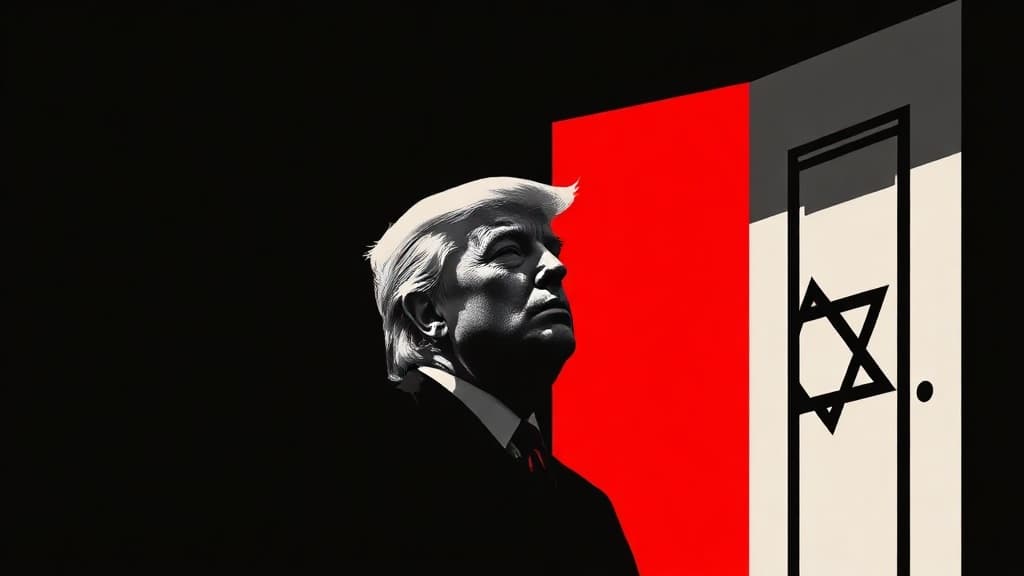
Israeli Prime Minister Benjamin Netanyahu rejected President Trump's 15-point peace plan outright on Sunday, telling his cabinet: "I want to be precise here: Israel rejects the 15-point document." The proposal, which Trump's Board of Peace negotiated with Hamas, called for the terror group to hand over heavy weapons, arms depots, production sites, and its tunnel network in exchange for a phased Israeli withdrawal from the more than half of Gaza its forces currently occupy. Netanyahu wasn't interested. Israeli troops, he said, "will not withdraw at all until Hamas is genuinely disarmed."
So much for American diplomacy.
The New York Times framed the rejection as a "rare public break" between Netanyahu and Trump, emphasizing the personal dynamics. The Daily Caller and the New York Post both noted the political context Netanyahu is operating under — an October election with his coalition trailing in polls — but buried the real question: why does a country that refuses to cooperate with U.S. peace efforts still collect $3.8 billion a year in American military aid?
Netanyahu didn't just reject the plan. He also shut down any path to Palestinian statehood: "As long as I am prime minister, no Palestinian state will be established — not in Gaza and not in the West Bank." His far-right coalition partners are pushing for more territory, not less. Finance Minister Bezalel Smotrich said Israel "cannot retreat one millimeter in the Gaza Strip," according to UPI. This is a government whose political survival depends on the war continuing — and American taxpayers are underwriting it.
Even Hamas noticed the absurdity. Politburo member Bassem Naim called on "the American guarantor to pressure Netanyahu and his government to adhere to the roadmap and not obstruct the process for internal political and electoral reasons." When a designated terror group is asking the United States to enforce its own diplomatic agreement against an aid recipient, something is broken.
The 15-point plan wasn't some State Department fantasy. Trump's Board of Peace, directed by Nickolay Mladenov, negotiated it directly with Hamas and announced it as a breakthrough. The framework built on an October cease-fire deal and called for Hamas disarmament — a core Israeli demand — verified before any Israeli pullback. Netanyahu's own office had previously expressed only "reservations," according to the Times. Then came the outright rejection.
Netanyahu told his cabinet: "We know how to stand up to those things" — "those things" being the preferences of the American government bankrolling his military. He added that Israel "can and will stand our ground even against our best friends when necessary."
Fair enough. Allies have divergent interests. But the aid flows both ways, or at least it should. The bipartisan consensus in Washington treats military aid to Israel as untouchable — no conditions, no leverage, no consequences for blowing off a presidential peace initiative. Republican hawks and Democratic leadership alike refuse to connect the money to the behavior. That's the bipartisan failure.
An American president put a deal on the table. The recipient of billions in annual American aid rejected it. The question isn't whether Netanyahu has the right to say no. The question is why Americans are still paying for the privilege of being ignored.