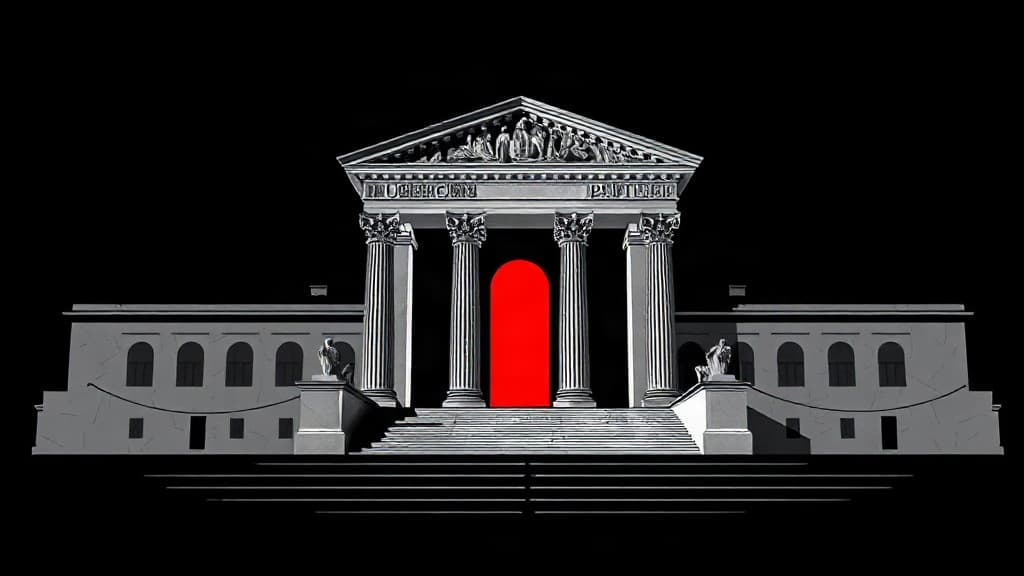
The Supreme Court just upheld a system where ballots can trickle in weeks after Election Day, and the establishment press is cheering it as a victory for democracy. It's not. It's a victory for a system that makes it impossible for ordinary Americans to verify who's casting ballots — and that's the real obstacle to voting rights.
The Lewiston Morning Tribune, reprinting a Seattle Times editorial, framed the Court's June 29 decision as protecting voting access from Republican efforts to "make voting more difficult for some people." That's the approved language: any measure that tightens ballot integrity is an "obstacle," full stop. But the editorial never once addresses the obvious question — difficult for whom, exactly? Citizens with a right to vote, or anyone who drops a ballot in the mail?
Here are the facts. The Supreme Court ruled 5-4 that grace periods for mail-in ballots — five days in Mississippi, twenty days in Washington state — don't violate what the Constitution means by "Election Day." Chief Justice Roberts and Justice Barrett joined the Court's three liberals. Washington Attorney General Nick Brown called it "a major win for voters and a firm rebuke of Donald Trump's strategy to take control of states' voting systems." King County Elections Director Julie Wise urged voters to use drop boxes and vote early.
Notice what's missing from the celebration: any acknowledgment that a 20-day grace period means counting ballots nearly three weeks after the polls close. Notice the framing — Trump's "strategy to take control" versus states simply running their own elections. The editorial describes Republican election integrity efforts as "desperate assaults on balloting in certain counties." Not safeguards. Not verification. Assaults.
This is the same linguistic trick the press uses every time. Voter ID? Obstacle. Clean voter rolls? Obstacle. Asking that ballots arrive by the day the law calls Election Day? Obstacle. The word does a lot of work — it implies that the only legitimate position is to make voting as frictionless as possible, with no questions asked.
But here's what the word "obstacle" deliberately obscures: every citizen's vote is diluted when the system can't verify who's casting ballots. A grace period that stretches to three weeks after Election Day doesn't expand access for citizens — it expands the window for error, for fraud, and for the kind of chaos that makes people lose faith in the result. And when people lose faith, they stop voting. That's the real obstacle.
Election security IS voting access — for citizens. The founders didn't design a republic where ballots drift in for weeks while partisans fight over which ones count. They expected elections to be held on Election Day, by citizens who could be identified and verified. The press can call that an obstacle all it wants. Most Americans call it common sense.
The question isn't whether voting should be easy. It's whether it should be trustworthy — and right now, too many people in power prefer a system you can't audit over one you can.