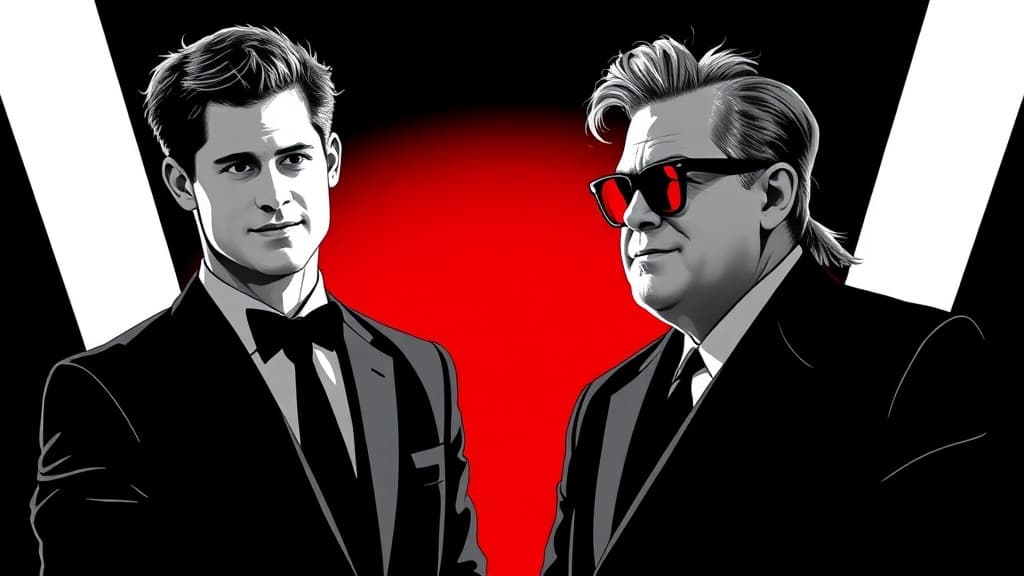
Prince Harry and Elton John just lost their years-long privacy lawsuit against the publisher of the Daily Mail — and the real winner is anyone who believes the press shouldn't be bankrupted by wealthy elites who don't like what gets printed about them.
A British High Court judge dismissed every claim Tuesday from Harry, John, and five other high-profile figures who accused Associated Newspapers Limited of unlawfully gathering information for stories published between 1993 and 2011. Judge Matthew Nicklin ruled that the claimants expressed suspicion but failed to prove any of the information was illegally obtained. "The court rejected the argument that, simply because information was private, and because Associated could not positively explain how it had been sourced, the relevant article must have been unlawfully sourced," Nicklin wrote in his summary.
This case was never really about privacy. It was about powerful people using the courts as a weapon against journalism they found inconvenient. Harry, John, and their co-claimants — including actresses Elizabeth Hurley and Sadie Frost, campaigner Doreen Lawrence, and former politician Simon Hughes — wanted the court to assume that because stories were private, they must have been stolen. The judge refused to make that leap. The burden of proof still matters, even when the people bringing the suit are rich and famous.
The allegations were serious: voicemail interception, phone tapping, private investigators, and "blagging" of sensitive records through deception. ANL denied all of it, calling the claims "preposterous" and insisting their journalists used legitimate sources. The judge accepted the honesty of the journalists' testimony on how they sourced their stories.
Nicklin also noted that the sheer age of the allegations worked against the claimants. In a 463-page ruling, he wrote that "memories have faded — in some cases entirely — and many documents are no longer available." Suspicion, even understandable suspicion built over decades, is not proof.
Harry had poured himself into this case. During his testimony at the 10-week trial that began in January, he described the press coverage as a "recurring traumatic experience" and said it made him "paranoid beyond belief," according to Page Six. He pushed back on the idea that his social circles were "leaky" and insisted that quoted sources attributed to personal information about him and former girlfriend Chelsy Davy were strangers, not friends. "These three people have never shared anything with anybody," he said.
ANL welcomed the ruling as a full exoneration. "This is a magnificent vindication of the Daily Mail's journalism," the publisher said in a statement, adding that "every single article was legitimately sourced." They also announced they will seek to recover the legal costs of defending against what they called "egregious litigation."
CNN framed the ruling as a loss for Harry specifically, noting it was his sole remaining unresolved case after years of legal battles with British tabloids — some of which he won. The New York Times called it a "stinging blow." Yahoo buried the legal reasoning beneath paragraphs about Harry's family travel drama and his downgraded taxpayer-funded security. The Daily Caller kept it straight: Harry lost, suspicion isn't proof.
Harry has not publicly addressed the defeat. He was photographed waving to crowds at a charity event in London on the same day the judgment came down.
The question now is whether this ruling slows the broader campaign by public figures to litigate the press into submission — or whether the next wealthy plaintiff simply tries a different angle.