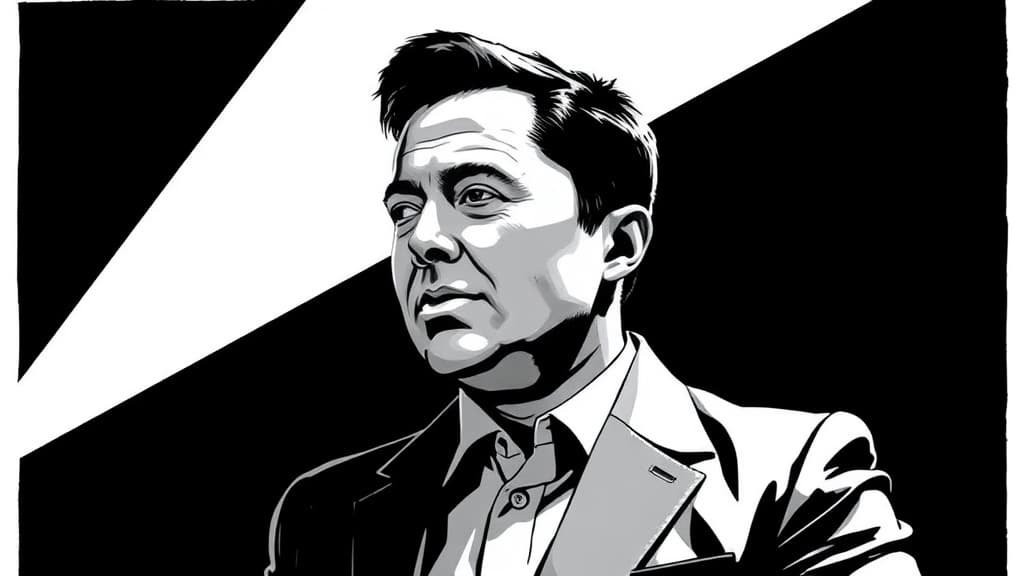
Elon Musk left a CNBC reporter dangling on live air Friday after postponing a scheduled interview at the last minute — and the media's reaction to being ghosted tells you exactly who thinks they own your attention.
Musk was set to speak with CNBC's Julia Boorstin at noon Eastern to discuss Tesla, SpaceX's record-breaking IPO, and the launch of Grok 4.5. Roughly ten minutes past the hour, Boorstin had to announce on-air: "We just got word that he has to postpone." No reschedule was offered. According to the New York Post, Boorstin told viewers, "We hope he will give us a new time for this interview. But we've just heard that he is postponing."
Here's why it matters: Musk just became the world's first trillionaire after SpaceX's IPO raised $85.7 billion, with underwriters exercising the overallotment. The stock debuted at $150 on June 12 and closed at $160.42 ahead of the interview. More than a dozen brokers — Morgan Stanley, JPMorgan, Goldman Sachs among them — issued enthusiastic "buy" ratings projecting a 47% average upside, according to Bloomberg data cited by the Post. The man has leverage, and he knows it.
The Post's headline blared that Musk "ditches MSNBC" — getting the network wrong in both the headline and URL, before correctly identifying CNBC in the body copy. The Verge, meanwhile, stuck to the basic facts without the editorial flash. Both outlets agree on the core event: Musk postponed, Boorstin was left waiting, and no makeup date has been confirmed.
The broader context is the AI arms race. SpaceXAI — the entity created after SpaceX merged with xAI earlier this year — dropped Grok 4.5 on Wednesday. OpenAI rolled out its GPT-5.6 series the next day. Meta announced Muse Spark 1.1 the same day. And the Trump administration lifted export controls on Anthropic's Claude models, letting Dario Amodei's company redeploy overseas. The competition is ferocious, and Musk is at the center of it.
But the real story isn't the IPO or the AI wars. It's the expectation. CNBC, like the rest of the corporate press apparatus, operates on the assumption that access is owed. When Musk doesn't show, the story becomes the snub — not whether the interview would have been a fair exchange or another setup from a network that has already decided what it thinks of him.
The Post noted that SpaceX did not immediately respond to a request for comment. Musk himself hasn't publicly explained the postponement.
The question isn't whether Musk was rude to a reporter. The question is why any American with real work to do should sit down with a press corps that has already written the ending before the interview begins.