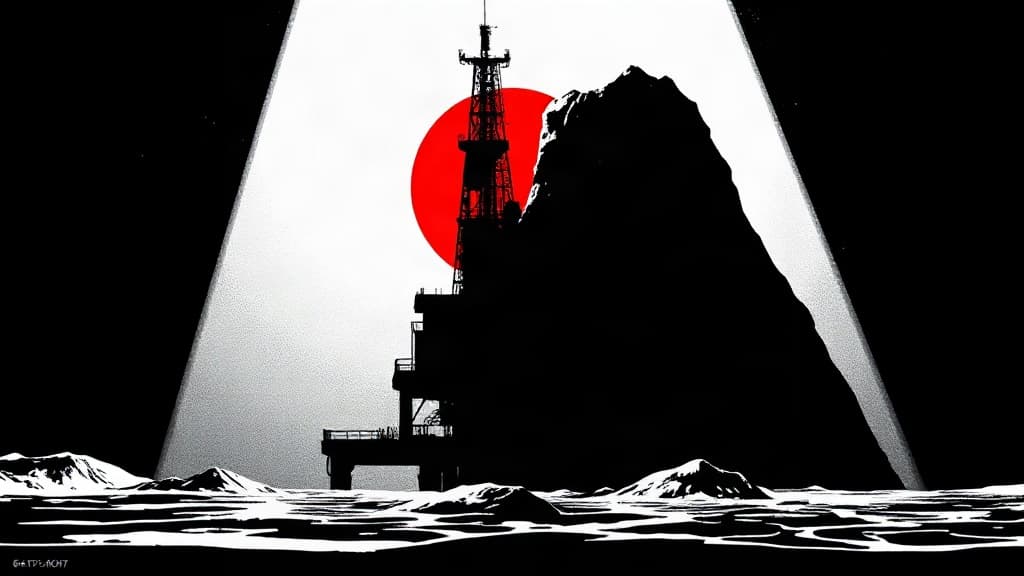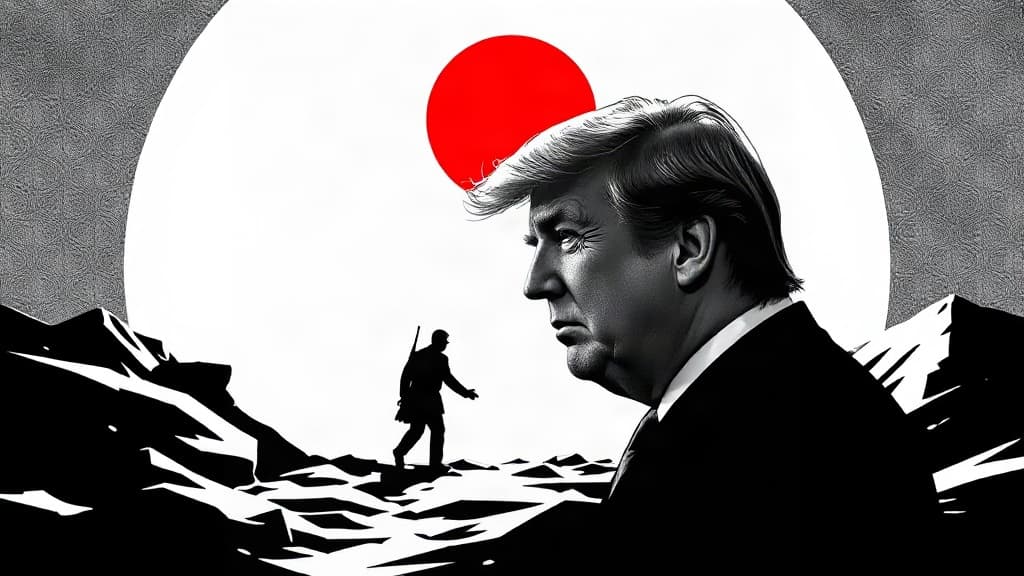
President Trump declared that "massive" oil, gas, and mineral exploration is about to begin in Greenland — an America-first bid to break U.S. dependence on foreign adversaries for critical resources — even as Greenland's own government says the claims are heavily exaggerated and a Trump-tied Texas drilling firm already cut corners on local approvals.
The stakes are straightforward: while Beijing's state buyers snapped up 18 to 23 cargoes of American soybeans this week — roughly 1.2 to 1.5 million metric tons moving China toward a 25 million-ton purchase target — the rare earth minerals flowing the other direction remain under Chinese control. Greenland's deposits could break that leverage, if they can actually be developed.
Trump said Oct. 14 that exploration in "our new and beautiful Greenland" is imminent, claiming experts believe the island's easily available oil exceeds almost any land on earth. He framed the territory as a frontline shield, saying any future attack would have to cross Greenland, giving U.S. defenses superior positioning to intercept drones and missiles. Brent crude is trading above $100 a barrel. Every barrel locked under American-aligned territory is one we don't buy from adversaries.
But Greenland's government isn't singing from the same hymnal. A top Greenland mining official said Trump's assertions are "heavily exaggerated" and such activity is still years away, according to Natural News. The gap between the announcement and the reality on the ground is where the story lives.
The exploration push follows an Arctic Security Agreement Trump signed with Denmark and Greenland on Sept. 22 at the United Nations General Assembly. The White House described the pact as giving the United States lasting control over security interests, permanent basing rights, and the power to bar any adversary from establishing a military presence or sensitive investment without American approval. The full text was not released. A State Department official told NBC News the agreement would bind Greenland even if it secedes from Denmark.
Follow the money: days after the security agreement was signed, North Carolina-based Greenland Mines applied on Sept. 21 to double its rare earth mine at Sarfartoq from 74 square miles to roughly 175 square miles. The expansion would supply magnet metals for electric vehicles, wind turbines, and defense systems. Meanwhile, Texas-based Greenland Energy, which has ties to Trump, offloaded drilling equipment in eastern Jameson Land without required local approval, according to an August Guardian report. The company falsely told residents permission had been granted. Greenland Energy claims up to $1 trillion in crude may lie beneath Jameson Land.
Trump previously said his interest in Greenland was "purely about national security" and "not for minerals." The exploration announcement contradicts that security-only rationale. Natural News framed the contradiction directly; the security agreement itself was designed to guarantee American access regardless of what justification is offered.
On the agriculture side, Successful Farming reported that Chinese state buyers booked 10 to 13 Panamax cargoes of U.S. soybeans overnight — the second large-scale batch since Trump met Xi Jinping in September. The USDA confirmed most of the earlier purchases. Combined weekly purchases bring China to roughly 15 million tons of the 25 million-ton target for the 2026/27 marketing year.
The question isn't whether Greenland holds the resources. It's who gets to extract them, on what timeline, and whether a security agreement with an unreleased text and a drilling firm that skipped local approvals can deliver on the promise of energy independence — or just delivers for the connected few.