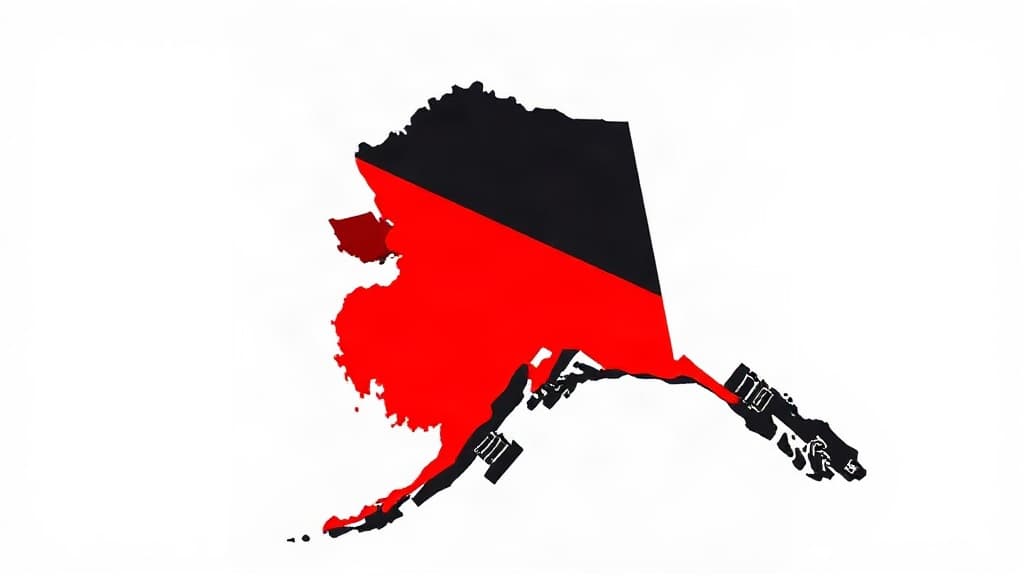
Two weeks after Election Day, the Associated Press finally called Alaska's Senate race for Democrat Mary Peltola — a full fortnight to tally votes in a state with fewer residents than Jacksonville, Florida.
The delay wasn't just about counting ballots. It was about a system — ranked-choice voting, a spoiler candidate recruited under suspicious circumstances, and a federal lawsuit to block certification — that turns the machinery of democracy into a black box. When results take weeks, accountability vanishes, and the public is left watching a process it can no longer audit in real time.
Peltola defeated two-term Republican incumbent Dan Sullivan 50.1% to 45.8%, with 99% of ballots counted, according to the AP. A second candidate named Dan Sullivan — retired teacher Dan J. Sullivan, dubbed "Decoy Dan" — received just 1.7% of the vote. A fourth candidate, Gerald Heikes, pulled 2.1%. Because Peltola cleared 50% on first-place votes, no ranked-choice tabulation was required — a detail NPR and NBC noted but the New York Post and Breitbart largely buried.
The spoiler candidacy wasn't an accident. The New York Times reported six days before Election Day that Peltola campaign aides and Democratic Senate officials launched a statewide search for someone named "Dan Sullivan" to siphon votes from the incumbent. They found Dan J. Sullivan, a self-described "moderate Republican" who told Peltola representatives he was willing to run "if it was going to help Mary," according to the Post. Peltola's former campaign manager, Elisa Rios, told the Times Peltola was "definitely aware" of the effort. Peltola denied it: "I knew nothing about any other candidate on the ballot except for me and the incumbent."
President Trump called for criminal prosecution. Alaska Gov. Mike Dunleavy ordered an investigation, calling it "an organized effort to manipulate Alaska's elections." The Justice Department filed suit to block certification if the incumbent Sullivan lost, arguing voters may have been confused by two candidates sharing a name. A federal judge rejected the request, ruling it would "clearly violate" Alaskans' right to a secret ballot. The DOJ plans to appeal, NPR reported. The department also issued at least 30 subpoenas as part of a criminal probe into a potential conspiracy to violate voters' rights, according to the Post.
Alaska's Division of Elections removed Dan J. Sullivan from the primary ballot, but the state Supreme Court ruled in June he had to be included. He finished top-four in the primary and advanced to the general.
The Guardian and NBC framed the result as part of a Democratic wave — nine flipped seats, a 56-seat majority, the largest in 16 years. They quoted Schumer vowing to "dare Donald Trump to veto" legislation. Breitbart kept it straight: two weeks, four-point margin, Sullivan hasn't conceded. The Post spotlighted Peltola's alleged use of slurs and violent outbursts — details other outlets ignored entirely.
Sullivan's campaign said Monday that Alaskans "deserve a complete and accurate count" and would have more to say by week's end.
The DOJ appeal is pending. Dunleavy's investigation is ongoing. And a state of 733,000 people just demonstrated how long a race can linger in limbo when the system is built to stretch the count — and the doubt.