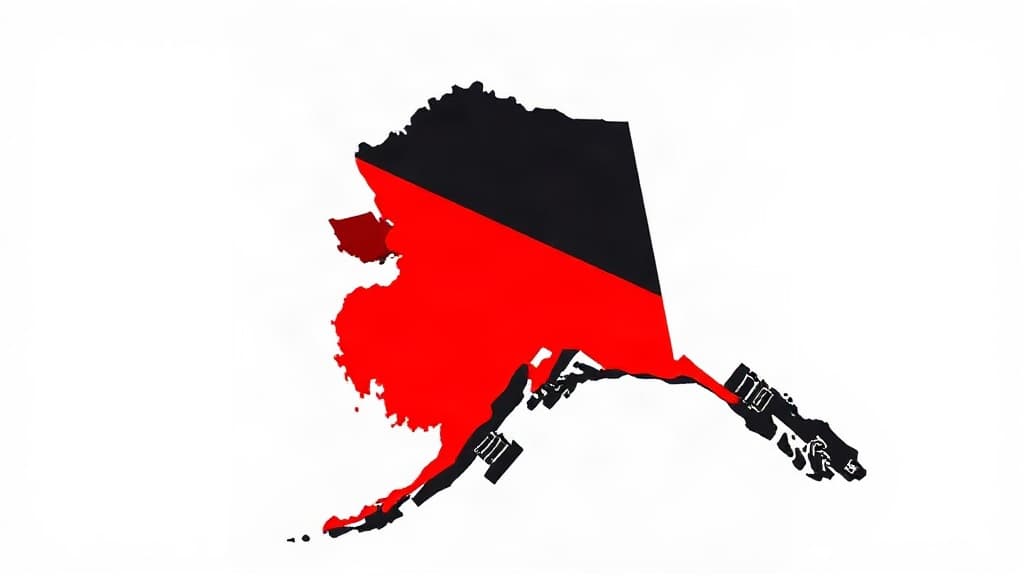
A Democrat will occupy the Alaska governor's mansion for the first time since 1998, and the election machinery that made it happen is sitting in plain sight. Former state lawmaker Jonathan Kreiss-Tomkins, 37, defeated three Republicans who split the right-of-center vote in a general election that took more than a week to call while mail ballots trickled in from remote communities. Democrats consolidated; Republicans didn't. The system worked exactly as designed.
Kreiss-Tomkins secured a majority on the first ballot, according to NBC News, so Alaska's ranked-choice tabulation never even activated. He didn't need it. The top-four primary — where candidates of all parties advance regardless of affiliation — put three Republicans on the November ballot alongside one Democrat. Former Democratic state Sen. Tom Begich finished second in the August primary but dropped out immediately to consolidate support behind Kreiss-Tomkins. No such discipline existed on the Republican side. Trump-backed businesswoman Bernadette Wilson, former Anchorage Mayor Dave Bronson, and former Attorney General Treg Taylor all stayed in. Wilson finished a distant second.
Trump had endorsed Wilson and publicly criticized the other Republicans for refusing to exit, according to the New York Post. Many Republicans saw strategic ranking as their best shot at retaining the seat — a message that conflicted directly with Trump's complaints about Alaska's voting method. The GOP could not agree on a tactic, and the vote splintered.
Then there was the endorsement wildcard. Republican Sen. Lisa Murkowski backed Kreiss-Tomkins one week before Election Day, calling him "a common-sense guy who has a known ability to be working together," according to NBC News. Three former governors — a Democrat, a Republican, and an independent — also endorsed him. The Post noted that Murkowski's father, former Republican Gov. Frank Murkowski, was among them. When a Republican senator and a former Republican governor endorse the Democrat, the party label starts to look optional.
NPR reported that the AP race call came after "over a week of counting votes, including those coming in by mail and from remote parts of the state." Alaska's geography makes mail voting a practical necessity for communities unreachable by road, but the extended count is the same dynamic that has eroded public confidence in election results nationwide. Meanwhile, voters on the same ballot rejected a measure to scrap the ranked-choice system entirely — keeping the machinery in place for future cycles.
Kreiss-Tomkins ran on affordability, full public-school funding, corporate income tax for oil and gas producers, and a moratorium on new data centers until the legislature passes regulations. He declared that Alaska had become "broken" under eight years of Republican Gov. Mike Dunleavy, citing a state ferry system he said has been left in shambles.
NPR framed the win as a repudiation of "zero-sum partisan politics." NBC framed it as "the latest gain for Democrats at the state level." The Post buried the structural story — the top-four primary, the vote-splitting, the week-long mail count — beneath talk of a national Democratic wave. What all three outlets agreed on is the bottom line: Democrats will now hold 30 governorships nationwide, up from 24.
Kreiss-Tomkins said his campaign had more than 10,000 donors. No outlet detailed how much outside money flowed into the race or from whom. That gap in reporting is itself part of the story.
The open question isn't whether the system worked as designed. It did. The question is why Republicans keep walking into the same machinery expecting a different result — and whether anyone in the party will acknowledge it out loud.