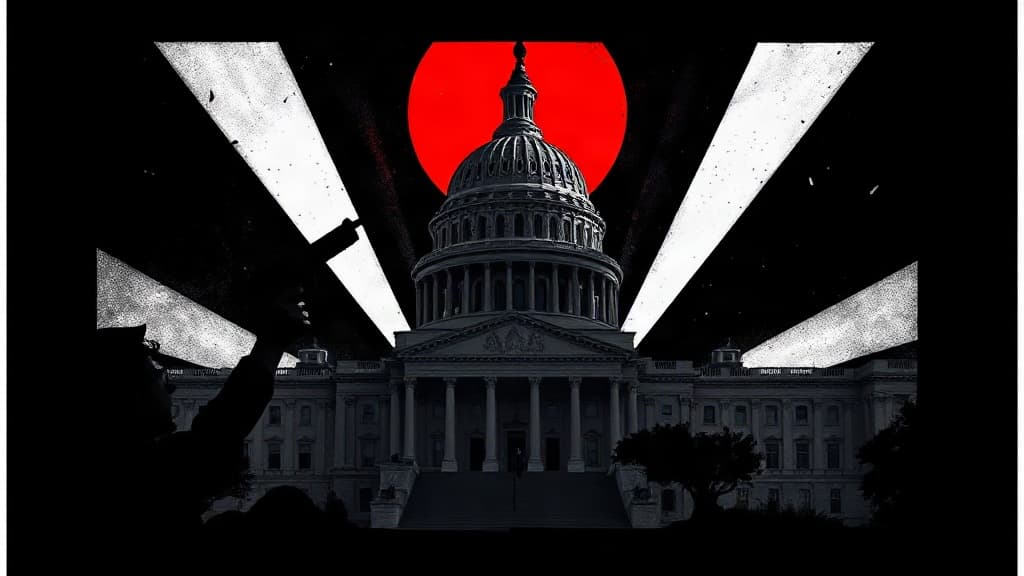
The Senate voted 86-11 to give President Trump authority to impose tariffs up to 100% on countries buying Russian energy — and the establishment press is howling about "unchecked power," but for working Americans who watched Congress ship their livelihoods overseas for decades, this is the first real weapon they've been handed to fight back.
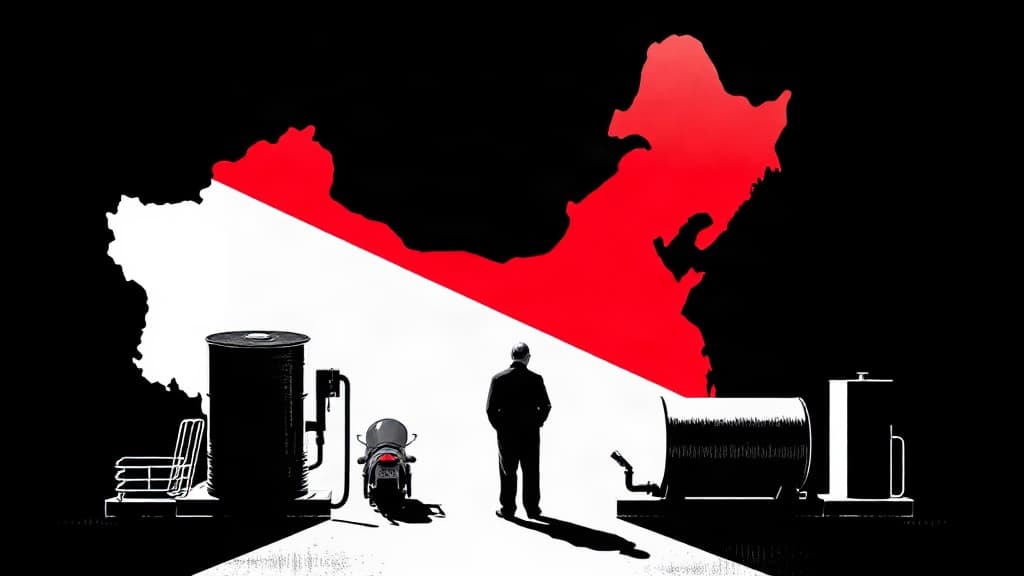
The Lindsey O. Graham Sanctioning Russia Act of 2026, expected to clear the House next month, sanctions Vladimir Putin and targets Russia's energy sector. The provision that has the globalist class sweating is the tariff authority — up to 100% on the top five importers of Russian oil and gas, potentially hitting China, India, the European Union, South Korea, and Japan. The president can issue waivers when he deems it in "the national interest of the United States."
Both outlets covering this — Europe Says and NewsBreak — frame the tariff power as "unchecked authority," echoing Cato Institute scholars Clark Packard and Scott Lincicome, who warned in a Washington Post op-ed that Trump could set different rates for different countries and use the leverage in disputes unrelated to Ukraine. "That unchecked authority gives Trump leverage in disputes unrelated to Ukraine," they wrote. That's not a bug. That's a feature. Every country the U.S. negotiates with uses leverage. For once, the American president would have some too.
Sen. Rand Paul, one of only 11 senators who voted no, warned on the Senate floor: "It will not bring peace to Ukraine, but rather will deliberately make American families poorer by increasing tariffs, which are nothing but a tax on imported goods." Paul's concern about costs hitting American families is honest. What Paul doesn't grapple with is the cost of decades of one-sided trade that already made those families poorer.
Sen. Ron Wyden joined Paul in trying to strip the tariff authority and lost. Sen. Raphael Warnock, D-Ga., balked but folded after getting a written promise from U.S. Trade Representative Jamieson Greer that tariffs would be lifted once countries stop buying Russian energy or facilitating sanctions evasion. "We should not have to choose between putting a check on Putin's aggression and putting a check on this president's tariffs regime," Warnock said, threatening court action if Trump "oversteps his power."
The Supreme Court in February blocked Trump's attempt to use the International Emergency Economic Powers Act for his "Liberation Day" tariffs. He then pivoted to Sections 122 and 301 of the Trade Act of 1974 for new levies — those face lawsuits too. The Russia sanctions bill would give him firmer legal ground because Congress is explicitly granting the authority.
Cato's scholars complain the bill doesn't specify what data determines the top five importers, doesn't say how long tariffs last, and leaves exemption decisions to USTR. The tariff authority expires in five years. Their real complaint is that the president has discretion at all.
The 86-11 bipartisan supermajority is the kind of vote that usually means the public gets sold out. This time, the sell-out is the globalist trade consensus itself — and that's exactly why the usual suspects are screaming.
The real "unchecked power" wasn't Trump's tariff pen. It was Congress surrendering American economic sovereignty to the WTO and foreign competitors for forty years while factories closed and towns died. Now the executive has a tool, and Washington can't stand it.