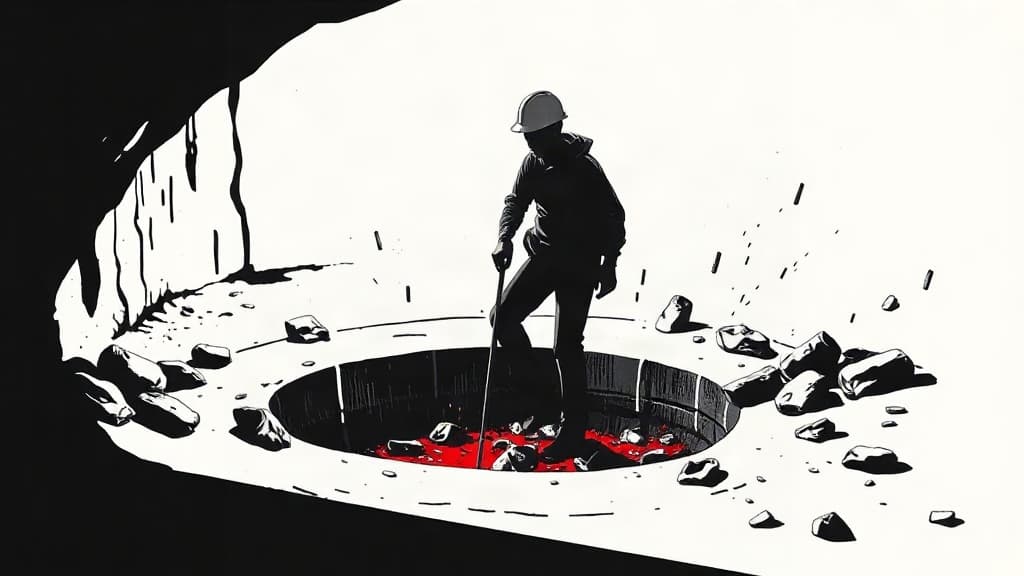
A worker nearly died Tuesday after falling into a manhole at a Massachusetts pumping station — the kind of everyday infrastructure failure that doesn't make the evening news but could have ended a life.
At about 9:59 a.m., Holbrook 911 operators received a report of an injured worker inside a manhole at the Brookville Pumping Station at 800 South Franklin St., according to a Holbrook Fire Department statement. Police and fire units arrived and found the worker in an underground confined space. A fire crew trained in search and rescue used rope equipment to pull the man out. He was taken to a local hospital. Authorities released no further details about his identity or condition.
MassLive reported the bare facts — a man fell, he was rescued, he went to the hospital. That's it. No follow-up on the worker's condition. No questions about why a man nearly died in a pumping station manhole in the first place. The Winston-Salem Journal, the other outlet assigned to this story, ran a piece on an entirely different incident — a house fire rescue in North Carolina — with no substantive reporting text beyond subscription prompts and boilerplate. Two outlets, two states, and neither asked the question that matters: why are the systems Americans depend on still this dangerous?
Brookville Pumping Station is the kind of unglamorous infrastructure that keeps water moving and towns functioning. When it fails — or when the people maintaining it are put at risk because of degraded conditions — there are no ribbon-cuttings, no press conferences. Just a worker in a hole and a rescue crew doing its job.
Meanwhile, Washington has sent over $175 billion to Ukraine since 2022, with more requests lining up. Congress approved $1.2 trillion in an infrastructure bill in 2021, but much of that money has been slow-walked or diverted to green-energy priorities and administrative overhead rather than the concrete-and-steel repairs that keep workers from falling into manholes. The bipartisan infrastructure deal was supposed to fix this. Two years later, the manholes are still dangerous.
Every dollar shipped abroad or funneled into pet projects is a dollar not spent on the pumping stations, bridges, and water systems that Americans use every day. The worker pulled from that Holbrook manhole Tuesday is lucky to be alive. The next one might not be.
How many near-deaths does it take before the spending priorities change?