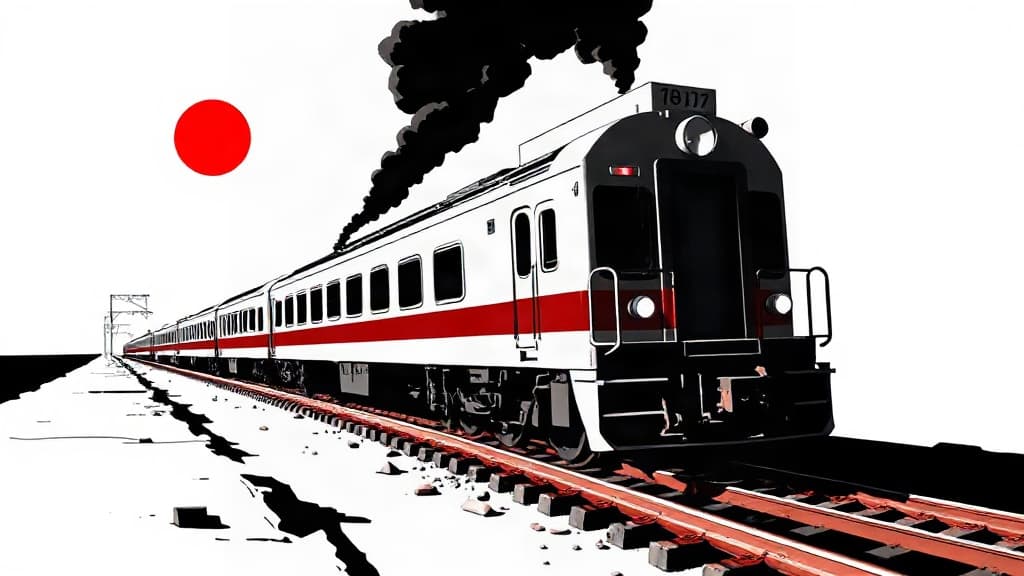
Seven people are dead and more than 100 injured after a passenger train slammed into the rear of a stationary train south of Cairo on Sunday — another symptom of the infrastructure rot that spreads when governments prioritize everything except maintaining what they already have.
The crash in al-Ayyat district, Giza province, is the kind of disaster that becomes routine when leaders spend on prestige and foreign commitments while the basic systems ordinary people rely on are left to decay. For American taxpayers, the question is direct: Washington sends roughly $1.3 billion a year in military aid to Cairo — and that's money competing with every dollar this country refuses to spend on its own crumbling rails and bridges.
According to Egypt's Public Prosecution Office, a train traveling from Giza to Fayoum crashed into the back of a Cairo-to-Aswan service that had stopped on the same track. Both trains were heading in the same direction. The driver of the Giza-Fayoum train was among the dead. Egypt's Health Ministry reported 112 injured, with casualties spread across three hospitals. Over 70 ambulances were dispatched to the scene.
Local resident Ayman Gamal told reporters that people from the surrounding area rushed to pull survivors from the wreckage and called for ambulances. He said some passengers were trapped inside a carriage of the stationary train and were dead when pulled out.
President Abdel Fattah el-Sisi posted on social media that he ordered a prompt investigation. The Egyptian Railway Authority dispatched cranes and emergency teams to clear the wreckage and restore service. El-Sisi has announced modernization initiatives before. The results speak for themselves.
Train crashes are common in Egypt. The railway system, one of the oldest in Africa and the Middle East, has a documented history of mismanagement and poor maintenance, as Breitbart, the Guardian, and the Los Angeles Times all noted. Last September, two freight trains collided in the same al-Ayyat district. In 2017, a collision near Alexandria killed more than 40. Al Jazeera reported that Egypt previously sacked its rail authority chief after a string of deadly accidents. The BBC's Cairo reporter, Wael Hussein, noted that both trains involved in Sunday's crash are used largely by lower-income passengers — the people with the least political power and the most at stake when the state fails.
The 2002 fire on a Cairo-to-southern-Egypt train killed more than 300 people according to the Guardian and Breitbart; Al Jazeera put the figure at over 370. Al-Ayyat district has been the site of multiple deadly rail disasters across two decades. Promises of reform follow each one. Then the cycle repeats.
The pattern is not unique to Egypt. The BBC noted that while billions have been poured into roads and high-speed rail projects, much of the country's ageing railway infrastructure remains in disrepair — a familiar story of governments chasing ribbon-cutting ceremonies while neglecting the unglamorous work of keeping existing systems safe.
Every dollar the United States sends abroad is a dollar not spent at home. Egypt's rail system is Cairo's responsibility. American infrastructure is Washington's. The bipartisan consensus keeps the foreign aid flowing while American bridges get a C-minus from the American Society of Civil Engineers. The question isn't whether Egypt's railways need fixing. It's who pays — and why Americans are expected to fund other governments before their own tracks are safe.