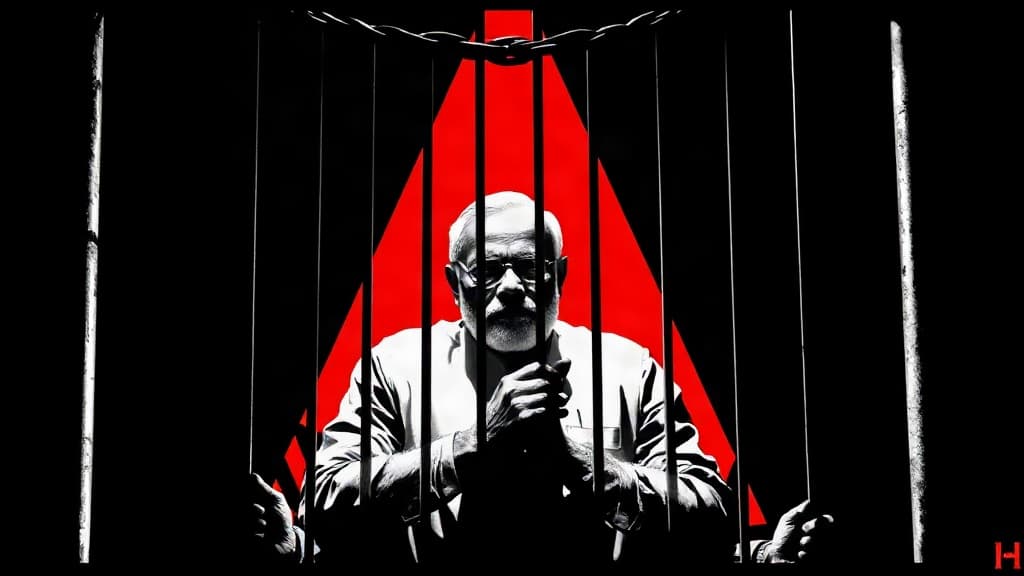
Indian police detained the founder of a surging youth protest movement and hundreds of demonstrators in a sweeping crackdown on New Delhi Saturday — and American tax dollars still flow to the government doing the locking up.
The Cockroach Janta Party, a Gen-Z movement that began as an internet joke in May and already forced one cabinet resignation, had planned a mass protest targeting Election Commission chief Gyanesh Kumar over a voter list revision that opponents say has stripped millions of eligible citizens from the rolls. Instead, authorities turned Delhi into a fortress. Police boarded a plane at the airport to seize CJP founder Abhijeet Dipke and two other leaders before they even reached the protest site, according to video the group shared on X. Dipke shouted "go ahead and arrest us! Victory to Mother India! Long live the revolution!" as officers hauled him away.
Mobile internet was blocked. Checkpoints stopped vehicles searching for demonstrators. Anti-riot vehicles with tear gas launchers lined key routes. Loudspeakers warned that gatherings of five or more people were banned. Journalists faced restrictions. By midday, only a handful of protesters remained at the site, and those who chanted slogans were promptly detained, according to KRDO.
NPR, which reported thousands detained, framed the crackdown as underscoring "the authorities' determination to disrupt a fast-growing protest campaign" — bureaucratic language that softens what happened: a government muzzling its own citizens before they could open their mouths. KRDO noted the security presence but gave more space to the movement's colorful origins — DJ parties at protest sites, viral reels mocking Prime Minister Narendra Modi, and so much free food that organizers begged supporters to stop sending it. Neither outlet pressed the obvious question for American readers: why does Washington send money to a government that boards planes to arrest dissenters?
The ruling BJP's defense was telling. Party president Nitin Nabin accused the movement of acting "at the behest of foreign forces" — the autocrat's classic playbook, branding domestic dissent as foreign subversion. Opposition lawmaker John Brittas put it plainly: "Is there a democracy in this country? A total siege over the city. Citizens are being driven out."
College student Tanya Negi, who traveled from Mumbai to protest, told NPR: "We are a democracy, yet peaceful protests are being crushed by force. Shouldn't we fight for our rights? Why is Modi afraid of India's young people?"
The CJP's name comes from India's chief justice, who allegedly called unemployed youth "cockroaches" and "parasites" in May — then claimed he was misquoted. Boston University graduate Dipke embraced the insult, highlighting the insect's stubbornness. In July, the movement channeled fury over exam paper leaks and lack of opportunity into sustained protests that forced Education Minister Dharmendra Pradhan to resign — a rare win against Modi's government that established opposition parties couldn't land.
Now the target is bigger: an election commissioner overseeing a voter roll revision that could shape the world's largest democracy. The government's response — mass detentions, sealed streets, silenced internet — tells you everything about who's afraid of whom.
The question for Washington is simpler: what does it say about American priorities that we fund governments that treat their own citizens like this?