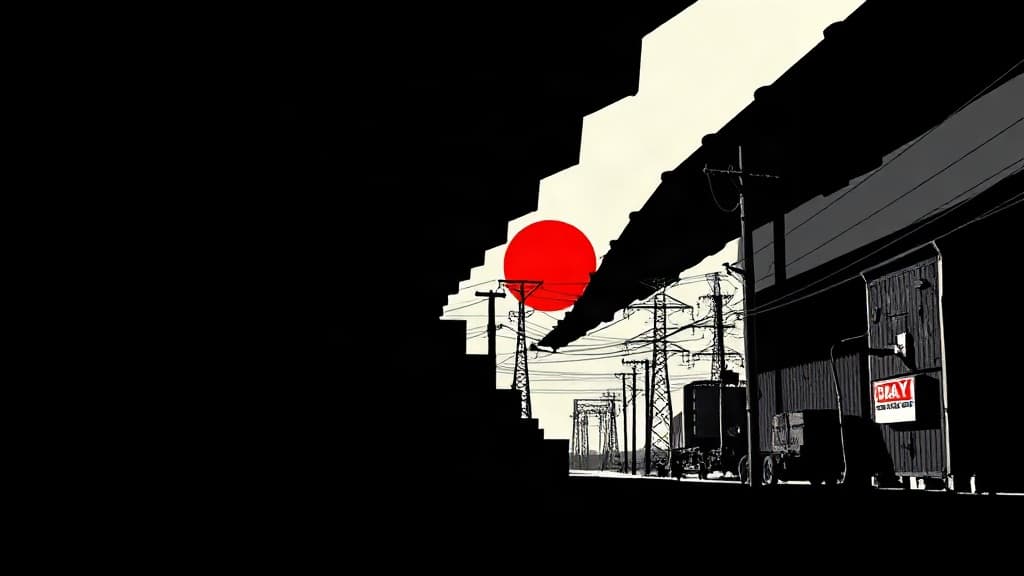
Nearly two weeks after a violent storm knocked out electricity to more than 374,000 customers in northwest Indiana, roughly 30,000 people in and around Gary are still sitting in the dark — a failure of basic governance that would trigger emergency action in any capital that prioritized its own citizens first.
The stakes are not abstract. Seven people are dead. A wheelchair user crawled down stairs because elevators stopped working. A man was discharged from dental surgery mid-procedure and went 48 hours without pain medication after having all his teeth pulled. Elderly residents dependent on oxygen tanks are sweating through the night. This is what it looks like when the grid fails and nobody in power cares enough to fix it fast.
The storm hit Aug. 11, bringing flooding and tornadoes across the Midwest with wind gusts hitting 99 mph, according to the National Weather Service. At its peak, more than half of Gary's residents lost power. The BBC reported that power has been restored to more than 345,000 customers since then — but that leaves tens of thousands still stranded as the outage stretches into its second week.
Gary is a town that Washington has already forgotten. Once home to the world's largest steel mill, it has been left to rust. One third of its roughly 70,000 residents live in poverty, according to U.S. Census data. When the power went out, petrol stations, supermarkets, and pharmacies went dark too. A global food charity, World Central Kitchen, had to step in to feed people — in an American city, in 2024.
Residents have filed a class-action lawsuit against the utility company NIPSCO, alleging it failed to proactively trim vegetation from power lines and that downed trees were the primary cause of the outages. NIPSCO denies wrongdoing and claims its "vegetation management spend has more than doubled since 2016." Gary Mayor Eddie Milton told CBS News he plans to "encourage and demand" more accountability from the utility.
Indiana Gov. Mike Braun has requested an expedited major disaster declaration from FEMA for 54 counties, estimating losses could top $5 billion. Whether that request is granted — and how quickly the money actually moves — remains an open question.
CBS News framed the story around resident frustration and the pending FEMA request. The BBC centered individual hardship and the class-action lawsuit. Neither outlet asked the obvious question: how does a country that has appropriated well over $100 billion for foreign conflicts and infrastructure overseas leave an American city in the dark for two weeks? Congress passed a $1.2 trillion infrastructure bill in 2021. Gary's residents are still waiting for it to show up.
Resident Shatiya Hardin put it plainly: "It's not OK for us to continually be in survival mode."
No, it isn't. The question is who in Washington is going to answer for it.