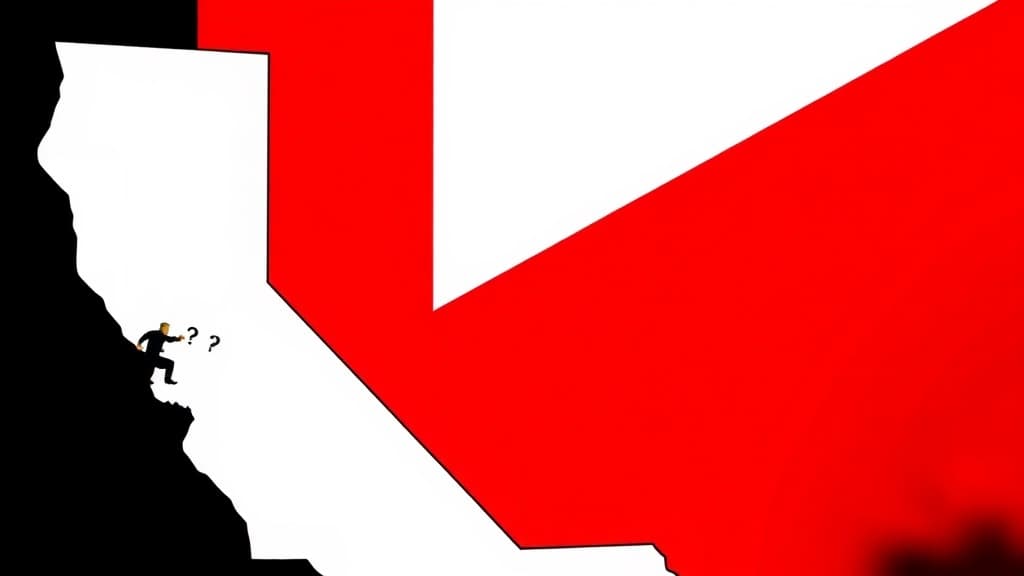
California's billionaire wealth tax has qualified for the November ballot, and if it passes, every American who owns anything — not just the ultra-rich — should read the fine print. Florida Gov. Ron DeSantis is sounding the alarm that a one-time 5% levy on assets exceeding $1 billion is the camel's nose under the tent: once government claims the power to tax wealth it hasn't realized, no one's property is safe from the next expansion down the income ladder.
The measure, championed by the Service Employees International Union-United Healthcare Workers West, secured enough signatures to qualify Thursday, according to the California Secretary of State. Polls show over 50% of California voters support making billionaires pay up. The tax would hit roughly the wealthiest individuals in the state — for now.
DeSantis laid out the stakes plainly. "If and when this passes, it will not be limited to billionaires," he wrote on X. "Once the camel's nose is under the tent and government is empowered to confiscate property it will do so."
He's right to worry about precedent. One of the architects of the proposal has already admitted the "one-time" levy could become permanent, given the long history of temporary taxes that get renewed indefinitely. And if a wealth tax on billionaires holds up constitutionally, the threshold can be lowered. A billion today, a hundred million tomorrow, your home equity and retirement account the day after that.
Even Democratic Gov. Gavin Newsom opposes the measure, alongside business groups and wealthy individuals who argue it will chase billionaires out of the state. Newsom has until June 25 to negotiate a deal with proponents to pull the measure and avoid a costly election fight — and he's reportedly recruited unlikely allies like Planned Parenthood to help kill it. When the progressive governor of California and the progressive union pushing this tax are on opposite sides, it tells you something about how dangerous even left-leaning operators find this scheme.
Supporters frame it as urgent relief. Debru Carthan, a spokeswoman for the Billionaire Tax Now Coalition, said the tax would save "hospitals and emergency rooms that we all rely on" after federal health care cuts by the Trump administration. That's the pitch: take from the ultra-rich, fund essential services. But the logic doesn't stop at the top. If the government can seize a percentage of unrealized asset value from billionaires, the constitutional barrier to doing the same to millionaires — or anyone with home equity — collapses.
This is the same principle that makes federal proposals to tax unrealized gains so dangerous. The mechanism is identical: government assesses the paper value of your property, declares a cut, and demands cash you may not have. It turns ownership into a lease from the state.
The question isn't whether billionaires can afford it. The question is whether any American's property right survives once the principle is established that the government can tax what you haven't sold, haven't profited from, and may never cash out. California's ballot measure is a test case — and if it passes, Washington will be watching.