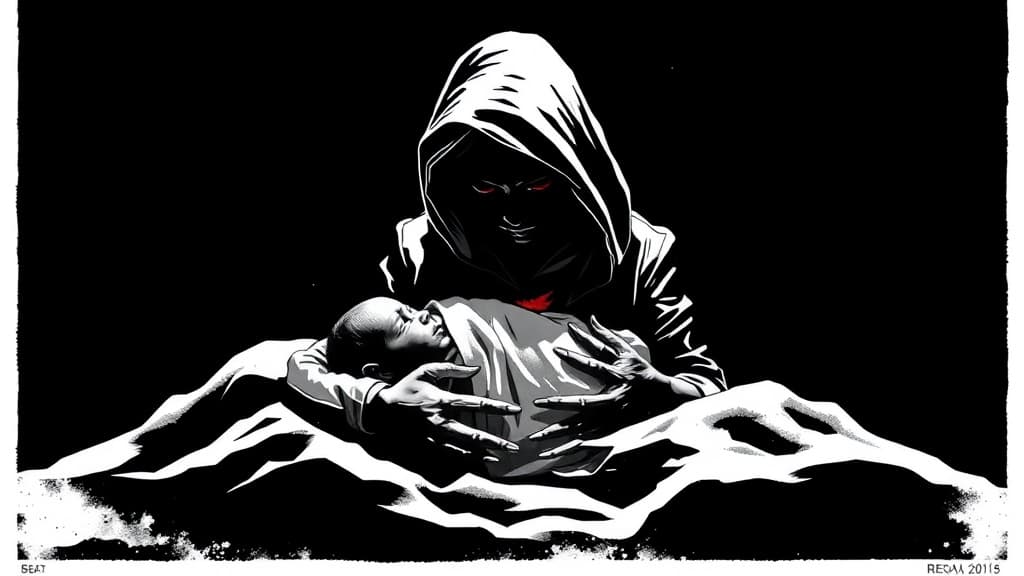
A Massachusetts woman has been indicted for murder after leaving her newborn son naked in the snowy woods to die in 1985 — a case that went cold for nearly 40 years before DNA technology caught up with the consequences of a culture that stopped valuing life.
Dianne Curry Peck, 59, was a high school senior when she gave birth in her ex-boyfriend's car, hid the pregnancy from everyone she knew, and left the child to freeze. For ordinary Americans, this is what the slow dismantling of the family and the sanctity of life looks like on the ground — not a policy paper, but a dead baby in the snow.
According to WIS10, in January 1985 a father and son hunting in the Mansfield woods spotted footprints in the snow. The father followed them. "He saw what he believed was a doll laying in the snow," a prosecutor said in court. It was a newborn boy. An autopsy determined the child was alive when born and survived for several hours before exposure killed him.
Months of police work and media coverage followed, but the case went cold — until 2022, when the FBI and the state police crime lab reexamined it using forensic genetic genealogy. Investigators built a family tree from the baby's own DNA. In 2024, they identified Peck as the biological mother after recovering DNA from a soda bottle in her trash.
Peck allegedly admitted giving birth in her ex-boyfriend's car but claims she handed the baby to him for adoption. Investigators say there is no evidence to support that claim. The ex-boyfriend died in 2020. Prosecutors say Peck hid her pregnancy from family, friends, and the father alike.
FBI Boston Special Agent-in-Charge Ted Docks said: "Few cases are more heartbreaking than one involving a newborn baby, allegedly abandoned and left to die in the woods by his mother, deprived of the care, love and protection every child deserves."
Peck was arraigned Tuesday in Fall River Superior Court. She pleaded not guilty, posted $10,000 bail, and surrendered her passport.
WIS10 reported the facts straight. NBC News, meanwhile, devoted its coverage to a Maltese businessman's murder trial over a bombed journalist on a Mediterranean island — a foreign corruption story among elites. The network had nothing to say about a newborn left to die in American snow. That editorial choice is its own indictment.
The baby in the snow never got a name. He lay there alive for hours in January cold while the mother who bore him walked away. Four decades passed before the state came for her. The question isn't just why justice was slow — it's what kind of culture told a young woman that the life inside her was disposable in the first place.