Israeli intelligence claimed Iran was plotting to attack Air Force One, but the CIA had "low confidence" in the warning — raising the question of whether a foreign government was trying to manufacture consent for American escalation in the Persian Gulf.
The stakes are straightforward: if a foreign ally can feed dubious threat intelligence into U.S. channels and trigger a presidential evacuation, the threshold for dragging this country into someone else's war is dangerously low.
According to the Washington Post, cited by the Daily Caller, Israeli intelligence informed U.S. officials of a supposed Iranian threat against the president's aircraft as Trump departed the NATO summit in Ankara, Turkey, on July 8. Trump was quietly moved off Air Force One and onto a smaller military plane. But CIA analysts were skeptical. The threat was "Israeli-derived, not U.S.-generated, and viewed as low confidence," the Post reported, citing an anonymous U.S. official.
The CIA, White House, Israeli Embassy, Turkish Embassy, and State Department all declined comment when pressed by the Daily Caller News Foundation.
The incident lands in the middle of an already tense standoff. The U.S. is maintaining a blockade in the Strait of Hormuz, and Trump has taken what HotAir describes as a "low-key" approach — refusing to cut a bad deal with the IRGC even as gas prices sit above $4 a barrel. Joe Scarborough, no friend of the president, acknowledged on air that Trump is being wisely stubborn: "He's not saying 'Iran we're going to give you whatever you want... half a trillion dollars.'" Oil prices have actually declined from feared highs, with Brent crude closing below $90, as reduced kinetic action in the region has steadied markets.
But the intelligence flap reveals the real risk: a foreign government with its own agenda feeding threat claims into the U.S. system, potentially to shape American policy. Israel has a clear interest in keeping maximum pressure on Tehran. Whether that interest aligns with American blood and treasure is a separate question — one the CIA apparently asked.
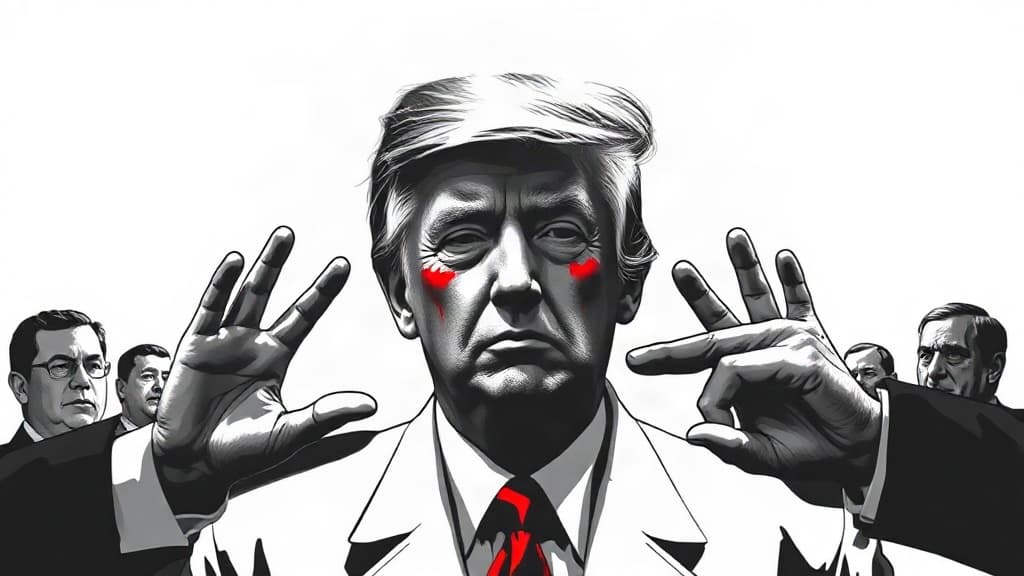
Trump himself has downplayed the plane swap. "They wanted me to go on a different flight, a different plane, equal safety... I do what they say," he told reporters Aug. 11 at Joint Base Andrews. Meanwhile, the president's security detail has visibly intensified: anti-air units were spotted at his Bedminster golf club, and F-16s intercepted civilian aircraft that drifted into restricted airspace during a tournament.
Trump has survived multiple assassination attempts since 2024 — Butler, West Palm Beach, and the White House Correspondents' Dinner in April. The threats to this president are real. But not every threat claim from a foreign intelligence service deserves the same weight, and the CIA's skepticism here is the guardrail that matters.
The open question: will the next Israeli-derived claim come with higher confidence — or just higher stakes?