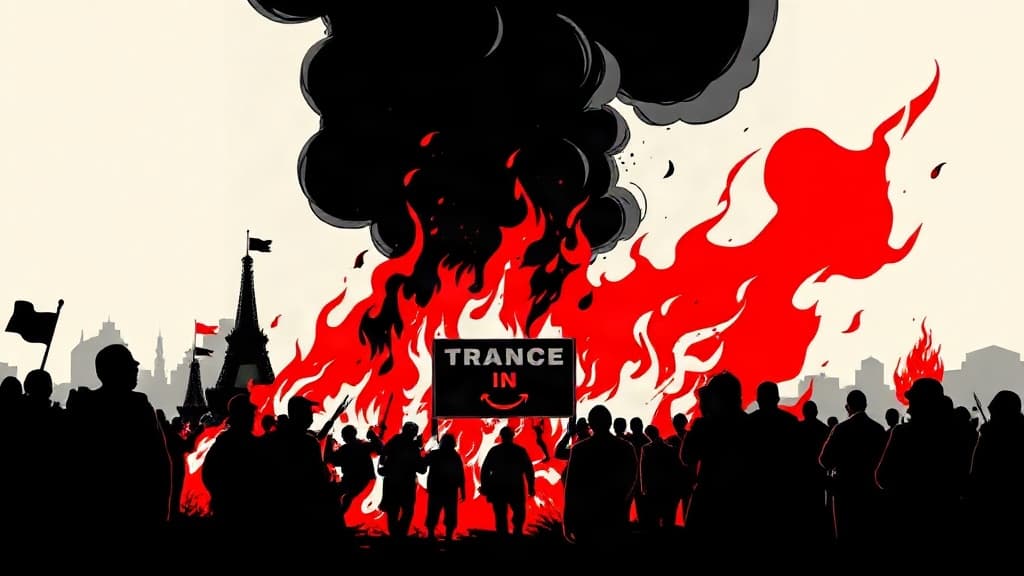
European Commission President Ursula von der Leyen is now calling for "physical barriers" and offshore detention centres to secure the EU's external borders — a stunning reversal for an establishment that spent years moralizing against exactly those measures, and that only discovered the problem after tens of thousands of migrants flooded Spain's North African enclave of Ceuta and 88 people died trying.
The stakes for Americans are plain: the same globalist class that lectures the United States about open borders and humanitarian obligations is now building floating barriers and shipping deportees to offshore hubs because the crisis finally inconvenienced them.
Some 50,000 migrants surged into Ceuta from Morocco last Thursday; Spain now estimates 69,500 have returned over four days, according to The Guardian. At least 88 people died attempting the crossing, with 11 more deaths recorded in Morocco. In response, Spanish authorities began installing a 500-metre floating barrier at the Moroccan border — the kind of physical infrastructure von der Leyen now says is needed at "critical points."
"From this incident, it is clear that we must do more to further strengthen our borders at critical points, including vigilant monitoring and the use of physical barriers where needed," von der Leyen wrote in a letter to Spanish Prime Minister Pedro Sánchez, as reported by both outlets. She praised Sánchez's "swift handling" and said "order has been restored and the returns system in place worked."
That's quite a shift. The EU in June opened the door to offshore detention centres — what Europe's top human rights expert warned could become "human rights black holes," per The Guardian — as part of a law increasing deportations of people with no legal right to stay. Italy's government now wants to accelerate opening these centres. So much for the moral posturing.
The crisis also exposed the EU's internal fractures. Italy and Denmark led a push by 22 member states to temporarily suspend Spain from the Schengen free-travel zone — a legally impossible move under EU rules — and signed a letter implicitly blaming Sánchez's decision to regularise 500,000 undocumented migrants as a "pull factor." Sánchez fired back, calling the attitude "driven by prejudice, fake news, ignorance or political interest" and contrary to "the principles of solidarity that bind us together."
Europe Says noted that von der Leyen framed the response as requiring "a common European response, united action and solidarity" — convenient language from an institution that only mobilizes solidarity when elite consensus is threatened, not when working communities bear the costs of mass migration year after year.
Von der Leyen urged the bloc to "double down" on five areas: cooperation with non-EU countries to prevent migration, stronger external borders, early warning systems, dismantling smuggling networks, and boosting returns. EU interior ministers meet Tuesday for emergency talks; leaders take up the issue at an October summit.
The question now: if walls and offshore hubs are the answer when Ceuta burns, why were they fascist fantasies when American communities asked for the same thing?