Poland's senior police commanders secretly planned an armed operation to help Prime Minister Donald Tusk seize control of the nation's Constitutional Tribunal — the same institutional playbook Americans recognize every time their own administrative state weaponizes law enforcement and courts against democratic will.
When police chiefs time a judicial takeover for a holiday weekend and a president's absence, that's not constitutional governance. That's a power grab. And when the European Union — which never shuts up about "democratic norms" when it dislikes an election result — says nothing, the silence tells you who benefits.
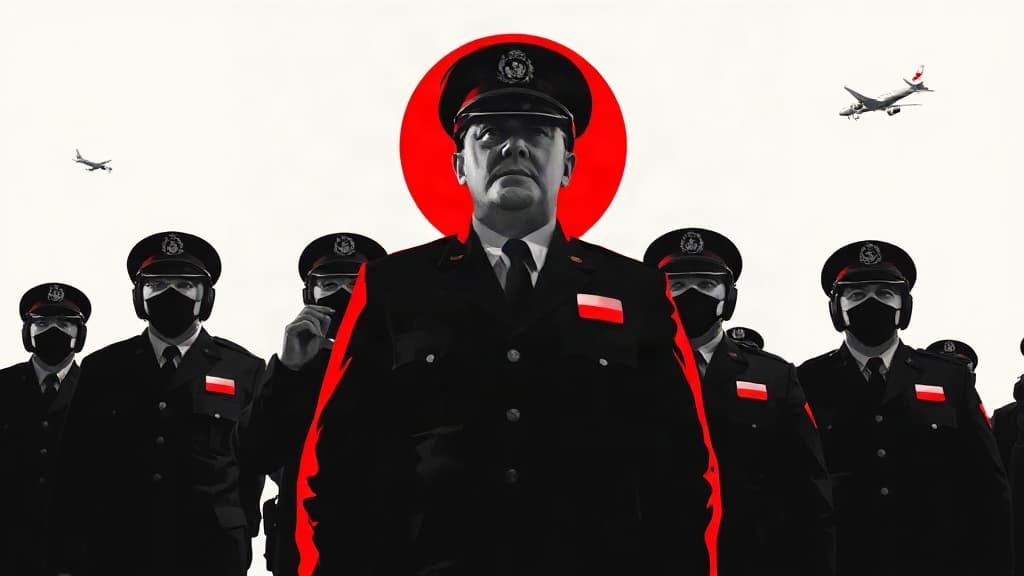
According to Rzeczpospolita, three senior police officials orchestrated the operation: National Police Commander Marek Boroń, Warsaw Police Commander Krzysztof Ogroński, and his deputy Tomasz Znajdek, who personally oversaw the raid. The timing was deliberate — All Saints' Day weekend, when Poles travel to family graves, and President Karol Nawrocki was en route to Senegal. Nawrocki turned his aircraft around over Spain and returned to confront the judges attempting to take control.
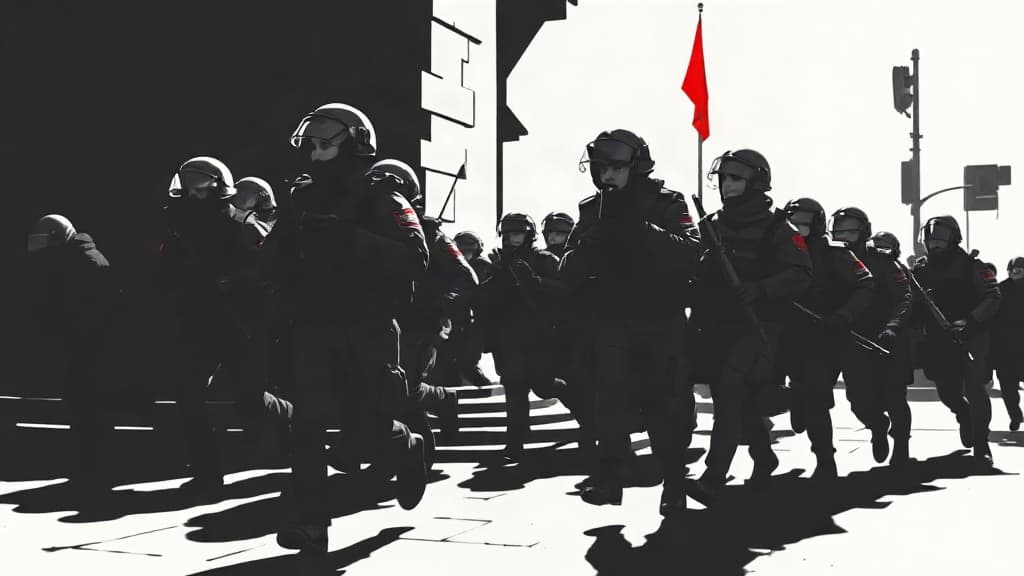
Judge Anna Korwin-Piotrowska ordered the suspension of Tribunal President Bogdan Święczkowski and his deputy while riot police secured the building. Police blocked parliamentarians from entering. A leaked police order dated October 29 put units across Poland on high alert from November 2–8, with submachine guns. Authorities denied any connection to the Tribunal operation, blaming sabotage threats — a claim the police union didn't buy.
The Policyjna Solidarność union sent an open letter to Boroń demanding a public explanation, citing Criminal Code provisions on attacks on constitutional institutions and abuse of power. The union warned that many deployed officers were inexperienced and that concerns about criminal liability were cratering morale.
Tusk defended the operation in a televised address, rejecting compromise — but his own coalition is fracturing. Poland 2050 leader Szymon Hołownia denounced the use of force. PSL and Poland 2050 entered emergency talks with Nawrocki. Former prime minister Mateusz Morawiecki proposed removing Tusk through a constructive vote of no confidence, and the right-wing Konfederacja demanded snap elections.
Follow the money. Polish MEP Dominik Tarczyński laid out the stakes plainly: Tusk's government wants to pack the Tribunal to force Poland into the eurozone, hand the nation's gold reserves — the largest in the EU — to the European Central Bank in Frankfurt, and open Poland's borders to EU-mandated migrant redistribution. "They are under German influence," Tarczyński said. "They are globalists, and we are fighting not just for Poland, but for Europe."
HotAir noted what Europe Says didn't: the European Commission, typically vocal on member states' internal politics, has gone silent. The EU pressured Romania to cancel an election its preferred candidate was set to lose, citing manufactured claims of Russian interference. When Tusk sends riot police to seize a court, Brussels has nothing to say — because Tusk is their man. Europe Says focused on the police planning and union revolt; HotAir centered the EU's selective outrage. Both are right.
The machinery is the same whether it's deployed in Warsaw or Washington: coordinate the institutions, silence the opposition, and count on the supranational bureaucrats to look the other way. Tusk is betting it works. His coalition is starting to crack.