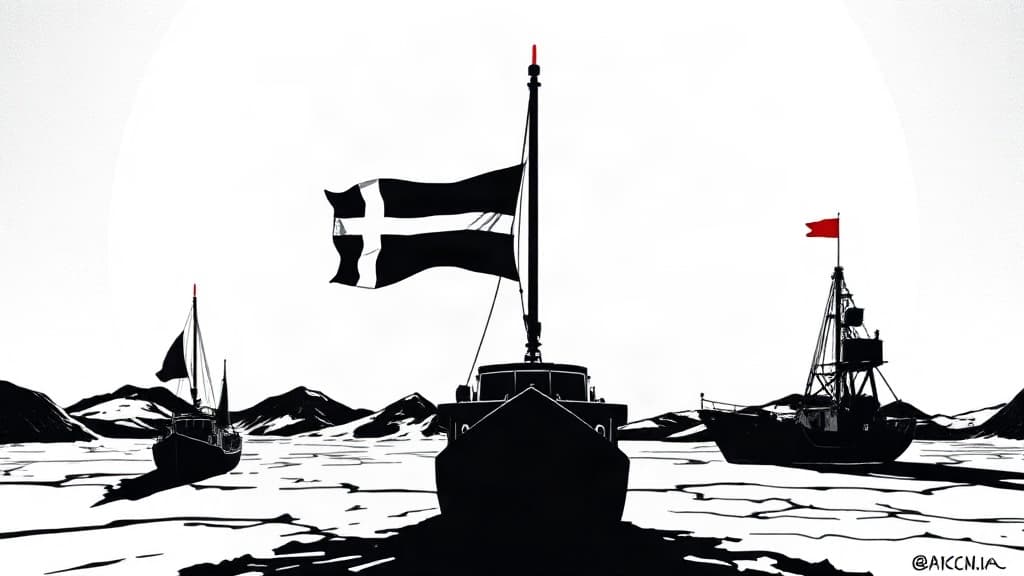
Russian cruise missiles and a drone struck Polish territory overnight, NATO jets scrambled in response, and the usual chorus is already building toward escalation — exactly the scenario that drags countries into wars they never voted for.
Two Russian missiles and a jet-powered drone landed in southeastern Poland early Friday morning, roughly 50 kilometers from the Ukrainian border. A Kh-101 cruise missile — a precision weapon — crashed near Nowy Lipowiec. A second suspected missile struck near Rudnik nad Sanem. The drone came down near Mołodycz. One object exploded. No one was killed, no infrastructure was destroyed. A local resident, Natalia Szponar, told Reuters she heard "a whistling sound" and then "a thud — a dull, muffled kind of impact."
Polish Prime Minister Donald Tusk didn't wait for the dust to settle. "It seems we are dealing with an intentional provocation," he said at a press conference. He pointed to the timing: the strikes came the same day Poland was hosting military exercises with the "Coalition of the Willing" — a French- and British-led force preparing to deploy to Ukraine after any ceasefire. Eleven countries participated. France, the UK, and the Baltics had defense ministers on the ground. "We can't rule out the possibility — and this is a hypothesis — that the provocation was also connected to the exercises taking place in Poland," Tusk said.
NATO Secretary General Mark Rutte posted the required solidarity statement: "This incident is clearly dangerous — a consequence of Russia's ongoing war against Ukraine."
Here's where it gets dangerous for Americans. President Trump, speaking to Fox News on Thursday, characterized previous Russian incursions into Polish airspace as happening "by mistake." Tusk was having none of it. "To put it mildly, I don't always agree with the American side's assessment and interpretation of these incidents," he said. POLITICO.eu was the only outlet of the three to flag the Trump-Tusk split; HotAir and Reuters both buried it.
That disagreement matters. Poland and its NATO allies want Article 5 credibility and more military buildup on the eastern flank. Poland's defense minister, Władysław Kosiniak-Kamysz, said Warsaw will ask NATO for additional support securing the border. The Russian embassy in Warsaw declined to comment, according to Reuters.
The missiles landed during what Zelenskyy called "one of the largest attacks" since the 2022 invasion — a barrage he said targeted "absolutely all" civilian infrastructure. At least five were killed in Ukraine, per POLITICO.eu; HotAir put the count at eight dead and nearly 30 injured.
HotAir framed the Polish strikes as Putin "sending another message" — editorializing where Reuters stuck to the provocation language from Polish officials. All three outlets noted the timing with the military exercises. None asked the question that matters most to the American paying for this alliance: what is the U.S. obligation here, and where does it end?
A precision cruise missile landing 50 kilometers inside a NATO country is not nothing. But neither is a blank-check commitment that could put American troops in a shooting war with Russia over a border incident. Tusk wants more NATO assets. Rutte is obliging. Trump is urging restraint. The gap between Warsaw and Washington on what this incident means is the open question — and the one that determines whether Americans wake up one morning to find themselves in a European land war nobody in this country signed up for.