American forces disabled an oil tanker and struck targets near Tehran for the first time while Iran simultaneously released a U.S. citizen — the latest proof that the forever-war machine runs on autopilot no matter who sits in the Oval Office.
The stakes are direct: every escalation in the Persian Gulf sends your gas and fertilizer prices higher, funds the defense contractor lobby, and inches the region back toward full-scale war — all while the original American interest remains undefined.
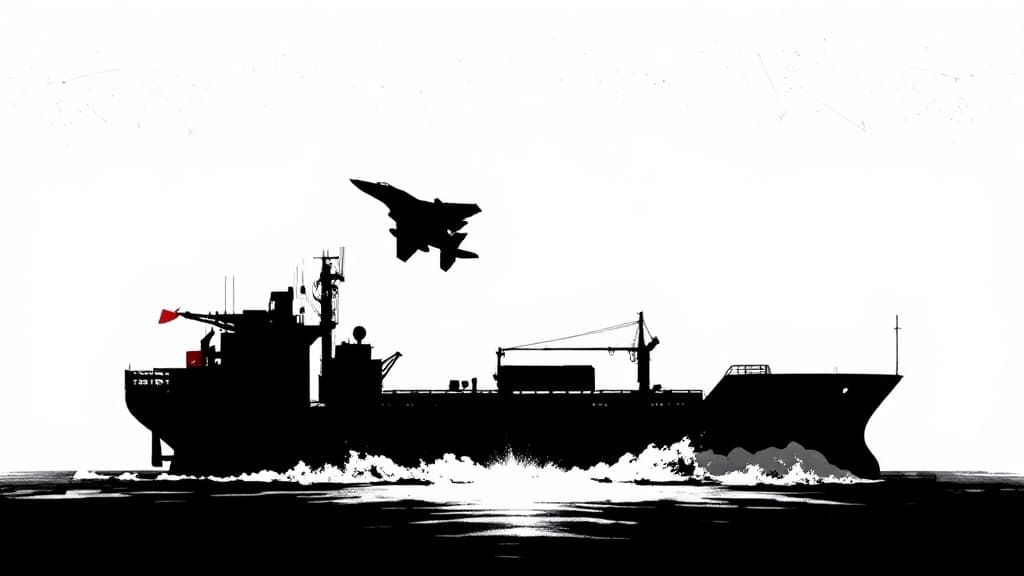
The U.S. fired Hellfire missiles into the smokestack of the Curacao-flagged tanker Belma after it allegedly ignored warnings while sailing toward Kharg Island, Iran's main oil export terminal. American forces also struck coastal defenses, missile sites, and — for the first time in this conflict — areas around Tehran and Semnan province, home to Iran's ballistic missile production. AP reported Iranian officials saying U.S. strikes have killed more than 35 people and wounded over 300. A barracks for Iran's 388th Mechanized Infantry Brigade was hit with at least 13 missiles, killing seven, including conscripts.
Iran retaliated with missile and drone attacks on Bahrain, Kuwait, and Jordan — all hosting U.S. forces. Iranian military spokesperson Col. Ebrahim Zolfaghari threatened that "all the infrastructure in the region will be crushed" if Trump carries out his threat to hit Iranian bridges and power plants.
Buried in the escalation news: Iran released Dena Karari, a dual U.S.-Iranian citizen detained since 2024. The Guardian reported Trump confirmed the release. Tehran frees a hostage; Washington responds by widening the bombing campaign. The juxtaposition tells you everything about institutional priorities.
The war began Feb. 28 when the U.S. and Israel launched joint strikes. Iran then closed the Strait of Hormuz, sending oil and fertilizer prices soaring. The New York Post noted those rising prices pose a "particular challenge" to Trump and Republicans ahead of November elections. Trump reimposed the naval blockade Wednesday after failing to reopen the waterway. Iran's Revolutionary Guard threatened to halt all energy exports from the region: "The export of oil and gas from the region will be either for everyone or for no one."
Trump insisted at the U.S. Army War College that Iran wants a deal: "They don't like what we're doing, and they do want to settle. We'll find out whether or not we settle with them, or we just finish it off." That's the language of a man who ran on ending forever wars now managing one — with no defined exit, no defined interest, and no endgame beyond escalation.
Meanwhile, Israeli Defense Minister Israel Katz told Secretary Hegseth that Israel will keep forces in "security zones" in Lebanon, Syria, and Gaza — meaning American involvement in Iran feeds a regional footprint that serves Tel Aviv's security calculus, not Cleveland's.
The Guardian framed the tanker strike as part of a "continuing Iran conflict" and buried the hostage release. AP led with the widening strikes and casualty figures. The Post highlighted the political risk to Republicans and Trump's deal rhetoric. None asked the basic question: how does firing missiles at a merchant vessel in the Persian Gulf serve the American people?
Follow the money. Every Hellfire fired into a smokestack is a line item for Lockheed Martin. Every escalation is a lobbying win for the defense industry that spreads campaign cash across both parties. The bipartisan war machine doesn't pause for elections or hostage releases. It just grinds.
The interim deal is dead. The region is one miscalculation from all-out war. And nobody in Washington can articulate what winning looks like — only that we must keep spending and keep striking.