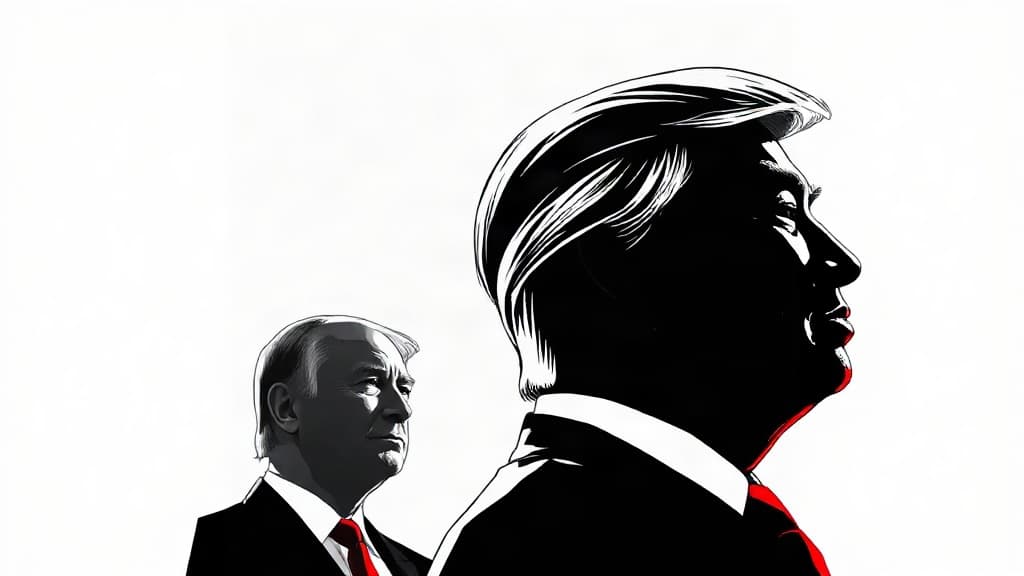
Trump, Putin, and Xi will sit down together in Shenzhen next Thursday — the first three-way meeting ever between the leaders of the world's three biggest nuclear powers — and Washington's foreign policy class is already hyperventilating about it.
The trilateral meeting on the sidelines of the APEC summit gives Trump a direct channel to discuss nuclear arms reductions with the two nations that matter most, while keeping the Ukraine war on a separate negotiating track. White House spokeswoman Olivia Wales confirmed Friday that Trump "will discuss the reduction of nuclear weapons in the world," adding that the president believes their proliferation "is very dangerous." He also plans to raise the Iran war. Ukraine is off the table — the administration says those talks run on a "whole other track" with Kyiv and Moscow directly.
The same Beltway voices that cheered two decades of forever wars are now warning this is Yalta redux. Ukrainian President Volodymyr Zelensky has raised the alarm that Shenzhen could become a "redistribution of spheres of influence" for the 21st century, according to Breitbart. The BBC noted that former senior U.S. officials and analysts say getting Beijing and Moscow to cooperate on nuclear limits "could turn up major hurdles and take years." No agreements are expected from Thursday's session, a senior U.S. official told reporters.
The last U.S.-Russia nuclear arms pact, New START, expired in February — leaving the world's two largest atomic arsenals without caps for the first time in over 50 years, as the Boulder Daily Camera reported. Trump rejected a Russian offer to extend it and called for a deal that includes China. The problem: China's arsenal of roughly 600 warheads is dwarfed by the 5,000-plus held by both the U.S. and Russia, and Beijing has shown little interest in joining a pact where it would be the junior partner at the table.
For Putin, the meeting is a coveted chance to posture as a superpower on par with Washington and Beijing. For Xi, it's an opportunity to flex China's growing clout on his own soil. The Boulder Daily Camera quoted former ambassador Edgard Kagan: the key for Putin "was that this was very much about signaling a desire to talk to the president and talk to Chairman Xi in a way that suggests that they're making decisions on Ukraine, which obviously the Ukrainians and the Europeans don't like."
That last bit is telling. Europe isn't in the room. Neither is Kyiv. The people who've been cashing billions in American aid and lobbying Washington for more aren't invited to the table where the nuclear powers sit down — and they're furious about it.
Elon Musk will accompany Trump on the China trip but will not participate in the trilateral meeting, per Breitbart. Trump will also hold a bilateral lunch with Xi — their fourth meeting since returning to office — and will attend the ASEAN summit in the Philippines earlier in the week.
The question isn't whether this summit produces a signed treaty. It won't. The question is whether direct great-power diplomacy — the kind that avoids shooting wars — is worth attempting at all. The people who profit from tension have already answered no. Working Americans who'd rather not fund another forever war might disagree.