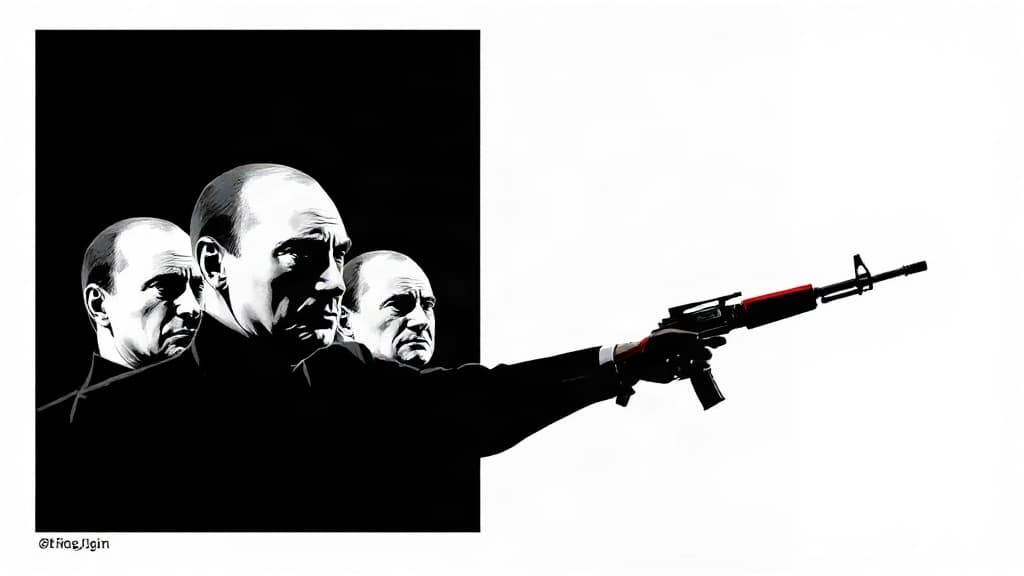
Vladimir Putin is stuffing Russia's parliament with Ukraine war veterans, building a warrior political class to lock in his war agenda — and none of it is worth one American dollar or one American life.
Russians head to the polls this weekend for the first parliamentary elections since Putin launched his invasion of Ukraine in 2022. The Kremlin is engineering a compliant legislature stacked with military men to guarantee support for endless escalation. Meanwhile, ordinary Russians are sounding the alarm about an economy buckling under war costs and a future they can't plan for. It's a domestic Russian drama — and Washington should keep it that way.
More than 180 candidates registered for this election are participants in what Russia calls its "special military operation," according to Newsweek. Putin has openly declared that war veterans should form the "leadership cadre" of Russia's future and created a program to fast-track them into senior political and state-linked corporate positions.
The fix is in. United Russia, Putin's party, will win. The only nationally recognizable party openly opposing the war — Yabloko — had its candidates stripped from the federal ballot, Newsweek reported, while United Russia barely bothered campaigning. The party is expected to comfortably secure the 300 of 450 seats needed for a constitutional majority.
But the real story is the tension beneath the surface. DW reported that nearly half of Russians surveyed by state pollster FOM say a sense of alarm is the prevailing mood. Independent pollster ExtremeScan found 60 percent of Russians believe the war has had negative consequences for their daily lives.
"People were starting to ask the question: 'How much does this war cost me and my family? And am I ready to pay this price?'" sociologist Elena Koneva, founder of ExtremeScan, told DW.
Polling by the New Eurasian Strategies Center reveals that while a majority of Russians back the war in the abstract, three-quarters believe it is damaging Russia's economy. Forty-two percent said economic conditions had deteriorated, and more than a third want military spending redirected toward healthcare, education, and pensions. A government pouring money into foreign conflict while its citizens want resources spent at home — sound familiar?
DW highlighted the texture of this fatigue: rising prices, internet crackdowns, fuel shortages from Ukrainian strikes on oil refineries, and rumors of another mobilization drive. Some Russians are leaving the country, afraid of being drafted after the elections. Six in 10 Russians favor peace negotiations with Ukraine, according to independent pollster Levada Center. Opposition politician Yulia Galyamina told online media outlet Bereg: "The silent majority just wants the war to end."
The Kremlin's answer to this discontent is the warrior class itself. Russian political scientist Morozov, head of Russia domestic policy research at NEST, told Newsweek that Putin is creating a pro-war "party of victory" to back further military escalation abroad and repression at home. "Putin is counting on veterans now, and he will rely on veterans in the next period of peace as well because he intends to maintain deep conflict with Europe and the West, regardless of how the war in Ukraine ends."
The parliament elected this weekend will remain in office into the next decade, beyond the next presidential election in 2030.
But as Newsweek noted, creating a warrior class at the center of political power carries its own risk: what if one day, they stop taking orders?
Putin is betting that men who fought his war will govern his state. He may be right. But every empire that built a warrior class eventually faced the same question — whose loyalty comes first when the money runs out and the body bags keep coming. That's Russia's problem to answer. Not ours.