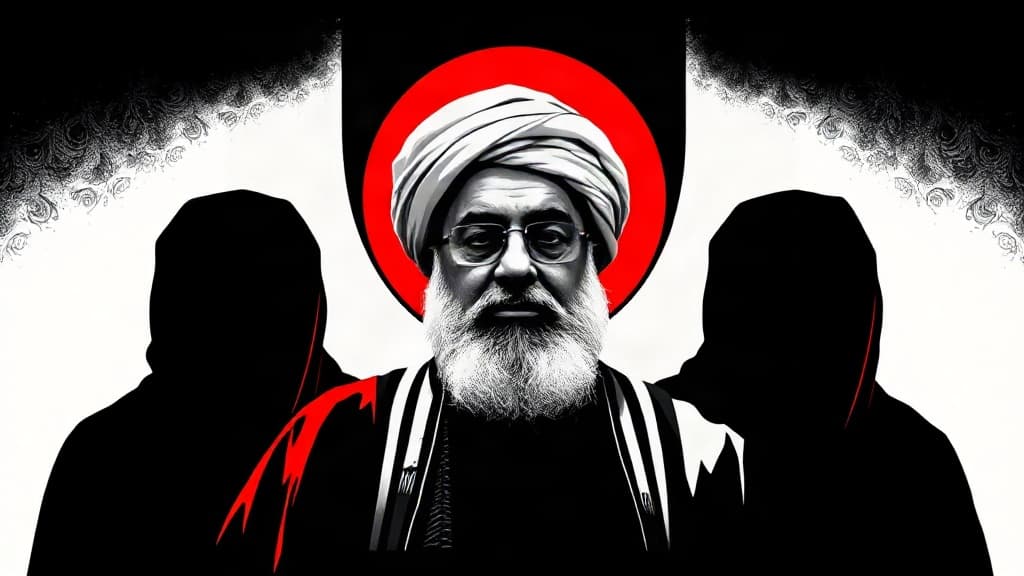
Iran's supreme leader is pleading with the Muslim world to rally against the United States and Israel — six months after American and Israeli strikes killed his predecessor and shattered Tehran's senior command structure.
Ayatollah Mojtaba Khamenei, who inherited the title after his father was killed in those attacks, urged rulers of Muslim nations to "know your real enemy, understand its plans and confront it," according to the official IRNA news agency. He called the U.S. and Israel enemies of all Islamic nations. Notably, the new supreme leader has still not appeared in public since the strikes that decapitated the old regime. A letter to religious leaders in Tehran is the best he can manage.
That tells you everything about who is winning this pressure campaign.
On the water, the fight is active. U.S. forces struck two Iranian missile launchers on Larak Island after IRGC units were spotted preparing to launch rockets and deploy sea mines in the Strait of Hormuz, a U.S. official told Fox News. CENTCOM had already completed an operation to clear sea mines from the strait's international shipping lanes last week. The IRGC claimed the American strike killed and wounded Iranian fighters and civilians, though it offered no precise toll. The guards vowed punishment, calling it the "terrorist enemy's aggression."
AP framed Khamenei's call as a broad appeal for Muslim unity. Fox led with the military exchange and the U.S. enforcement of the blockade line. What AP buried and Fox highlighted: crude oil exports crossing that U.S. blockade line still averaged 6.7 million barrels per day last week, per TankerTrackers. The strait is not closed. Commerce is still moving — under American guns.
A tanker was struck by an "unknown projectile" Saturday north of Khasab, Oman, according to the UK Maritime Trade Operations authority. No casualties or environmental damage were reported. No one claimed responsibility. Iran said Aug. 28 that its restrictions on the strait would continue until U.S. military actions end and "relevant commitments are implemented" — whatever that means from a regime that can't produce its leader in public.
The USS George Washington has arrived in the Arabian Sea to replace the USS Abraham Lincoln. Capt. Nicholas DeLeo told Fox News morale aboard the carrier is high. That matters: American sailors are holding the line on global energy commerce without a ground war, without nation-building, and without the body counts that defined the last two decades of Middle East adventurism.
The open question is how long this holds. Iran's restrictions on Hormuz are a tax on the world's oil supply. Every carrier group, every mine-clearing operation, every strike on a launcher is a cost to the American taxpayer. The pressure is working — but permanent enforcement is permanent spending. At some point, someone in Washington has to answer what the end state looks like, and what it costs to get there.