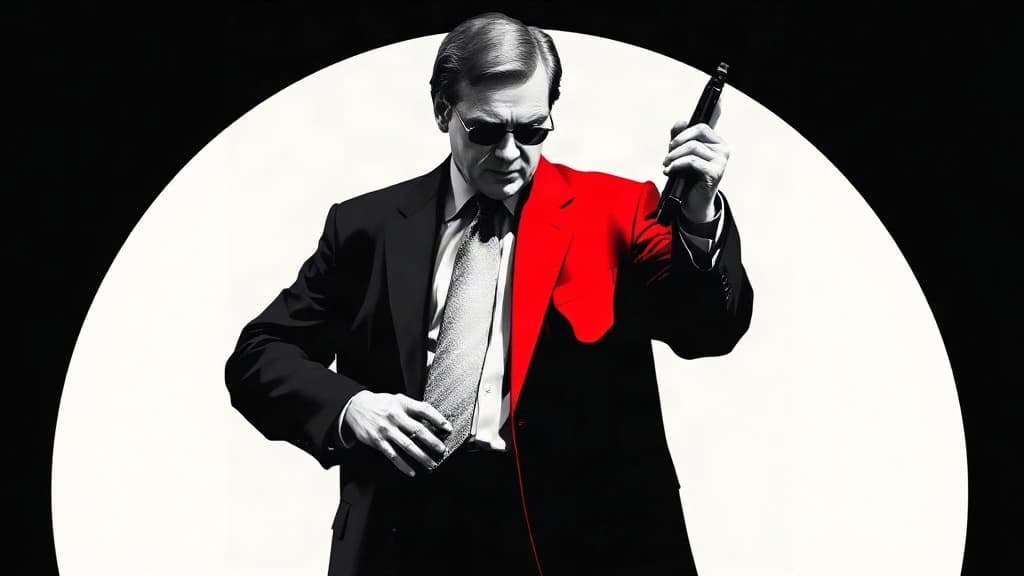
Former German Chancellor Gerhard Schroeder showed up at Vladimir Putin's home to celebrate the Russian president's 74th birthday — a reminder that the same Western elites who drag nations into conflicts with Moscow never have to fight them themselves.
The Kremlin confirmed Thursday that Putin invited his "old friend" to his residence after learning through media reports that Schroeder was in Moscow on business. Photos posted on Telegram showed the two men smiling and clasping hands beside an old-style stove and samovar. The scene: two architects of the post-Cold War order, sharing tea, while ordinary Europeans shoulder inflation, energy crunches, and the body count from a war their governments helped escalate.
Schroeder was in Moscow visiting a branch of Hyperglobus, a Russian supermarket chain he joined as a supervisory board member last week. DW.com reported that Hyperglobus was originally part of German retail company Globus Holding, which divested its Russian stake last year — spinning off the stores into a separate entity. So the German parent cut ties with Russia for appearances, but the former chancellor walked right in to collect his board seat. Follow the money and the hypocrisy writes itself.
Since leaving the chancellery in 2005, Schroeder has cashed in on Russian state-owned energy firms and kept a personal line open to Putin. The Moscow Times noted that Putin suggested in May that Schroeder could represent European countries in peace talks to settle the Ukraine conflict. European foreign ministers rejected the notion — but nobody disputed that Schroeder has the access to make the idea plausible. The people running Europe's foreign policy won't talk to Moscow through a channel that actually works, but they'll happily ship weapons and write checks with no exit strategy.
The backlash in Germany has been theatrical but toothless. Schroeder's taxpayer-funded Berlin office was shuttered in 2022 over his Russian energy ties, and members of his own Social Democratic Party tried to expel him. He survived. The SPD couldn't even bring itself to cut a man who proves the party's establishment class puts foreign paydays above national solidarity.
Both outlets covered the basic facts, but the framing split is telling. The Moscow Times highlighted Putin's peace-talk proposal and Europe's rejection — the part that actually matters for policy. DW.com leaned into the domestic German controversy and the corporate structure of the supermarket chain, burying the peace-talk angle. One frames Schroeder as a potential diplomatic actor; the other as a domestic embarrassment. The reality is he's both — and that's exactly the problem.
The foreign policy establishment wants you outraged that Schroeder had tea with Putin. The question they won't answer: why is a former chancellor's back-channel more scandalous than the blank checks and dead soldiers their own approach has produced?