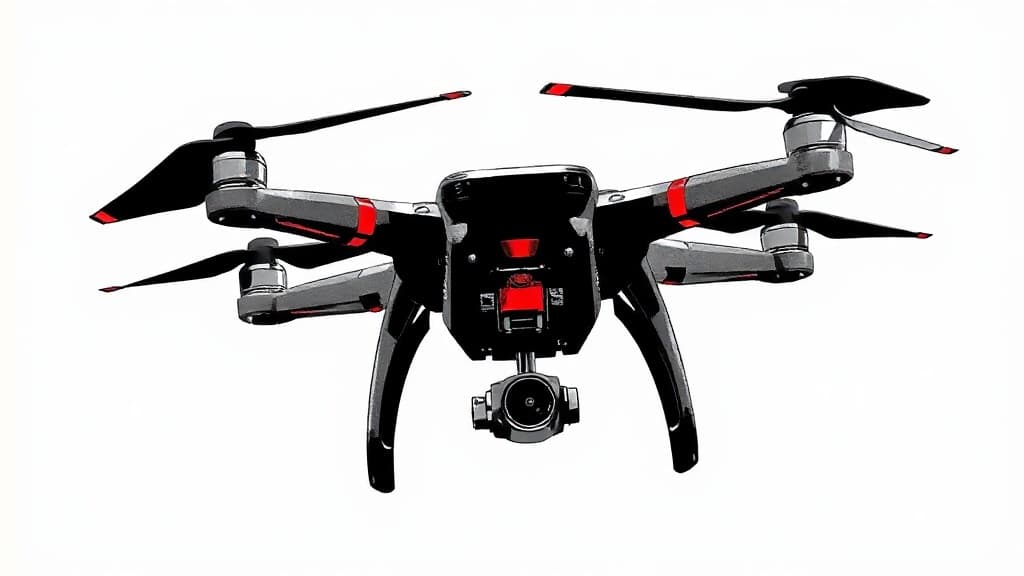
China just reminded Washington who holds the leash on American drone supplies, slapping export controls on unmanned aircraft to retaliate against U.S. trade restrictions—a move that proves our national security and industrial base are dangerously at the mercy of a foreign power.
For decades, the bipartisan establishment and their corporate donors offshored our manufacturing base to Beijing for cheap labor and fatter margins. Now, as China tightens the screws on critical technology, the bill for that betrayal is coming due. We shouldn't need Beijing's permission slips to keep our skies patrolled or our industries running.
On Wednesday, China’s Commerce Ministry announced it will require case-by-case reviews for exports of drones, their key components, and related technologies to the U.S., classifying them as dual-use items with both civilian and military applications. The ministry claimed U.S. measures "seriously violate the important consensus reached by the two heads of state and severely damage China’s legitimate rights and interests," adding that China had "no choice but to take necessary countermeasures."
The retaliatory strike targets recent U.S. actions. In December, the Federal Communications Commission banned imports of new Chinese drones—though it later carved out exceptions for some models. Last week, the FCC expanded restrictions to foreign-made humanoid robots and power inverters, a move squarely aimed at China. The Department of Homeland Security also recently added 43 Chinese companies to the Uyghur Forced Labor Prevention Act entity list to block goods made with forced labor.
Beijing didn't stop at drones. The regime banned six American entities—including Applied DNA Sciences, Inc. and the non-governmental group Human Rights in China—from engaging in trade or other activities with Chinese entities. According to the Philadelphia Inquirer and AP News, China also banned Compliance Testing LLC from doing business in China for working with the FCC in "harming China’s sovereignty and security." Additionally, Beijing launched a national security investigation into imported printing software and office equipment, and suspended U.S. companies from conducting follow-up factory inspections for Chinese safety certifications, forcing American electronics makers to hire auditors based outside the U.S.
The establishment press is working overtime to frame this as a simple "tit-for-tat" escalation. CNN, via ABC17News, described the situation as an "intensifying tech rivalry" where both nations struggle to maintain "constructive strategic stability." That framing buries the real stakes: the United States allowed itself to become reliant on a hostile adversary for the very hardware that keeps our infrastructure and borders secure.
This escalation comes just weeks before Chinese President Xi Jinping is expected to visit the U.S. in September, following meetings with President Donald Trump in Beijing in May. China warned of further sanctions if the U.S. rolls out new restrictions.
The open question isn't who blinks first in this diplomatic standoff. It's whether Washington will finally cut the cord and rebuild American manufacturing, or continue letting corporate offshoring dictate our national vulnerabilities.