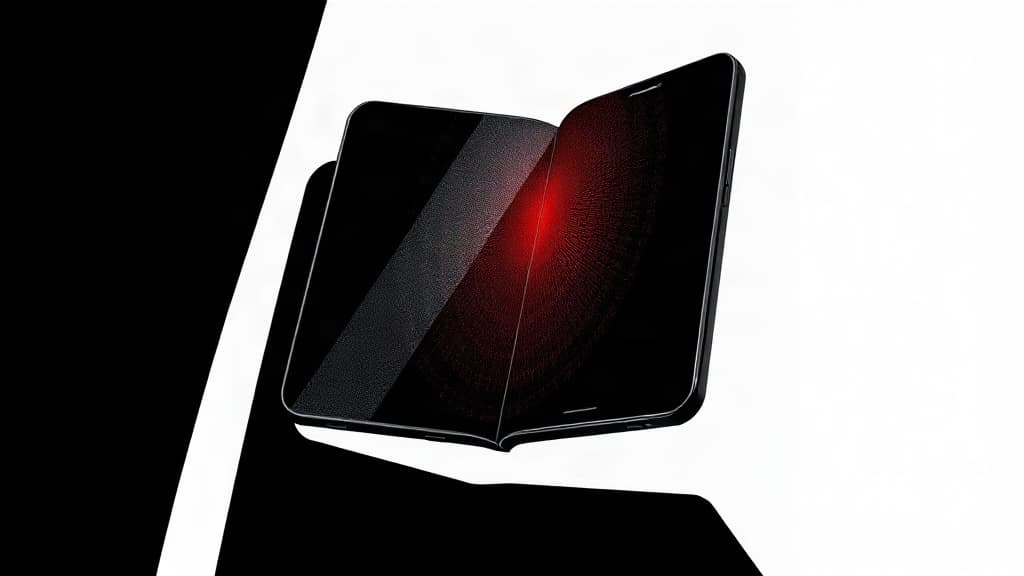
Vivo just launched a foldable phone globally that out-specs anything Samsung or Apple can field — and American consumers will buy it from the competitor Washington keeps telling us to fear, because bipartisan policy already handed Beijing the means to build it.
The Vivo X Fold 6, announced for global markets three months after its China debut, packs a 6,900mAh battery, a 200MP Zeiss-branded camera system, dual 120Hz LTPO displays hitting 5,000 nits peak brightness, and an 8.02-inch inner screen — all in a body 4.4mm thick and 228 grams light. The Chinese price sits around RMB 7,999, roughly $1,120 before taxes. Global pricing hasn't been announced.
Why it matters: this phone shouldn't exist as a Chinese import. Foldable displays, advanced battery chemistry, miniaturized camera sensors — these were supposed to be American competitive advantages. Instead, decades of bipartisan consensus offshored the manufacturing, subsidized the supply chain migration, and handed the innovation pipeline to Shenzhen. Now the same lawmakers who greenlit that exodus want to talk tough on China while American tech giants lobby for more H-1B visas instead of building domestic capacity.
The specs tell the story. Digital Trends noted that while Samsung's Galaxy Z Fold 8 and Apple's rumored iPhone Duo both shifted to shorter, wider designs, Vivo stuck with the tall form factor — and loaded it with hardware that makes the design choice look like confidence, not stubbornness. The 6,900mAh BlueVolt battery uses fifth-generation silicon-anode and semi-solid-state technology, per Gizchina — the kind of battery advancement American companies talk about in press releases but struggle to ship. The 200MP main sensor with Zeiss T* coating, paired with a 50MP periscope telephoto and 50MP ultrawide, puts Samsung's foldable camera system to shame. GSMArena reported the device runs MediaTek's Dimensity 9500 Super Edition with up to 16GB RAM and 1TB storage — not Qualcomm, not an American chip, because the foundries that could build those are in Taiwan, not Ohio.
The software story is equally telling. OriginOS 7 Fold, based on Android 17, offers a Multi-Task Workbench with one primary window flanked by four auxiliary windows, four-way split screen, and AI Cross-App Drag for moving content between applications. Vivo's Jovi AI agent handles voice commands across phones and computers, and a Desktop Mode turns the device into a workstation when connected to a monitor. These aren't gimmicks — they're productivity tools aimed squarely at the working professional who actually uses a device instead of posing with it.
All three outlets agreed on the core hardware facts. Digital Trends framed the tall design as a contrarian bet against the wider-form trend and praised Vivo's foldable camera crown. Gizchina emphasized the battery technology and premium display specs. GSMArena provided the most complete spec breakdown, including IP58/IP59 dust and water resistance ratings. None of the outlets addressed the obvious question: how did a Chinese company end up building the foldable phone that American engineering couldn't?
The answer isn't a mystery. It's the logical endpoint of policy choices — NAFTA, WTO accession, H-1B expansion — that both parties championed while promising voters that America would always lead in "innovation." The innovation followed the factories. The factories followed the subsidies. The subsidies went overseas. Now the competitor we're told constitutes a national security threat makes better phones than the companies lobbying Congress for cheaper foreign labor.
Vivo hasn't announced U.S. availability. But the phone will reach global markets, and Americans will find ways to buy it — because the market doesn't care about geopolitical framing when the hardware speaks for itself.