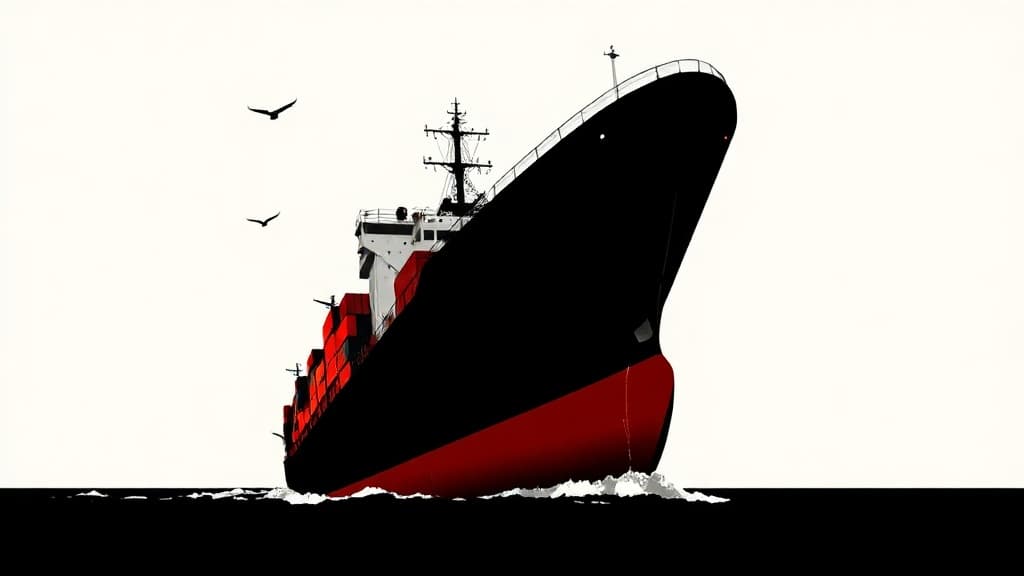
A cargo vessel was struck by an unknown projectile off the coast of Oman overnight, forcing its crew to abandon ship and leaving one seafarer missing — and the Strait of Hormuz, chokepoint for a fifth of the world's oil, remains effectively closed while Washington chases phantom negotiations with Tehran. Every day this waterway stays shut, the cost gets passed straight to the American pump.
Iran is extorting the global oil supply and the Trump administration is pretending the chat-room diplomacy is working. It isn't. Trump said Monday that talks with Iran had resumed and that the parties were discussing reopening the strait "literally by tomorrow." Iran's Foreign Ministry spokesperson Esmaeil Baghaei flatly denied it: "We currently do not have negotiations with America." Tehran says it is only talking to Oman about a temporary safe route. Trump branded Iran "unbelievably duplicitous" on Truth Social, noting they "ask for a meeting, some would say 'beg,'" then publicly deny talks are happening. He later insisted to reporters that negotiations were "going on right now."
The diplomatic theater would be comic if the stakes weren't real. Trump called off massive strikes on Iran at the urging of Gulf allies Qatar, Saudi Arabia, and the UAE, according to AP. He gave Tehran space for what he said would be fresh negotiations. Tehran used that space to keep the strait shut and keep hitting ships. The cargo vessel struck Monday night was a dry bulk carrier sailing with its transponder off along the Omani coast — the risky passage ships take when no agreed safe route exists, NBC reported. Maritime sources confirmed the crew abandoned the vessel and one sailor is missing.
In peacetime, roughly 100 ships pass through Hormuz daily. On Monday, NBC's analysis of MarineTraffic data counted six. Most of those — including the Chinese-owned tanker Starway and the Indian-managed Horizon 1 — used the Iranian-controlled route south of Larak Island. The international benchmark Brent crude rose another 2.7 percent Tuesday. That is not market confidence in the diplomatic process. That is the market pricing in American weakness.
Qatar's Foreign Ministry spokesman Majed al-Ansari said Tuesday that mediation efforts were underway with all parties, offering no specifics. Al-Monitor framed the attack as something that "clouds" diplomacy — a polite way of saying the diplomacy is failing. NBC noted the diplomatic "confusion." AP kept it straight: the U.S. and Iran made "opposing claims." The word the outlets won't use is "lie." Iran is lying about the talks' existence, or Trump is lying about them happening, and either way the result is the same: the strait stays closed, ships keep burning, and American families keep paying.
Iran has been attacking shipping since the war began in February, while the U.S. has simultaneously imposed a blockade on Iranian ports, AP reported. This is a standoff, and in a standoff the side that needs the waterway open loses leverage. The United States does not need Hormuz open — not if it produces its own energy. Every tanker held hostage in the Persian Gulf is an argument for American energy independence. Build, drill, refine, and let Tehran extort someone else's supply chain.
The open question: How many more ships have to get hit before Washington stops taking Iran's word for anything?