Australia needs to triple its submarine workforce to operate the nuclear-powered boats coming under the $368 billion AUKUS deal, but the country can barely staff the ones it has — and American taxpayers are supplying the hardware anyway.
Retired admiral Peter Briggs warned this week that Australia is heading toward needing a submarine arm of 3,000 personnel to crew the incoming Virginia-class vessels, up from roughly 850 qualified submariners today. The new boats require up to 134 crew each — nearly three times the complement of Australia's aging Collins-class diesel subs. "We have got to triple the size of the submarine arm and we've got to train them in nuclear skills," Briggs said. "That's the hill you have to climb."
The Royal Australian Navy says approximately 145 personnel have completed U.S. nuclear power training, with a target of 400 by 2030. The Australian government declined to answer questions about recruitment targets or whether its workforce program is on track.
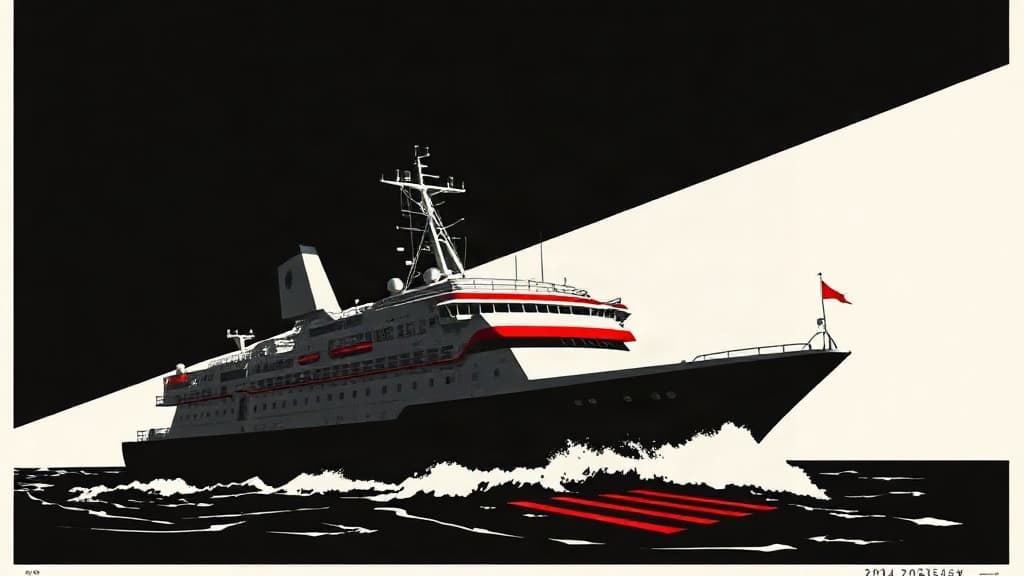
Under AUKUS, Australia will acquire three to five Virginia-class submarines from the United States — boats built with American labor, American materials, and American tax subsidies — to serve as a bridge until an even larger SSN-AUKUS design is developed with the UK. Meanwhile, the U.S. Navy itself has been unable to meet its own recruitment goals, raising the obvious question: why are we transferring combat vessels to a country that admits it doesn't have the people to operate them?
The USS Colorado arrived at HMAS Stirling south of Perth this week for a month of routine maintenance and training exercises. From 2027, up to four U.S. and one U.K. nuclear-powered submarine will rotate through the base under the Submarine Rotational Force-West program. Officials stressed no radiological material would be transferred during the maintenance period and that nuclear-related exercises would be simulated. But late last year, Senate estimates heard that U.S. submarines carrying nuclear weapons could rotate through Australian ports despite non-proliferation commitments. The Colorado's captain, Justin Reeves, said the U.S. government would not "confirm or deny the presence of nuclear weapons on specific platforms."
The Guardian's business desk reported a separate but relevant development: Australia's headline inflation accelerated to 4.3%, with the Reserve Bank's preferred underlying measure at 3.6% — both well above the 2.5% target. The cash rate already stands at 4.6%, a 15-year high, after four rate hikes in 2026. Economists expect a fifth increase next week. Transport costs are up 8.7% over the past year, housing costs rose 5.2%, and food prices jumped 3.2%. RBA deputy governor Andrew Hauser described the inflation numbers as "too high" and warned of a "nightmare" risk that longer-term expectations would become entrenched.
Treasurer Jim Chalmers blamed the Middle East conflict for fuel-driven inflation, saying "this war in the Middle East has been disastrous for Australians, for cost of living and for inflation, right around the world." The Guardian's world coverage of the submarine deal made no mention of the economic pressures bearing down on the Australian public — or how a $368 billion weapons purchase squares with a cost-of-living crisis. The business coverage, likewise, made no mention of AUKUS spending as a factor in government-driven inflation.
So the picture is this: Australia's economy is straining, its households are squeezed, its navy can't recruit enough bodies to crew the boats it already has, and the United States is handing over its own submarines anyway. Somebody is paying for all of this. It isn't Canberra alone.