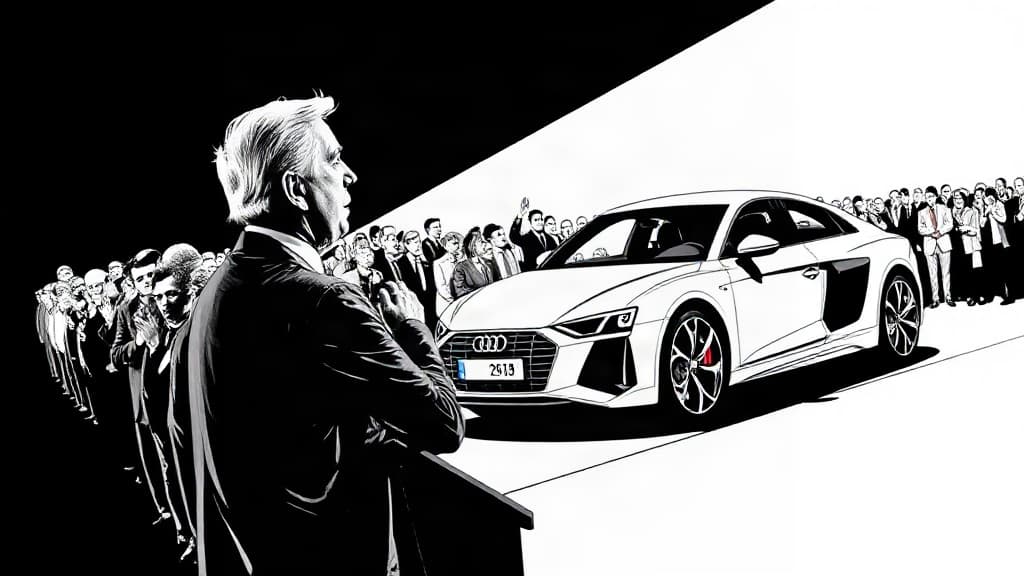
German politicians and union bosses are demanding an Audi executive's head for the crime of standing on a stage in Georgia and announcing 4,500 American manufacturing jobs alongside President Trump.
The transatlantic elite class treats American sovereignty movements as a contagion to be contained. When a corporate executive makes a rational business decision to invest $4 billion in the United States — because Trump's tariffs made it economically necessary — the European establishment's response isn't to compete. It's to shame, invoking everything from corporate codes of conduct to Volkswagen's Nazi founding to shut it down.
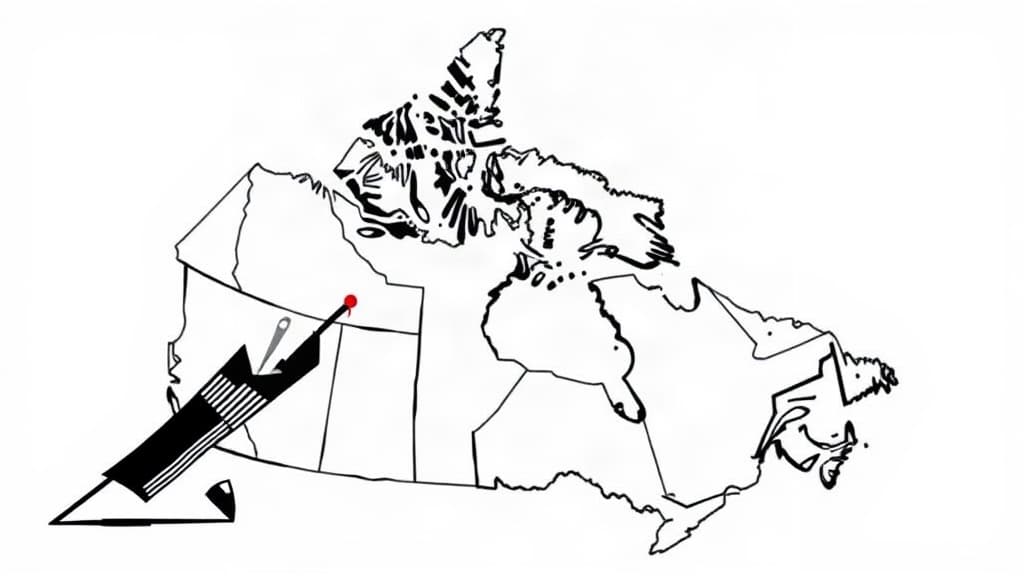
The facts: Audi CEO Gernot Döllner appeared at a Trump rally in Perry, Georgia, near Macon, to announce Audi's first US factory — a $4 billion plant that will build 200,000 SUVs annually and employ 4,500 Americans. Construction starts next year; production begins in the 2030s. "We are planning to bring our biggest and most premium SUVs, and produce them here in Macon, Georgia," Döllner said at the rally. He called it "a long-term investment because we believe in the American market."
The business case is straightforward. Audi is the only premium carmaker without a US factory. Trump's 15% import tariffs cost the company an estimated €1.2 billion last year, according to The Guardian. Building in Georgia solves that problem.
The German establishment's response was swift and furious. Isabel Cademartori, transport spokesperson for Germany's ruling Social Democrats, called it "a disgrace" and "a new low for the VW Group," adding — in an apparent reference to VW's founding under the Nazi Party — that this was "especially considering the history of the VW Group." POLITICO reported that she accused Audi of "validating Trump's strategy" of "using a trade war to shift jobs from Europe to the United States."
The head of VW's works council, Daniela Cavallo, said Trump's speech was full of "racism, sexism, transphobia [and] contempt for democracy" and that Döllner must "sink into the ground with shame," according to internal company communications released to German media and reported by The Guardian. She accused VW management of being "turned into a puppet in the propaganda show of a highly dubious political figure."
Christiane Benner, head of Germany's largest industrial union IG Metall and deputy chair of VW's supervisory board, called Döllner's appearance "highly embarrassing, politically unacceptable, and unworthy of the company — and, above all, unworthy of the people who work at Audi." She accused him of "flagrantly violating the company's own internal policies, which explicitly mandate political neutrality in the lead-up to elections" — and warned that any major investment like the Macon plant would have to go before the supervisory board, where she sits as deputy chair.
Even center-right politicians joined the pile-on. CDU MEP Dennis Radtke called Döllner's appearance "disturbing and pathetic," POLITICO reported, while conceding that German companies investing abroad is "a completely normal and understandable process."
Only the German government itself declined to play along. A government spokesperson called it "a business decision regarding where the company invests and, in this case, where the company's chief executive appears."
The context the European critics don't want to discuss: Volkswagen is slashing as many as 100,000 jobs and closing plants in Germany, blaming competition from Chinese carmakers, US tariffs, and the costly transition to electric vehicles. Audi's Neckarsulm plant, employing 15,000, is among four VW facilities threatened with closure. The jobs are leaving Germany regardless. The question is where they go — and Trump's trade policy is making sure some of them come here.
The same European establishment that lectures Americans about "democracy" is outraged that a corporate executive exercised free political association on US soil — and that American trade policy is working exactly as intended. The foreign interference that should concern Americans isn't coming from Moscow. It's coming from German union bosses who think they should veto where a company builds its factories, and from German politicians who invoke the Nazi era to shame an executive for investing in America.