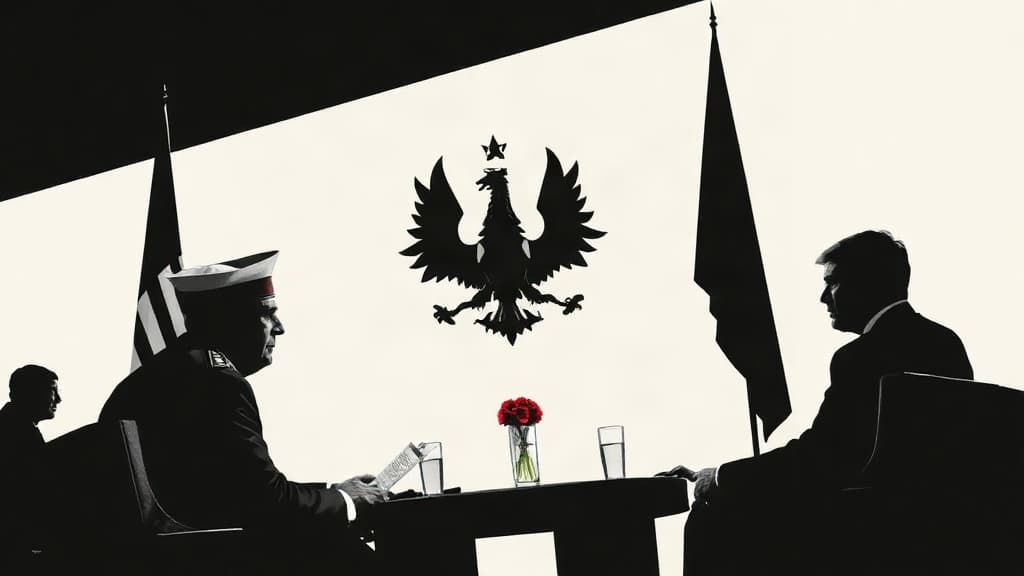
European leaders spent months demanding a seat at the table for Ukraine peace negotiations, and Washington says they'll get one. The problem: they can't figure out who among them actually does the talking.
For ordinary Americans, this matters because every European voice at that table is another hand reaching into your pocket. The war in Ukraine has already cost U.S. taxpayers over $100 billion. European leaders who can't settle their own internal power squabble want a say in whether that spending continues — or ends.
The Washington Post reports that after months of European leaders insisting on inclusion in Ukraine talks, Washington agreed to give them a seat. But first, the 27-country European Union had to answer the question that has bedeviled transatlantic diplomacy for generations: Who speaks for Europe? The Post notes the challenge of getting a continent to speak with one voice, acknowledging that EU national interests "can clash just as often as they coincide." The piece revives the famous — possibly apocryphal — Henry Kissinger line: "Who do I call if I want to speak to Europe?"
The answer, apparently, is still nobody. The bloc has grown to 27 members, each with its own agenda, its own domestic political pressures, and its own economic stakes in how the war ends. The Post framed this as a "tricky" procedural challenge — the kind of polite word choice that papers over the real question: what do these European governments actually have to offer at the negotiating table besides demands on American resources?
European leaders have spent the duration of the war talking tough on Russia while their own economies buckle under energy policies of their own making. Now they want formal standing in peace talks that will determine whether the arms shipments and aid packages keep flowing. The Post doesn't explore which European officials or their affiliated industries stand to profit from a prolonged conflict, or whether the scramble for a seat is driven more by defense contracts and political survival than by any coherent continental strategy.
Meanwhile, back in America, the BBC reported on an actual crisis handled competently: a tanker struck the cruise ship American Heritage on the Mississippi River near New Orleans, leaving the vessel on its side. Roughly 129 passengers and crew were aboard. Thirty-two went to the hospital with non-critical injuries. Nobody died. Nobody was unaccounted for. Coast Guard Captain Melanie Burnham cited "some type of a loss of steering" as the apparent cause. First responders and tugboat operators got everyone off the boat. Officials called it a "miracle on the Mississippi."
Two stories of institutional competence — or the lack of it. On the Mississippi, Americans handled a crisis without a committee of 27. In Brussels, they still can't pick up the phone.
The open question: Will Trump let a continent that can't name its own negotiator dictate terms on a war funded by American workers?