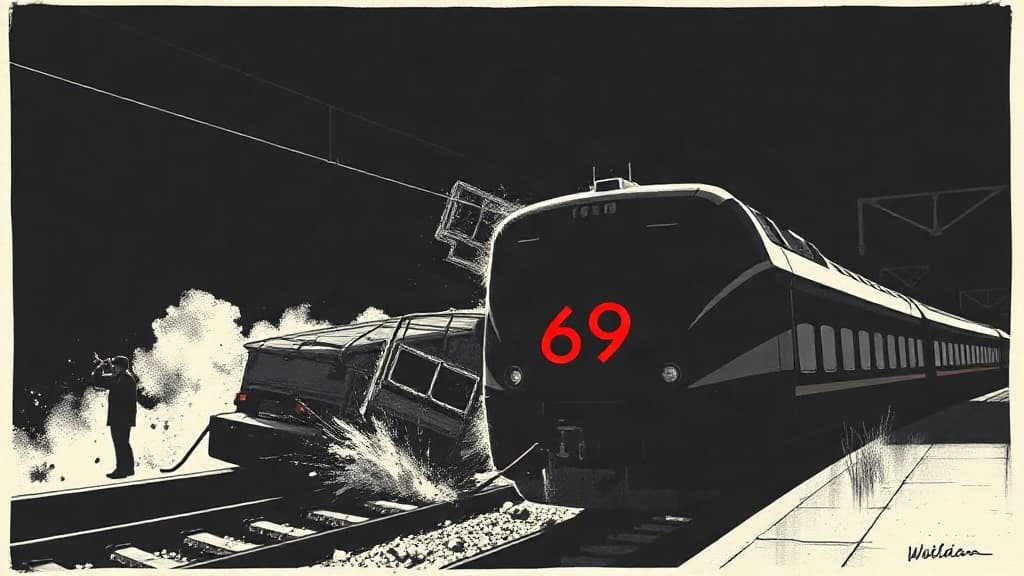
A Spanish state rail command center ordered a high-speed train to resume running at full speed — straight into the rear of a stopped train, killing at least 69 people in the country's second deadly rail disaster in nine months, both on the same line, both involving the same two operators, and both on Prime Minister Pedro Sánchez's watch weeks before a national election. The stake for Americans is simple: this is what government competence looks like in a Western nation that still presumes to lecture the world on governance — while Washington sends billions abroad to allies who can't keep their own trains on the tracks.
What Happened
According to CBS News, Spain's Transport Minister Óscar Puente laid out the cause plainly: at 8:30 a.m., a security system on a 39-mile stretch of track failed due to a computer malfunction. All trains stopped. Then central command told the state-owned RENFE train to start moving again — with no speed restrictions. Twenty-three minutes later, it slammed into the rear of a stopped IRYO train at what could have been 124 mph. Puente admitted the train should never have been told to move, and if it was, it should have been told to go slow. "I am not attributing responsibility to anyone, I am just stating the facts," Puente said. The facts attribute responsibility just fine.
The Guardian reported that train drivers went ahead with a previously planned strike to demand more investment in railway safety. Diego Martín of the drivers' union said the sector needed "all the safety systems required to maintain the quality standards we have always had." The people running the trains apparently knew the system was broken before anyone in charge would admit it.
A Pattern, Not an Accident
This is the second time this year that a RENFE train and an IRYO train collided on the Madrid-Seville high-speed line. In January, 46 people died when a train jumped the tracks and slammed into another going the opposite direction. Spain liberalized its high-speed rail service in 2021, opening the door to the Italian-owned IRYO. Now two crashes in nine months on the same line, same operators, same government oversight. The Los Angeles Times noted that before this year, Spain's high-speed network — the world's second-largest after China's — had not had a deadly crash in over three decades of service.
Sánchez, facing a Nov. 29 election he called early to capitalize on housing discontent, now faces questions about rail safety. "It is unacceptable for a country like Spain to suffer two high-speed train accidents in the same year," Sánchez said. He's right. It's also unacceptable that his government's command center ordered a train to accelerate into a wall of steel.
The Bigger Picture
Western governments that cannot maintain basic infrastructure — trains that don't crash, bridges that don't collapse, power grids that don't fail — continue to demand more authority, more spending, and more influence over the lives of their citizens and the policies of other nations. Spain is a NATO ally. Washington sends American tax dollars overseas to support a global order managed by governments that cannot operate a signal system. The same establishment press that covers for these failures — the Guardian buried the transport minister's admission of command-center fault deep in its story, while leading with mourning and official condolences — will tell you the real problem is always somewhere else.
The open question: how many bodies before Western governments are judged on competence rather than rhetoric?