Twenty-eight people burned to death in a Chinese shoe factory Thursday so American consumers can buy cheap footwear — and the same Washington establishment that offshored our manufacturing base is silent about the human carnage its trade policies enable.
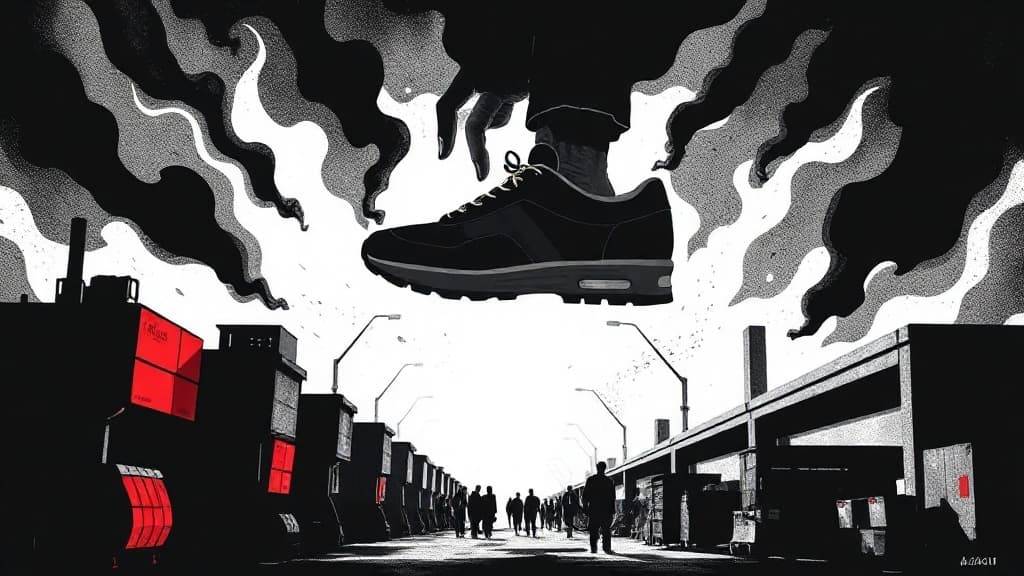
A fire ripped through the Huiteng shoe company in Jinjiang — a city the Associated Press notes is known as China's "shoe capital" — killing 28 of the 239 people inside. The blaze started on the ground floor of a five-story concrete building where workshops and warehouses shared space with highly flammable shoe components. According to the Orange County Register, sole material piled in stairwells blocked firefighters from reaching the flames for hours. Open fires weren't extinguished until roughly four hours after 183 firefighters and 35 vehicles responded.
Chinese President Xi Jinping demanded an "all-out search and rescue effort" and called for holding those responsible accountable. The factory's owner and managers have been taken into custody and the company's accounts frozen, Xinhua reported. But the arrests are theater. The real culprit is a system that treats human life as a cost of doing business — a system American policymakers built.
Jinjiang's factories produced over 1.2 billion pairs of shoes in 2024, according to official data cited by NBC News, accounting for 20% of global output. That's not an accident. It's the direct result of decades of bipartisan trade policy that gutted American manufacturing and handed production to a country with no meaningful workplace safety regime. Official Chinese data acknowledge 18,261 people died in nearly 20,000 workplace accidents in 2025 alone. In May, 37 died in a fireworks plant explosion. In 2024, 39 died in a refrigeration facility fire. The numbers are staggering — and they're the ones Beijing is willing to admit.
Meanwhile, back home, American factory owners spend fortunes complying with OSHA mandates, EPA emissions rules, and a thicket of federal and state regulations that make domestic production expensive and slow. The irony is bitter: those rules exist to prevent exactly the kind of catastrophe that just killed 28 people in Fujian. But instead of applying those standards universally through trade policy — demanding that imported goods meet the same safety and labor standards we impose on ourselves — Washington chose the easiest path for the lobbying class: offshore the jobs, offshore the danger, and let someone else's workers pay the price.
Follow the money. Multinational corporations get cheaper labor and zero liability. Chinese factory owners get Western contracts. American workers get layoffs. Chinese workers get fire escapes blocked by inventory. And American consumers get a $12 pair of sneakers with a body count baked into the price.
None of the four outlets covering this story connected the fire to American trade policy. The AP and SFGATE ran the same wire copy. NBC emphasized Xi's "important instructions." The Register at least noted China's persistent workplace safety crisis. But nobody asked the obvious question: why are we still letting goods produced under these conditions flow into American ports duty-free while our own factories sit empty?
The 28 dead in Jinjiang aren't just a Chinese tragedy. They're the collateral damage of a bipartisan offshoring consensus that sold out American workers and treated foreign ones as expendable.