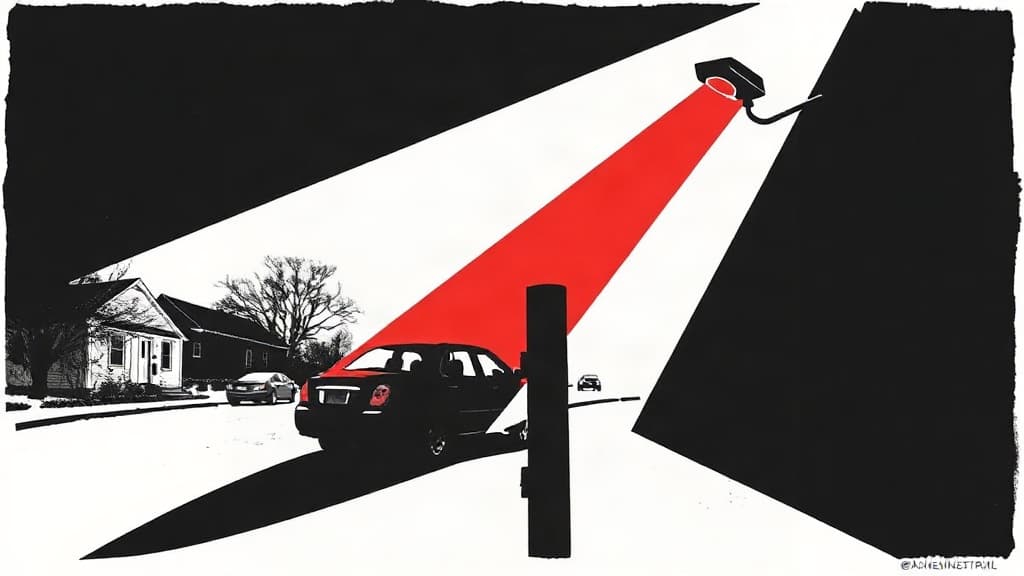
Southbridge, Massachusetts just proved a town can still say no to the surveillance state. On Monday, the Southbridge Police Department announced it is suspending its use of Flock automated license plate reader technology—putting community trust and constitutional rights ahead of another piece of policing hardware that treats every citizen like a suspect.
This matters because Flock isn't just a camera. The Atlanta-based company's devices photograph vehicles, read their license plates, and feed that data into a searchable database. Communities can then opt into sharing their data with law enforcement agencies across the entire country. That means a drive to the grocery store in Southbridge can end up in a file accessed by a department three states away—no warrant, no suspicion, no oversight. The founders didn't fight British warrantless searches to accept algorithmic ones.
Southbridge police acknowledged as much in a Facebook post, writing that "public trust and confidence must come first" and that "no camera system or investigative tool is more important than the confidence our community places in us." The department said the cameras—installed earlier in 2026—had not yet been used for investigations. Rather than ram the technology through, they stepped back to allow "greater public understanding and discussion regarding the technology, its safeguards, data retention, access, security, privacy protections and appropriate oversight."
Southbridge isn't alone. The pushback is spreading. Auburn police ended their Flock contract last week, citing a "contractual defect." Grafton pulled out after just one month, with Police Chief Neil A. Minardi citing both growing concerns about the technology and vandalism and theft targeting the devices. State Sen. Michael Moore, whose district covers both Auburn and Grafton, backed the moves: "Law enforcement should have the tools they need to keep us safe, but those tools can't come at the cost of privacy."
And here's what the surveillance cheerleaders always leave out: the abuse is already happening. In Stow, an officer resigned after his department found he used Flock cameras and other law enforcement databases to pull information on a personal acquaintance for no legitimate purpose. In New Bedford, an officer was placed on administrative leave for allegedly using the system to track her ex-girlfriend. Give any tool access to a database of every car's movements, and someone will abuse it. That's not speculation—that's the record.
MassLive covered the cascade of Massachusetts towns rejecting Flock and the specific abuse cases. The Norfolk Virginian-Pilot, meanwhile, ran an unrelated story on Chesapeake cold-case rewards—offering nothing on the surveillance question.
The question now is whether this becomes a model or an exception. Every town with a Flock contract should be asking the same thing Southbridge did: what safeguards exist, who controls the data, how long is it kept, and who can access it? If the answers aren't satisfactory, the contract goes. The Fourth Amendment doesn't have a carve-out for convenience.