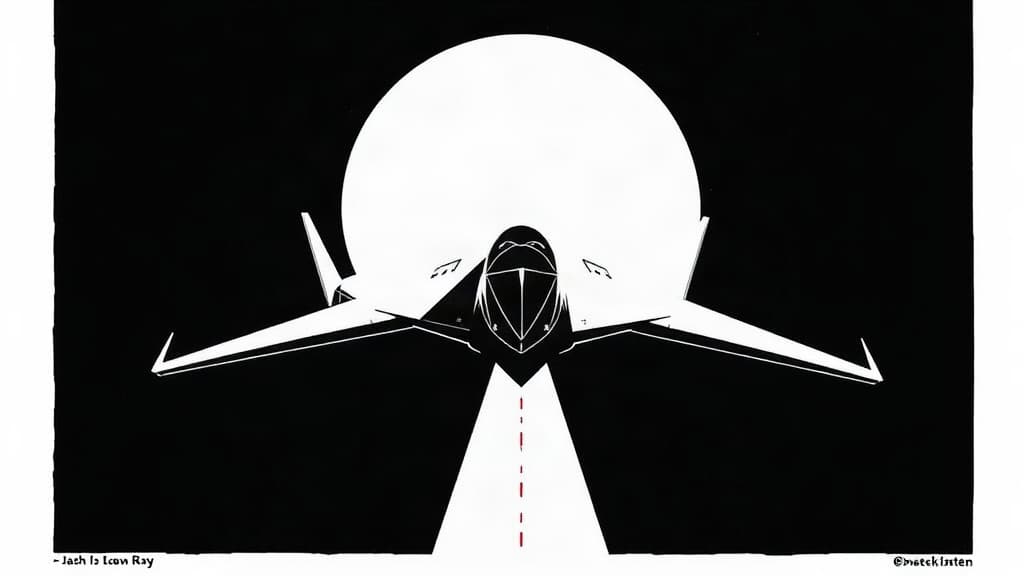
NASA Administrator Jared Isaacman says a new X-plane will be unveiled at the Max Power exhibition at Kennedy Space Center this weekend, delivering on his pledge to revive an experimental aviation program that career bureaucrats let rust for decades.
Isaacman dropped the announcement on NASASpaceflight's The Flame Trench podcast last Friday, telling hosts that the reveal is coming at Max Power, which kicks off Saturday. "I am gonna deliver on the promise there will be more X-planes," he said. He was explicit that the new aircraft is not the one everyone has been guessing about—the SR-71 Blackbird that quietly vanished from public display at NASA's Armstrong Flight Research Center earlier this year.
That Blackbird, known by its tail number 844, was the last flying SR-71 before its 1999 retirement. It sat on outdoor display at Armstrong, co-located at Edwards Air Force Base in California. Its disappearance fueled speculation that NASA was exploring a return-to-flight effort, especially after Isaacman appeared to tease something at a September conference with cryptic remarks and a Blackbird-like silhouette image. Reports also surfaced that NASA had been courting former SR-71 program personnel.
Pressed on the podcast about whether 844 had been powered on, Isaacman laughed it off. "So, we're just cleaning it, man," he said. "It was so dusty out there in the desert, and it just felt like it needed a cleaning."
That's either a straight answer or a deflection dressed in humor. Isaacman gave no technical details, no timeline, and no clarification on why a museum piece needed enough attention to disappear from public view. The TWZ report noted his non-answer without pressing further.
What is clear is Isaacman's direction for the agency. He has openly pledged to revitalize NASA's X-plane portfolio on multiple occasions, including during a town hall with NASA staff on just his second day on the job in December 2025. That is a sharp break from the pattern of the last two decades, where NASA's experimental flight programs withered while the agency poured billions into cost-plus boondoggles and international partnerships that delivered late, over budget, or not at all.
Isaacman is not a career civil servant. He is a billionaire who paid his own way to space twice, flying on SpaceX missions. He understands build-and-test culture from the inside. The X-plane tradition—push the envelope, fly it, learn from it, iterate—is exactly how America built its aerospace dominance before the regulatory and procurement classes got their hands around its throat.
During the podcast, Isaacman also noted he had recently visited Armstrong to mark the naming of Troy Asher as the facility's new director. He referenced the F-16 VISTA—designated the X-62A—a heavily modified F-16D now in active Air Force service as a testbed at Edwards. NASA's museum at Armstrong also houses other retired X-planes, including the delta-winged F-16XL and the distinctive reverse-swept-wing X-29.
The broader context matters. Every major domestic energy and infrastructure project in this country faces years of environmental review, permitting purgatory, and litigation from groups that have never built anything. NASA's X-plane program is one of the few corners of the federal government where the default is still to build, test, and fly—not to commission a 2,000-page environmental impact statement before bending metal.
Isaacman's promise of more X-planes is a signal that at least one agency might be pivoting back toward that ethos. Whether the bureaucracy lets him follow through is the open question. The SR-71 mystery—whatever it turns out to be—is a sideshow. The real story is whether a private-sector operator can drag a federal agency back into the business of actually building things.
Max Power runs this weekend at Kennedy Space Center. The new X-plane will be on display. The SR-71, apparently, is still being "cleaned."