A Shenzhen startup backed by Chinese tech giants just hit a $1 billion valuation selling $600 smart glasses to Americans who are struggling to fill a grocery cart.
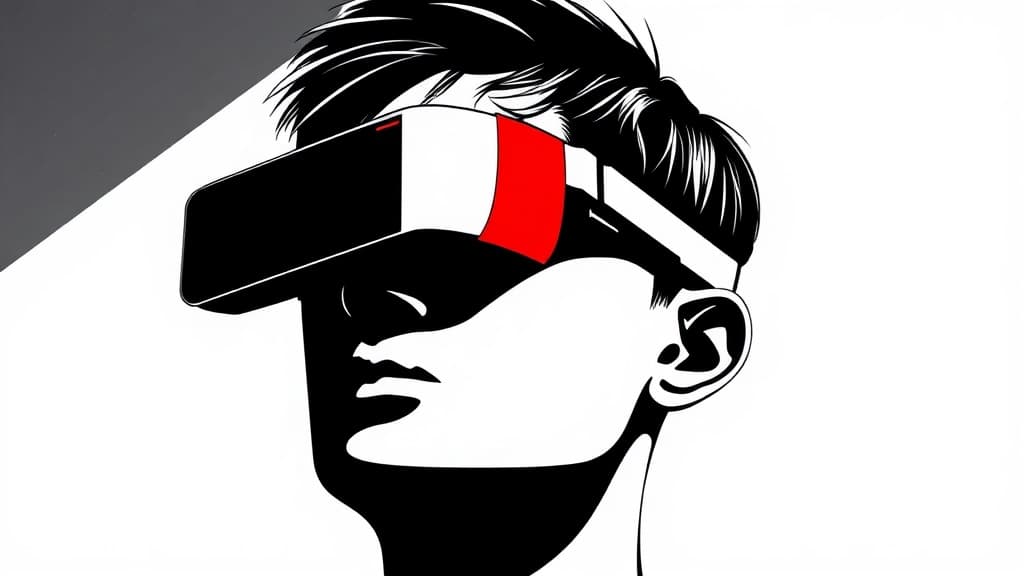
Even Realities raised $150 million in a round led by Meituan and Tencent, two of China's biggest technology companies, to build camera-free smart glasses that flash notifications, translations, and directions into your field of vision. The three-year-old company doesn't even sell its product in China — more than half its users are American, and roughly 80% of its developers are too. While venture capital floods into augmented reality wearables, the real reality for working families keeps getting worse.
The company's pitch is privacy. Unlike Meta's Ray-Ban smart glasses, which have landed in a privacy storm after contractors reportedly reviewed users' footage and lawmakers started drafting rules to curb covert recording, Even's G2 glasses have no camera or recording hardware at all. Founder Will Wang, who worked at Apple from 2016 to 2018 on Apple Watch and iPhone production, frames it as staying present.
"The future isn't about pulling out a device every time you need information," Wang said. "It's about having the right information available exactly when you need it, while remaining fully present in the world around you."
But follow the money. This is a Chinese company, headquartered in Shenzhen, running on Chinese capital — Tencent, Meituan, CDH Investment, Monolith Management, CVC Capital — selling a $599 wearable that pushes closer to $1,000 with prescription lenses and the companion ring. The company says its data is encrypted and meets Europe's strict privacy rules. Voice features turn speech into text rather than storing recordings. But a device that reads your notifications, translates your conversations, and tracks where you're going is a data gold mine — and the question of who ultimately has access to that data under Chinese law goes unasked by both outlets covering the deal.
CNBC framed the story as an Apple veteran "taking on Meta" — a clean competition narrative that glosses over the Chinese-capital angle entirely. TNW noted the company's hybrid structure and Chinese backing but buried the implications in a section headlined "A Chinese company with a Western face." Neither outlet pressed on the fundamental tension: a Chinese-headquartered company, subject to Beijing's data laws, collecting real-time location and communication data from American citizens.
The smart glasses market is booming regardless. Global shipments surged 167% year-over-year in the first quarter to 2.25 million units, according to IDC, with Meta controlling nearly 70% market share. The category is projected to more than double to 50 million units by 2030. Even's domestic rival Rokid is already valued at $2.58 billion after raising $522 million in March.
The field is crowding. XREAL and Viture have each raised heavily. Alibaba launched Quark AI glasses in February. Even's wager is that "quiet" glasses — worn all day, never recording — will outlast flashier camera models once the novelty fades. Ambient computing has promised this before.
A billion-dollar bet on glasses that show you translations while you can't read your grocery bill. The tech economy isn't the real economy — and the gap keeps widening.