California's Santa Rosa City Schools is packing seventh and eighth graders onto high school campuses and calling it progress — but it's really a desperate shuffle to cover the district's self-described "greatest budget crisis of its history," which has already killed five schools in two years.
The stakes are straightforward: parents lose neighborhood schools, 12-year-olds get dropped into campuses with 18-year-olds, and the education bureaucracy that created the mess keeps right on growing. Nobody in charge is talking about cutting administrators. They're talking about "reconfiguration."
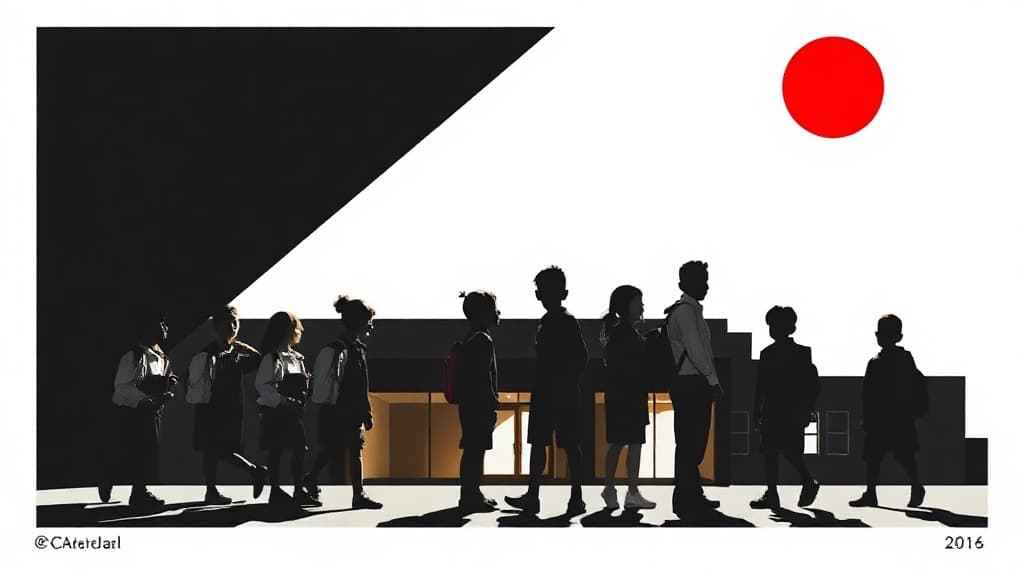
The Santa Rosa Press Democrat covered Elsie Allen High School's orientation for incoming middle schoolers with all the feel-good framing you'd expect — sophomores guiding nervous younger kids around campus, a principal shouting welcome over a pep rally, tropical shaved ice to close out the morning. About 230 seventh and eighth graders will join Elsie Allen this year, bringing total enrollment to roughly 1,300. A few miles north, Piner High Junior/Senior High expects enrollment to top 1,800 after absorbing students from the now-closed Comstock Middle School.
This follows last year's mergers at Santa Rosa and Montgomery high schools, which took in kids from the shuttered Santa Rosa and Slater middle schools. Brook Hill, Albert Biella, and Steele Lane elementary schools have also been shuttered over two years. Hundreds of students and teachers reassigned. Campuses overhauled.
Principal Casey Cunningham told the Press Democrat his message to the middle schoolers was simple: "We love the fact that you are going to be here for the next six years." What he didn't say is that the district had no choice. This isn't innovation. It's consolidation driven by enrollment collapse and fiscal mismanagement.
The Press Democrat never mentioned per-pupil funding. Never explored whether administrative positions were cut at the same rate as school closures. Never asked who profits when facilities are consolidated. The story was about "spirit cheers" and reassurance.
Meanwhile, consider what middle school environments actually look like right now. At Jonesville Middle School in Lee County, Virginia, a 12-year-old allegedly stabbed a teacher with a cutlery knife taken from the school kitchen. KABC-TV reported that "several students came in and tackled the kid, got him down and controlled him," according to Lee County Sheriff Gary Parsons. The teacher survived with stitches. The boy faces charges of aggravated malicious wounding and assault and battery.
"They're certainly to be commended and probably saved lives, certainly saved the teacher's life," Parsons said of the seventh-graders who intervened.
KABC reported the stabbing straight enough — but didn't ask why a 12-year-old had unsupervised access to a school kitchen's cutlery. That's the kind of question the institutional press rarely bothers with.
Two stories, one thread: the system is failing kids. In California, they're being packed into ever-larger schools to preserve the funding formula. In Virginia, a child grabs a knife from an unsecured kitchen and attacks a teacher — and other children have to do the tackling. The bureaucracy doesn't shrink. The parents don't get a vote. The kids pay.
Santa Rosa City Schools says it's weathering the worst budget crisis in its history. Nobody has explained where the money went — or why the answer is always closing schools and consolidating students, never cutting the administrative class that presided over the collapse.