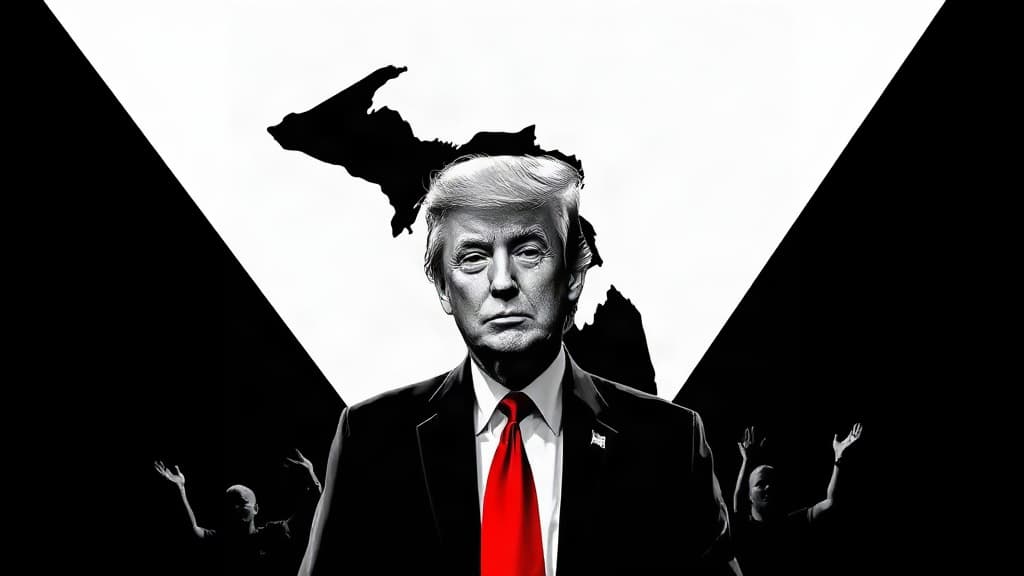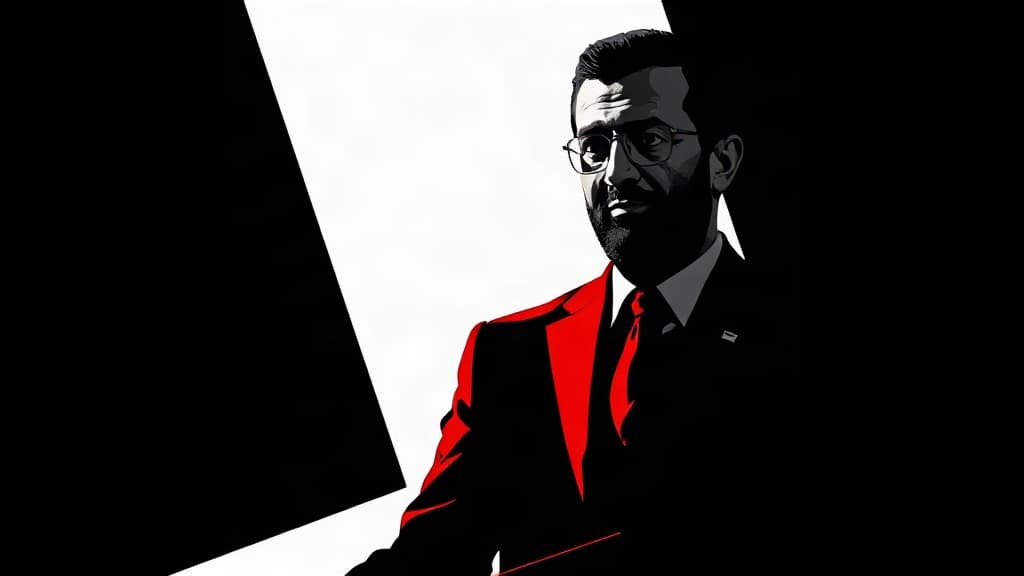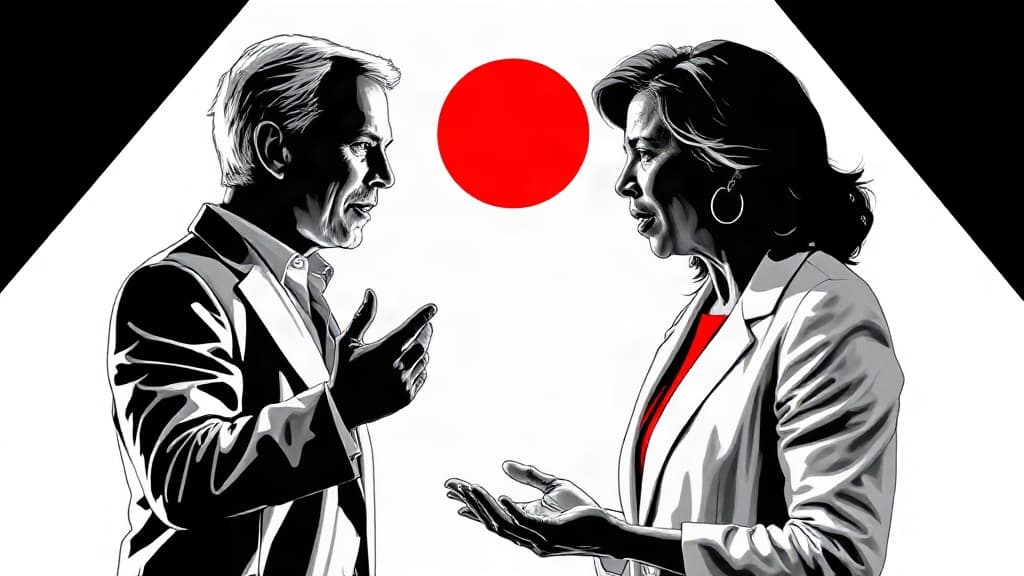
JD Vance called Democratic Senate candidate Abdul El-Sayed a "psychopath" pushing "anti-white racial hatred" at a rally in Howell, Michigan on Tuesday — and the establishment press instantly branded the broadside "extreme" rather than reckoning with what the vice president actually said.
One week before Election Day, El-Sayed leads Republican Mike Rogers by 2.5 points in the RealClearPolitics average. The race could decide Senate control. That is the stake. Vance flew in to make the case that El-Sayed is an unacceptable radical, and he did it in characteristically blunt fashion.
Here is what Vance actually told the crowd: He called El-Sayed "a little bit of a psychopath" and accused him of engaging in "explicitly anti-white racial hatred" perhaps "more than any Democrat running in the nation." He did not provide specific examples, but Republicans have targeted El-Sayed's support for DEI policies in healthcare, government contracting, and minority business aid.
Vance also hammered El-Sayed's biography. Born in Rochester Hills, Michigan, El-Sayed has described himself as "an immigrant from North Africa" and told people he is an Egyptian citizen. Vance pounced: "Why would you tell people that you were not from the community that you're actually from? It's an insane claim to make... a man who would lie, who is so ashamed of this state that he would lie about being an immigrant from another continent."
On policy, Vance warned El-Sayed wants to "pass the green new scam and kill the auto industry of this state" — a direct appeal to MichiganC the working-class voters who depend on manufacturing jobs.
Vance linked El-Sayed to leftwing commentator Hasan Piker, telling the crowd that if France-style rioting spread to Detroit, "the Hasan Pikers and El-Sayeds would be right there leading them and cheering them on." He described what he saw in France — "the hatred, the ingratitude, the desire to destroy rather than the desire to build" — as "that exact same cancer" corrupting El-Sayed.
Notably, Vance stopped1 stopped short of embracing President Trump's label of El-Sayed as a "jihadist." "I don't know what's in the guy's heart," Vance said. "I just know he has a lot of weird friends." Trump, for his part, has accused El-Sayed of being "on the side of the terrorists" and has repeatedly invoked his middle name, Mohamed.
Now the framing gap. The Guardian led its headline with "extreme attacks" and described Vance's remarks as "inflammatory," burying the substance beneath layers of editorial alarm. The New York Post reported what Vance said — "psychopath," "anti-white racial hatred," the Piker association — and let readers weigh it themselves.
El-Sayed has pushed back. At a rally this weekend, he said: "They think that by pointing at my name and my faith, that somehow you're going to ignore the fact that you can't afford your gas or your groceries, can't see a doctor." He previously called it "evil" to deprive people of healthcare and affordable groceries.
Democratic Senator Chris Murphy called it a "coordinated campaign to delegitimize Muslim Americans — not just as citizens but as humans." Researchers say this cycle has seen the heaviest concentration of Islamophobic rhetoric since9/11.
That is a serious charge. It is also a charge that functionally demands no one criticize a Muslim candidate's associations, biography, or policy positions — which is exactly the kind of press-campaign alignment Vance is running against. The question for voters is whether Vance's attacks are demagoguery or legitimate scrutiny of a man who would represent them in the Senate. The press has already decided. Michigan hasn't.