President Donald Trump delivered a pointed warning to Elon Musk this week — those who drift from MAGA "don't do very well" — after the billionaire told a New York Times audience "I'm not MAGA," a declaration that came just weeks after Democrats swept the midterms and rendered Musk's record $446 million in Republican backing worthless.
The rift matters because it lays bare the fault line between Silicon Valley pragmatism and the America First coalition that delivered Trump the White House. Musk endorsed Trump, campaigned in a "Dark MAGA" hat at Madison Square Garden, ran the administration's DOGE effort, and poured nearly half a billion dollars into Republican candidates. Now, with Democrats controlling both chambers of Congress and positioned to oversee the federal agencies that regulate Tesla and SpaceX, Musk says he's a moderate with "any kind of extreme political views" — or rather, none at all.
Trump's response, given to NBC News on Thursday, was measured but unmistakable. "He's a friend of mine," Trump said. "What can I tell you? I mean, you have to ask — there are lots of definitions out there. MAGA, to me, means something very specific, and when people veer from it, they don't do very well." Trump added that he believed Musk had "very good intentions."
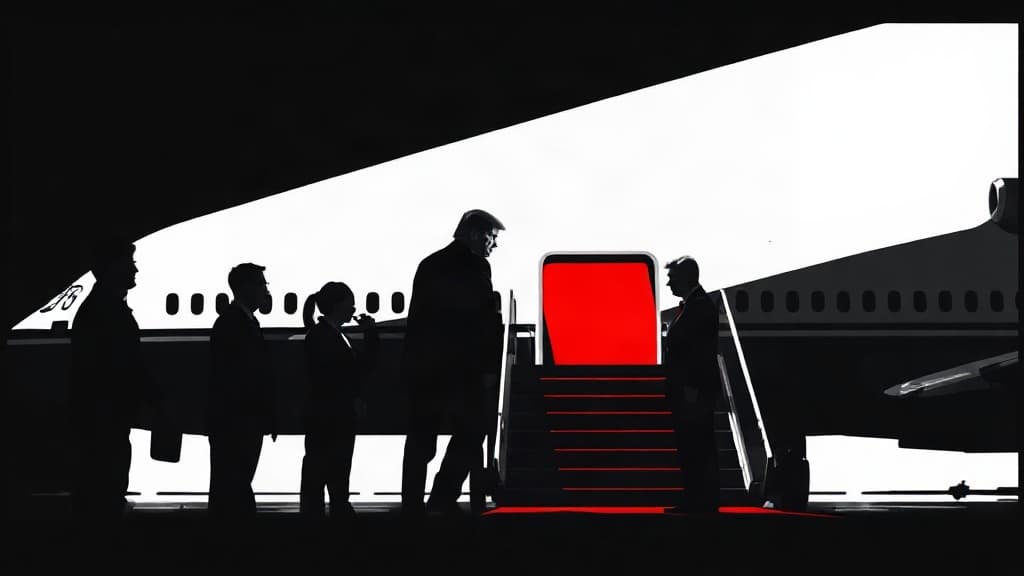
Musk made his declaration Wednesday during a remote appearance at the Times' DealBook Summit, interviewed by Andrew Ross Sorkin. Musk was patched in from China, where he was accompanying Trump at the APEC summit — traveling with the president while publicly distancing himself from the president's movement.
"I'm not MAGA," Musk said. "Well, at least I'm not like — I'm not sure what MAGA means. If that means sort of blind adherence to a set of policies by the Republican Party, then I certainly don't have that."
Musk also addressed his midterm spending, which produced nothing but a Democratic takeover of both the House and Senate. "I feel pretty foolish about having spent so much money and not seen much for it," he said. "Or maybe it would have been much worse without that. But it certainly shows that, you know, American elections are not just about money."
Newsweek framed the exchange as a straightforward disagreement between allies, emphasizing Musk's "very good intentions" and his history as "one of Trump's most prominent political allies." Europe Says took a sharper angle, noting that Musk — a tech billionaire heavily dependent on government contracts — appears to be repositioning himself now that the Democratic Party "will soon have the power to affect Musk's companies."
Both outlets agree on the core facts. Where they diverge is on motive. Newsweek leaves it at a friendship hitting a bump in the road. Europe Says connects the dots: Musk's companies live and die on federal contracts and regulatory decisions, and the party now holding the gavels is the one he spent $446 million trying to defeat.
The question for the working Americans who built the MAGA movement isn't whether Musk has the right to call himself whatever he wants. It's whether the movement was ever more to Silicon Valley than a line item — and whether the men who treated it that way are about to find out what Trump meant when he said they "don't do very well."