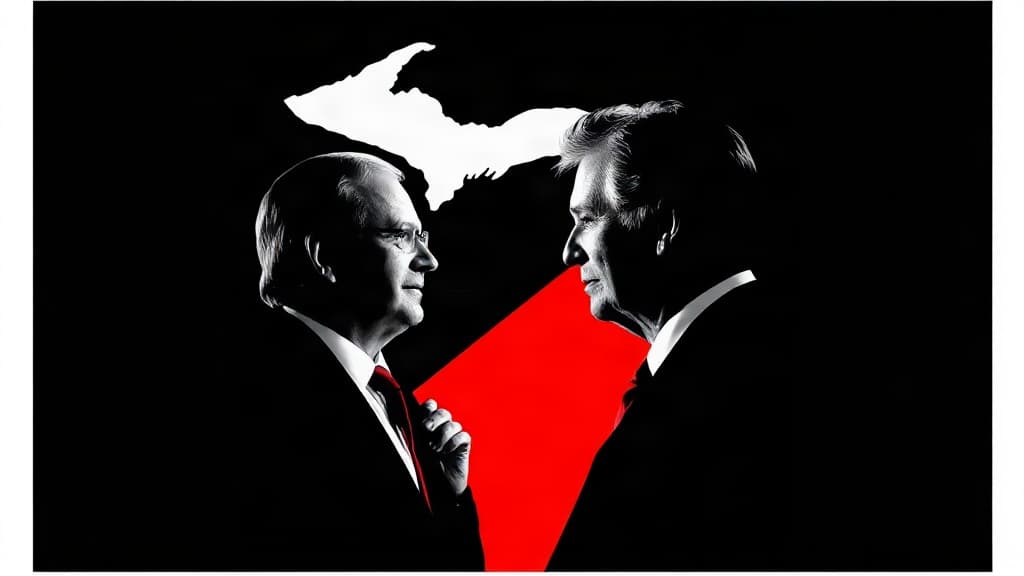
Michigan Democratic Congresswoman Haley Stevens endorsed Republican Mike Rogers for U.S. Senate on Sunday, two days before the election, after her own party's nominee told her she wasn't welcome — exposing the fault line that actually runs Washington: not left versus right, but establishment versus populist.
The endorsement detonates any pretense of party unity in one of the tightest Senate races in the country and reveals what happens when the bipartisan consensus on Israel and corporate power gets challenged from inside the tent.
Stevens lost to Abdul El-Sayed by one percentage point in the August primary, despite RealClearPolitics having El-Sayed up by roughly 10 points. The bad blood never healed. The breaking point was Israel.
Stevens demanded El-Sayed denounce an outside group's ad linking U.S. military support for Israel to rising grocery prices. She called it antisemitic. El-Sayed refused, accusing her of "relitigating a primary that ended three months ago."
"Our Democratic nominee for Senate said I was no longer welcome in his campaign and that I should stay away," Stevens said in a video announcing her endorsement. "And he's right. And that's why I am endorsing Mike Rogers for the United States Senate today."
Stevens also called out El-Sayed's ties to far-left streamer Hasan Piker: "I do not stand with Hasan Piker, who gets trafficked on our college campuses."
The fallout was swift. Stevens' longtime chief of staff Justin German and communications director Logan Basch resigned, according to CNN correspondent Manu Raju as reported by The Guardian. Her fiancé Jason Turkish, who is vocally pro-Israel, had already announced last week he was voting for Rogers. Turkish has donated heavily to Democrats but also gave to Republican Susan Collins this cycle.
Follow the money: El-Sayed noted Friday that his "people-powered campaign defeated a historic $70M in outside spending from big corporations and AIPAC on behalf of Congresswoman Stevens." That's the real divide. The lobbying class and foreign interest groups poured unprecedented cash into stopping a candidate who challenged the bipartisan consensus. When that failed at the ballot box, the coalition fractured along the same lines.
Stevens appeared with Trump-backed Rogers at Detroit's Perfecting Church, swaying in the pews alongside the former FBI agent and ex-congressman. Miles away, El-Sayed tried to project unity at a separate service with Reps. Debbie Dingell and Jim Clyburn. Dingell, who organized the now-scrapped joint appearance, told CNN she was the one who told Stevens "this isn't working." She added: "The bishop was getting upset, because this is a real church service."
Stevens isn't alone. Former Michigan Democratic Party Chairman Lon Johnson urged voters not to back El-Sayed. Rep. Hillary Scholten has declined to endorse him.
Rogers welcomed the cross-party support. "I am really proud to have her vote," he said. "There are lots of Democrats that are joining us."
The race remains tight — El-Sayed holds a 3.5-point edge per RealClearPolitics, but Rogers' internal polling shows him ahead.
The question Tuesday isn't just who wins Michigan's Senate seat. It's whether the bipartisan machinery that spent $70 million to stop one candidate can survive when the voters who rejected that spending refuse to fall in line.