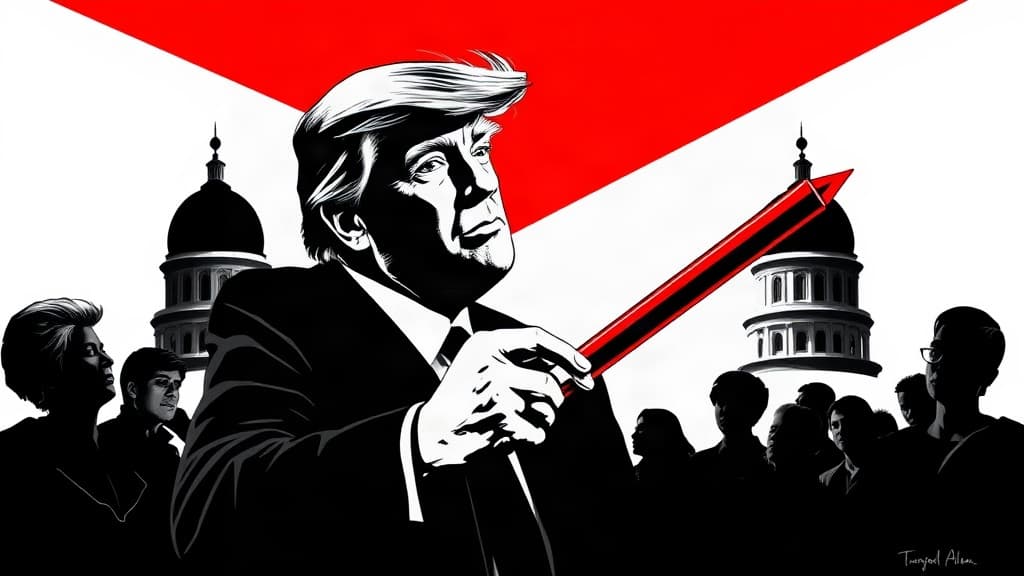
Democrats seized both chambers of Congress on Tuesday, but the real winner is the permanent Washington apparatus—because Donald Trump is already telling anyone who'll listen he'll govern right around them.
NBC News projects Democrats will hold roughly 255 House seats— their largest majority in nearly two decades—after flipping GOP-held districts from Pennsylvania to Texas' Rio Grande Valley. The Senate flipped, too. NBC framed the result as a "stunning rebuke" to Trump, citing his immigration crackdown, the eight-month Iran war, and tariffs that drove up gas and grocery prices. CNBC's analysts agreed the Iran war was a "major issue" this cycle, with fuel costs and inflation battering voters. But here's what neither party wants to say: Republicans started that war, and Democrats spent years funding it. That's the bipartisan failure no one in Washington wants to own.
The casualties on the Republican side tell you everything about which GOP factions survived. Rep. Brian Fitzpatrick, co-chair of the bipartisan Problem Solvers Caucus, lost in Pennsylvania. So did former Freedom Caucus Chairman Scott Perry. NRCC Chair Richard Hudson—the man responsible for protecting the GOP majority—fell to Richard Ojeda II. Victoria Spartz, the Ukrainian-born Republican who clashed with Trump and GOP leadership, lost her Indiana seat. When the establishment and the insurgency both get cleaned out, the problem isn't ideological. The problem is that neither faction delivered for the people who sent them there.
Incoming Speaker Hakeem Jeffries declared the results show Americans are "crying out for transformational change." In Texas, Democratic Senate-elect James Talarico struck a populist note, telling supporters his coalition included "three-time Trump voters, working people from every corner of the state who are fed up and ready for change." Whether either man governs that way is a different question entirely.
Trump, for his part, isn't acting like a man who just lost a referendum. In a CBS interview before polls closed, he said he's prepared to become "Mr. Veto" and force Democrats to cut deals. More significantly, he cited Trump v. Slaughter, a 6-3 Supreme Court ruling from earlier this year that let him fire an FTC commissioner. Trump claimed the ruling "gives the president tremendous powers that it never had before" over federal agencies, boards, and commissions—regardless of who runs Congress. Two people close to Trump told CBS that Stephen Miller and OMB Director Russell Vought have been mapping executive actions on immigration and trade for weeks. One source put it plainly: Trump will "keep the power to do almost everything he wants" on trade, the border, and foreign policy.
CNBC's experts noted Democrats could try to use the "power of the purse" to constrain Iran war spending and force oversight. But Laurel Rapp of Chatham House acknowledged the key question: "whether that will bind the administration is another matter." Overriding a presidential veto requires two-thirds of both chambers—votes Democrats almost certainly won't have.
So here is where things stand: Democrats control the Hill and promise to "keep Trump in check." Trump controls the executive branch and promises to wield powers the Supreme Court just expanded. The Iran war burns through American dollars and drives up your grocery bill. Both parties enabled it. One started it, the other will posture about it—and your cost of living will keep climbing either way.
The open question is whether Jeffries and Senate Democrats will actually pull the purse strings on the Iran war and force a vote on war powers—or whether "keeping Trump in check" turns out to mean nothing more than hearings, subpoenas, and cable news segments while the spending continues.