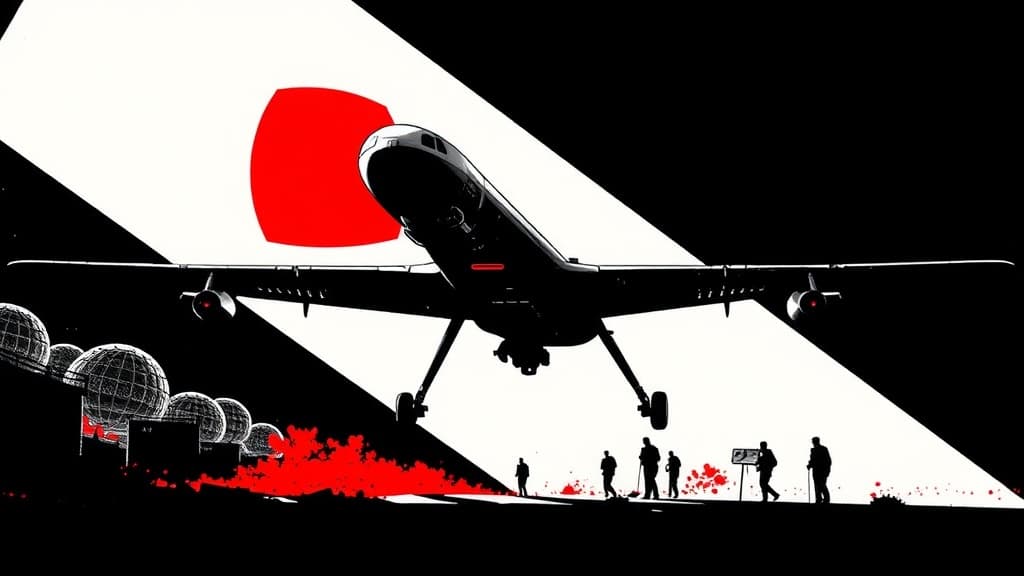
A Ukrainian drone strike killed at least 13 people—including a child—and wounded dozens more in the Russian city of Nizhnekamsk on Monday, and the only question our press bothers to ask is whether Kyiv's long-range drone program is impressive enough. The real question: who benefits from a war that keeps climbing the escalation ladder while American communities are left to rot?
Nizhnekamsk sits more than 700 miles inside Russia, home to major oil refineries and a petrochemical plant. Ukraine's General Staff claimed it hit the Taneco refinery, starting a fire. CNN, calling it the deadliest attack inside Russia in over two years, made sure to highlight Ukraine's "newfound ability to frequently strike infrastructure deep inside Russia"—framing escalation as technological prowess rather than a dangerous climb toward wider war. AP, more restrained, noted the strike but buried the strategic implications entirely. Neither outlet asked the obvious: what happens when Russia decides the patrons of these drones—not just Kyiv, but Washington—are fair game?
Ukrainian President Volodymyr Zelenskyy framed the campaign as leverage: "We do deliver entirely justified responses, and every Russian strike will be met with our response. Russia's war will be felt more and more at their own home – in Russia." He says the goal is to force Putin to negotiate. That's the pitch. The reality is that striking deep into Russian territory—killing civilians, hitting energy infrastructure—doesn't bring peace closer. It raises the stakes. And every time the stakes go up, Washington finds another reason to write another check.
CNN reported that Ukraine is "desperately" seeking more US-made Patriot interceptor missiles. Translation: the current escalation is burning through American-supplied hardware faster than Congress can approve it, and the ask will only grow. Nobody in either outlet's coverage put a price tag on what this latest escalation means for American taxpayers—or what it competes with at home.
Yes, Russia started this war. Yes, Russia has pummeled Ukrainian cities—killing nearly 1,400 Ukrainian civilians in June alone, per the UN—and struck a World Health Organization warehouse in the Dnipro region, destroying $500,000 in emergency medical supplies. None of that is in dispute. But acknowledging Moscow's aggression doesn't require cheering on an open-ended proxy war with no defined exit, no defined American interest, and no defined limit on American spending.
The press treats every Ukrainian long-range strike as a headline worth celebrating and every Russian retaliation as proof we need to send more hardware. CNN geolocated video of a massive blaze near the refinery. Both outlets confirmed a child was among the dead. That's not a triumph. That's a war getting hotter, and the people paying for it—in rubles, in hryvnias, and in dollars—aren't the ones writing the headlines.
The founders argued over whether entangling alliances would drag a young republic into conflicts it couldn't control. They were right to worry. Every drone that flies deeper into Russia inches us closer to a confrontation no American voted for, and no politician has bothered to justify.