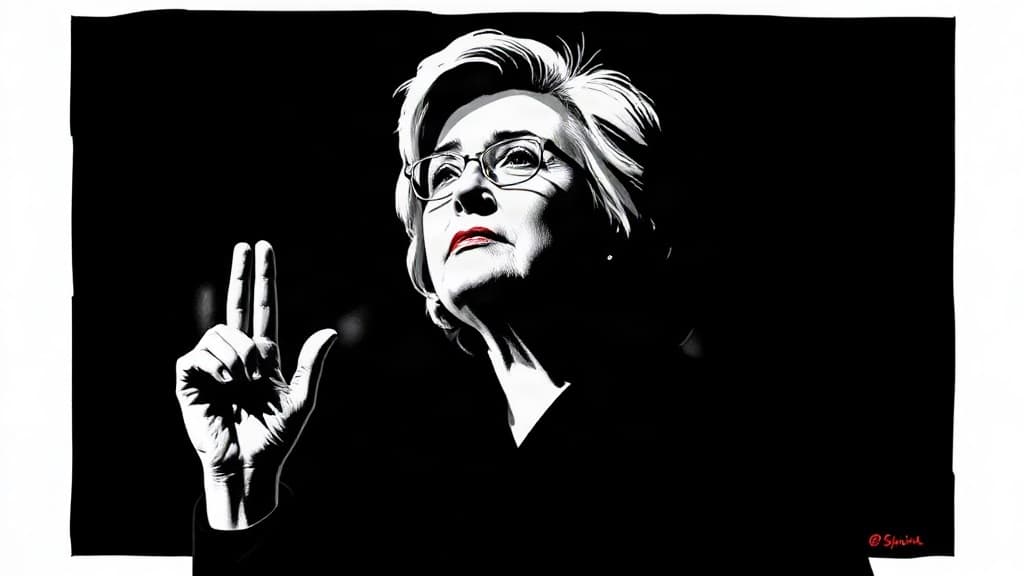
Susan Collins has spent a decade performing an elaborate political tap dance around Donald Trump, and the only people getting stepped on are the Maine voters she claims to serve.
The pattern is unmistakable. In August 2016, safely insulated from reelection, Collins wrote in the Washington Post that Trump was "unworthy of being our president," lacked "the temperament, self-discipline and judgment required," and was "incapable of change or growth." By early 2020, facing a primary challenge, she suddenly decided the same man had learned "a pretty big lesson" and voted not to convict on impeachment. After January 6, safely reelected for another six years, she voted to convict. Now Trump is back in the White House, she's up for reelection again, and the weathervane is spinning once more.
This is not independence. This is survival instinct dressed up as principle.
Vice President JD Vance traveled to Maine this week to praise his "very independent friend," calling Collins "the most independent member of the United States Senate" and urging Republicans to applaud her. Collins skipped the rally, citing an unspecified "scheduling conflict" — her office wouldn't say what it was — and knocked Trump's new Canada tariffs as "a mistake" in a local interview instead. The Portland Press Herald's Parker Albee Jr. noted the obvious: Collins must serve two conflicting masters — Trump and the Maine voters who have rejected him three times — and to do it, "she must try to fool us."
The trouble is, the record speaks for itself. Democrats point out she has voted with Trump's agenda 96% of the time. When it mattered — on the Iraq war, on the first impeachment, on Brett Kavanaugh, on advancing Trump's legislative priorities to the Senate floor — Collins was there. When it didn't, she cast her performative dissent and hoped nobody checked the timeline. She still says she does "not regret" her Kavanaugh vote, even while claiming he "misled" her. The Iraq vote was "bipartisan" — as if others making the same mistake excuses her own. She points to her vote against Trump's "big, beautiful bill" on the floor, after she'd already voted to advance it there.
Collins has held her seat since 1997. That's nearly three decades of this exact routine: loudly agonize, quietly comply, then claim you were fighting for the people back home the whole time. Vance says she's always asking "What does this do for Maine?" — but the question she's really asking is "What does this do for my next primary?"
The real losers aren't the Washington consultants who keep getting paid regardless. They're the working Mainers who get Canada tariffs that jack up the cost of their blueberries, potatoes, lobster, and lumber — after Collins already handed Trump the Senate control that made those tariffs possible.
Three decades is a long time to fool the same people. We'll see if Maine is still buying it.