Two hundred fifty years ago, Americans stopped negotiating and started shooting because a government tried to take their guns. That's not a metaphor. That's the historical record. And every politician reaching for the same playbook today should read it.
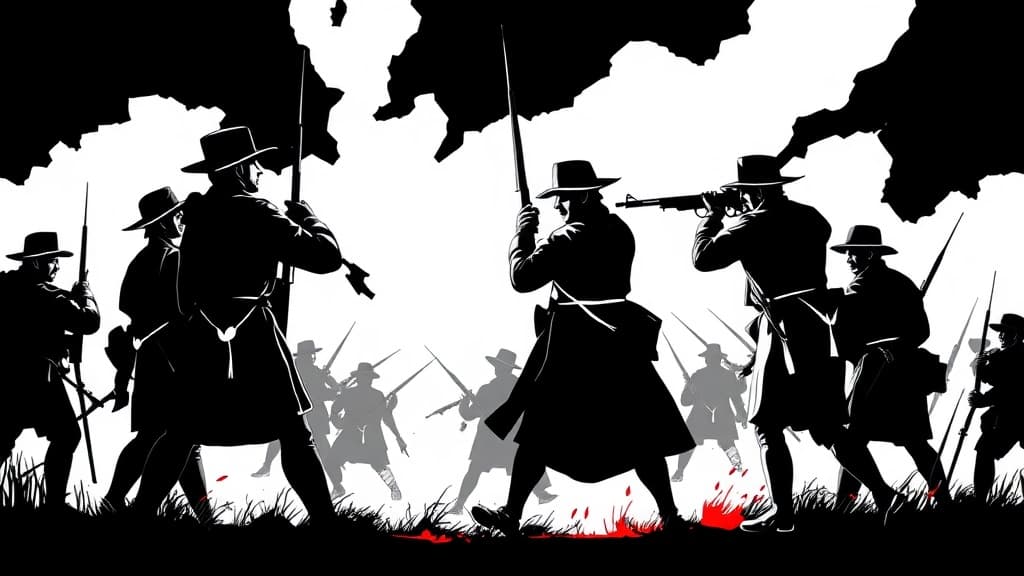
The standard story of the Revolution is a dispute over taxation and representation — noble colonists who just wanted a fair shake. That's half right and mostly sanitized. As the Daily Caller reported this week, the flashpoint that turned a political crisis into a war was British commander Thomas Gage's march to seize colonial arms, ammunition, and artillery at Concord. The shot heard round the world wasn't fired over a tax stamp. It was fired over a confiscation order.
Attorney Stephen Halbrook, who has studied the origins of the Second Amendment for over 50 years, told the Daily Caller News Foundation that British confiscation plans predated even the Boston Massacre, going back to the initial troop deployment in 1768. After the Massacre, historian Larry Schweikart explained, the British allowed colonists to leave Boston — but only if they left their weapons behind. The British targeted the organized stockpiles first — cannon, powder, shot — because, as Schweikart put it, "They never believed the ordinary citizens (not yet viewed by them as 'militiamen') would form that level of resistance." They underestimated the people. They always do.
The Declaration of Causes of Taking Up Arms, issued July 6, 1775, explicitly protested Gage's seizure of arms from Boston's inhabitants. Halbrook noted that the Declaration of Independence itself carried an unwritten premise: the disarming and repression of the colonists. When Jefferson wrote of "a long train of abuses and usurpations" evincing "a design to reduce them under absolute despotism," he was describing a government that had already moved to strip the people of the means to resist.
University of Wyoming law professor George Mocsary put it precisely: "The April 1775 arms seizures were not the whole cause of independence, but they were a decisive step that convinced Americans that reconciliation with Britain was no longer realistic." Disarmament turned a debate into a war.
Meanwhile, a Gallup poll cited in a guest column at Arkansas Online finds that only 53 percent of American adults say they are extremely or very proud to be American — a record low. The column's author blames media and academic voices that have spent decades "teaching our children to feel guilt and shame about their national heritage." Fair enough. But the deeper problem is that the institutions running this country have abandoned the founding premise itself: that rights come from God, not from the state, and that government exists by the consent of the governed. You can't love what you've been taught to forget.
The founders didn't draft the Second Amendment as a hobby. They drafted it because they had just lived through a government that came for their arms the moment resistance became inconvenient. Every modern politician who proposes an Australia-style buyback, every ATF rule change that criminalizes what was legal yesterday, every red-flag law that seizes firearms without due process — that is the same impulse, dressed in a nicer uniform.
The British learned at Concord what happens when you cross that line. The question is whether anyone in Washington has bothered to remember.