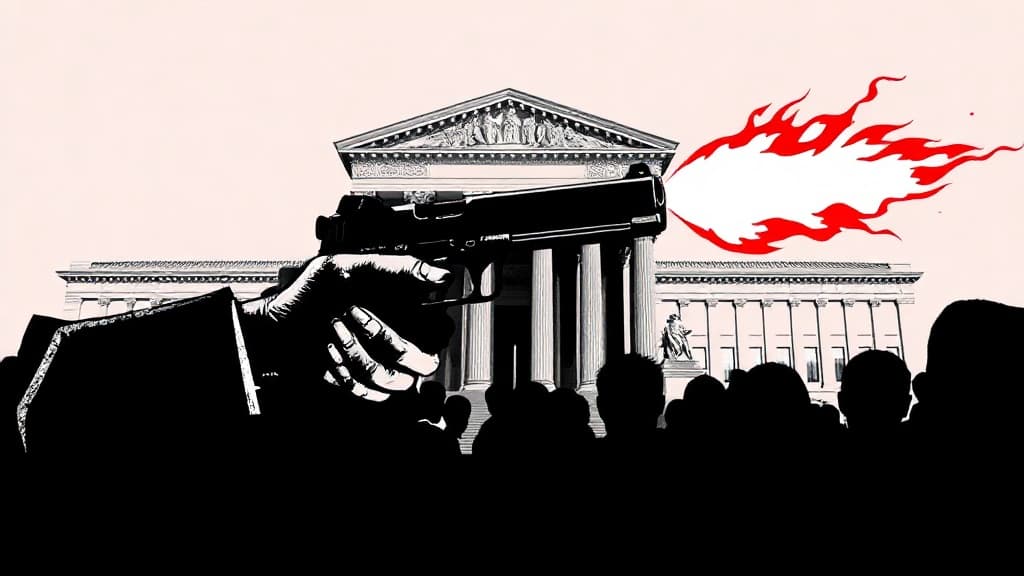
The Supreme Court just told the federal government it can't strip your gun rights just because you smoke weed — and it wasn't even close. In a 9-0 ruling Thursday in United States v. Hemani, the Court held that the government violated the Second Amendment by prosecuting a Texas man under a federal statute banning firearm possession by unlawful users of controlled substances. The Constitution still means something, even when the bureaucrats wish it didn't.
This matters because 18 U.S.C. § 922(g)(3) wasn't some niche regulatory tool — it was a blunt instrument that let the feds disarm anyone they could label a "user" of illegal drugs, full stop. No proof of danger required. No showing of addiction or intoxication. Just the label, and your rights were gone — up to 15 years in prison and a lifetime firearms ban, as NBC News reported. That's the same law prosecutors used to nail Hunter Biden before his father pardoned him. The Daily Wire and National Review both noted the Biden connection; the Daily Caller buried it in favor of celebratory quotes from gun groups. The framing difference tells you something about who each outlet is really talking to.
The case centered on Ali Hemani, a 27-year-old who admitted to smoking marijuana roughly every other day and kept a handgun for self-defense. The FBI found the gun during a terrorism investigation — then filed no terrorism charges against him, according to the Daily Caller. Instead, they hit him with the gun charge. That's the administrative state at work: when you can't make the real case, reach for the regulatory club.
Justice Neil Gorsuch dismantled the government's argument methodically. Prosecutors tried to analogize modern drug-user restrictions to historical laws disarming "habitual drunkards." Gorsuch wasn't buying it: "The government's analogy fails under every measure it asks us to consider," he wrote. "The historical laws on which it relies targeted different kinds of people, did so for different reasons, and operated in different ways." The historical laws targeted people whose substance abuse made them incapable of managing their affairs. The modern statute sweeps in anyone who uses a controlled substance regularly, dangerous or not.
Gorsuch also flagged where the government's logic leads: under its theory, the law could apply to "a college student who routinely uses a friend's Adderall to cram for exams" or "a husband who regularly takes his wife's prescription Ambien to sleep." That's not a slippery slope — that's a cliff.
The ruling is narrow. It doesn't touch laws disarming addicts, people actively intoxicated, or genuinely dangerous individuals. Justice Samuel Alito wrote separately, according to the Daily Wire, though his full concurrence wasn't detailed in the available reporting. Second Amendment groups — SAF, NRA, Gun Owners of America — all filed amicus briefs and praised the outcome. SAF's Adam Kraut called it a confirmation that 922(g)(3) "poses problems with regulating people who are not a danger to society based on their use of a substance." Judicial Crisis Network's Carrie Severino noted the strange bedfellows: pro-drug organizations allying with gun rights groups, and Justices Thomas and Jackson agreeing on something.
Nine justices agreed the government overstepped. The question is why it took this long, and how many Americans had their rights stolen by this statute before the Court finally stepped in.