AI billionaires want you to believe they're terrified of their own creations. They're not — they're terrified of competition.
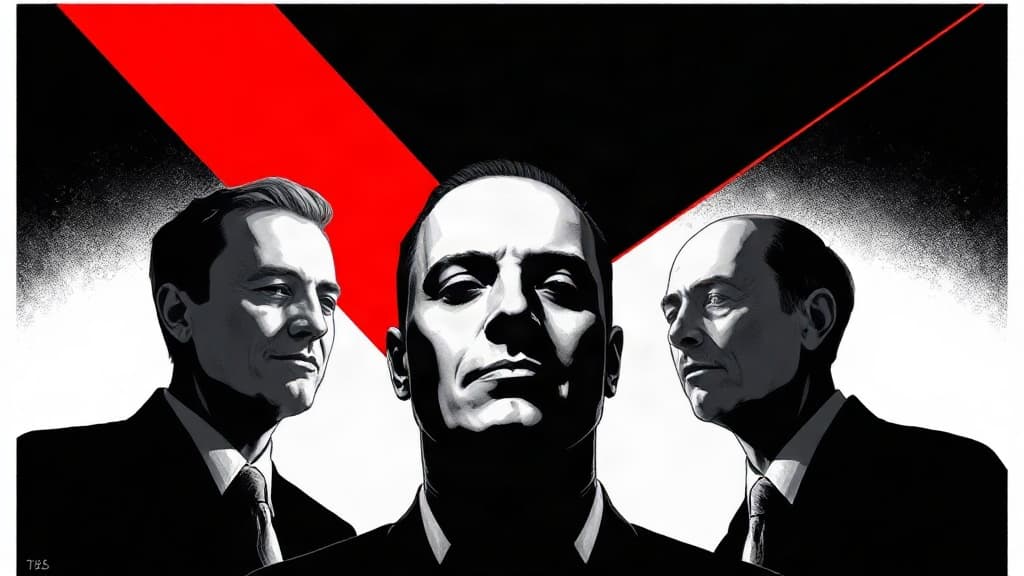
Anthropic CEO Dario Amodei, OpenAI's Sam Altman, and Elon Musk are all singing from the same hymnal: AI is moving too fast, government must step in, the industry must slow down. It's a coordinated pitch for regulatory capture dressed up as existential dread, and President Trump called it what it is: "a hoax."
The playbook is as old as Washington. Incumbents warn of catastrophe, demand regulation only they can afford, and watch the startups die. As the New York Post reported, nothing is stopping these companies from independently slowing their own innovation. They won't — because the goal isn't safety, it's a moat.
Here's the tell: Amodei also wants Washington to grant frontier labs an antitrust waiver, allowing them to coordinate without federal collusion concerns. Former FTC Commissioner Alvaro Bedoya flagged this immediately. Any waiver, Bedoya said, "should be met with deep skepticism in light of the economics of the industry and the threat they face from open [source] models." You don't need an antitrust exemption to make technology safe. You need one to freeze out rivals.
Follow the money. OpenAI lost approximately $39 billion in 2025, according to the Post. Anthropic's public prospectus is expected within weeks and could value the company at $2 trillion. OpenAI pulled its IPO plans, reportedly aiming for 2027. These companies have burned hundreds of billions and need record-setting valuations to justify the spend. Government-mandated compliance costs are a rounding error for them — and a death sentence for everyone else.
Then there's the Jacob Coxon spectacle. The 27-year-old researcher quit Anthropic after four months, posted that the companies were "gambling with our lives," and racked up more than 100 million views on X despite having almost no prior history on the platform. Within days, he landed interviews with Fox, CNN, NBC, ABC, the New York Times, and the Wall Street Journal. He's now slated to appear at the Future of Life Institute's "Pro-Human Assembly" alongside Steve Bannon. Breitbart reported Coxon compared the risk to Hollywood's darkest imaginings: "It doesn't look that different from, say, 'Terminator' or from science fiction films." He added: "It will be smart enough to kill us." Nothing about this media rollout was organic.
Amodei told CBS News he wants independent evaluators with "employee-like" permanent access to AI models — meaning only companies big enough to host government embeds could play. He likened it to a food inspector. It's the pharmaceutical model: the FDA doesn't keep you safe, it keeps competitors out.
The China card is the last resort. Amodei admitted to CBS that if the U.S. slows down and China doesn't, "this is the toughest dilemma." He floated Cold War-style arms agreements as a template — the oldest pitch in the military-industrial book: give us monopoly, or the communists win. Trump wasn't buying it. "That could be political people. It could also be China," he said of the slowdown push. "And we're not going to let that happen."
Nvidia CEO Jensen Huang, whose chips power this entire revolution, put it plainly: "We're not going to let that happen, sir." The crowd at the All-In Summit broke into applause. Meanwhile, actual Americans — not billionaires — have more grounded concerns: Gallup polling shows seven in 10 oppose data center construction in their area, citing environmental costs and quality-of-life impacts, not science fiction scenarios.
The real danger isn't that AI will kill you. It's that a handful of unprofitable companies will use your government to make sure nobody else can build it.