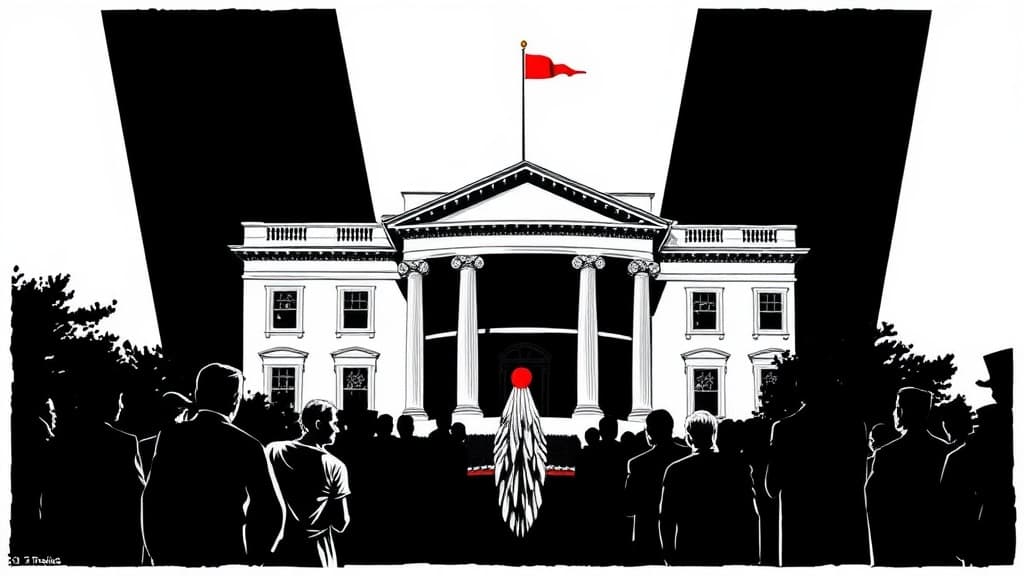
The Trump White House wants political appointees to sign off on more than $1 trillion in annual federal grants before the money goes out the door — and the same institutional players who sat quiet while DEI mandates governed those funds are suddenly screaming about constitutional norms.
The draft regulation, unveiled in May, would require grants to "demonstrably advance the president's policy priorities" and bar recipients from using taxpayer dollars to "promote anti-American values." Organizations that engage in certain "issue advocacy" or hold disfavored "memberships and affiliations" could lose funding. The Philadelphia Inquirer reported that roughly 500,000 formal comments have flooded in opposing the plan, from law enforcement groups to city leaders to academic researchers.
Here is what the Inquirer got right: the stakes are enormous. Grants for climate, education, health, housing, and infrastructure would all fall under political review. Lansing Mayor Andy Schor, a Democrat, told the paper the plan would affect "policing to housing to all the dollars we get from the feds" and could force layoffs if grants get pulled.
Here is what the Inquirer buried: the federal grant machine has been an ideological weapon for years. DEI requirements, climate pledges, and woke litmus tests were standard conditions for receiving federal money under the prior administration. The Inquirer mentions OMB Director Russell Vought's stated goal of eliminating "woke" spending but never grapples with the fact that ideological conditions on grants are not new — only the ideology is.
Law enforcement groups — sheriffs, narcotics officers, district attorneys — warned that "undefined expectations" from Washington could interfere with public safety. That is a fair concern. When federal money comes with vague political strings, local operations that depend on it become extensions of White House policy rather than servants of the communities that elected them.
The Inquirer also noted that the administration "has adopted an expansive view of its budgetary powers, even though Congress possesses the power of the purse under the Constitution." True enough — but Congress long ago outsourced its spending authority to the executive branch through sprawling grant programs with minimal oversight. The constitutional objection is real, but it is a objection to the entire administrative state, not just this regulation.
Worth noting: the Los Angeles Times, given the same news cycle, did not cover the grants story at all, instead running a piece on fencing around Lafayette Park and a White House visitor screening center. When the press ignores a $1 trillion power grab because the grabbing was done by the right people, that tells you everything about whose interests they are protecting.
The real question is not whether the White House should impose political conditions on grants. It is why the American people tolerated those conditions for so long when the politics ran the other direction.