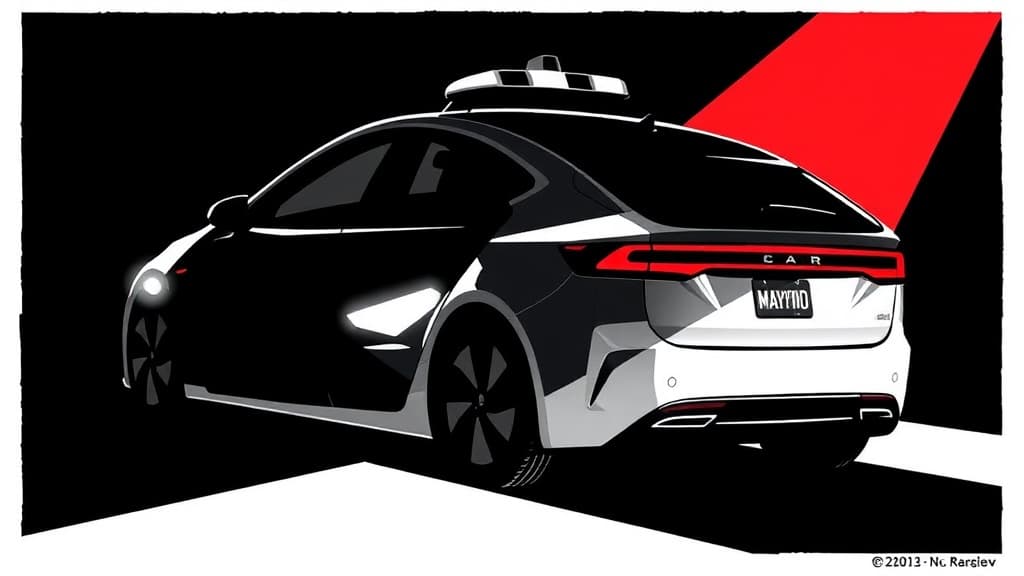
A man is dead on a Dallas street after being struck by two vehicles Friday night — one of them a Waymo autonomous car — and the company's response was a polished statement about how its robot was only going 5 mph at the point of impact. No citation. No driver to charge. No accountability beyond corporate condolences.
Dallas Police say the man entered the roadway around 11:30 p.m. on Maple Avenue near Lucas Drive and was first hit by an SUV traveling south. That collision knocked him into the northbound lane, where the Waymo vehicle struck him. The man, who has not been publicly identified, later died at a hospital. The investigation is ongoing.
Waymo confirmed to CBS News Texas that the vehicle was one of theirs. The company said the man struck the autonomous car's left rear and that the vehicle had detected him in advance, slowing to about 5 mph at the time of impact. Waymo's statement: "The safety of our riders and other road users is our top priority. We are deeply saddened by what happened and our thoughts are with the individual's family and friends."
CBS News reported the company's claims without scrutiny — the 5 mph speed, the detection timeline, the left-rear impact — all presented straight from Waymo's press shop. No independent verification. No questioning of whether a machine traveling at any speed should have stopped short of a human in its path rather than merely slowing down.
Now look at how the same media ecosystem treats human drivers. That same weekend in Detroit, a driver lost control at over 100 mph on I-94, injuring three people. Michigan State Police, who witnessed the crash, immediately cited the driver and used the incident to lecture the public about speed limits. In St. Louis, police are actively hunting a driver who fled a fatal hit-and-run. Human drivers get cuffs, citations, or manhunts. Silicon Valley's robot cars get a sympathetic write-up and a company statement about their safety commitments.
The double standard is the story. When a human kills someone on the road, it's a crime beat. When a Waymo vehicle is involved in a fatal collision, it's a tech brief with corporate talking points laundered into the coverage. CBS didn't challenge Waymo's self-reported speed data or ask why a sensor-equipped vehicle that supposedly detected a pedestrian couldn't avoid hitting him entirely. The company gets to be its own witness.
A man is dead. The robot that hit him is back on the road, or will be soon. And the press is taking the tech company's word for what happened.